Prepared by the Institute for Sustainability, Employment and Growth (ISEG) Foundation in collaboration with the state government, the plan targets the creation of 2-2.5 million jobs while strengthening BMR’s position in technology, advanced manufacturing, healthcare, education and tourism.
The plan seeks to drive private investment, use land value capture to finance urban transformation and promote inclusive and sustainable growth.
BMR currently has an economy of $149 billion, spans three districts and is home to around 16 million people. The region contributes about 40 per cent of Karnataka’s gross state domestic product despite accounting for around a quarter of the state’s population. Its per capita income is nearly twice the state average.
The plan proposes positioning BMR as a global hub for information technology, global capability centres (GCCs), artificial intelligence and technology startups. Key measures include dedicated IT and GCC hubs, deep-tech sandboxes and an AI mission.
It also aims to establish the region as a deep-tech manufacturing hub across seven priority sectors, including aerospace and defence, electronics, automotive, biopharma and medical devices. Tertiary healthcare, higher education and high-end tourism have also been identified as key growth areas.
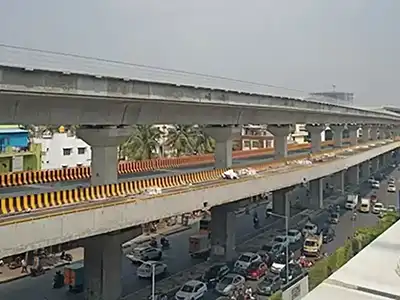
Transport infrastructure is a major focus of the plan, with a target to increase public transport’s modal share from 35 per cent to 75 per cent through expansion of metro, suburban rail and regional rapid transit corridors. The plan also proposes a second airport, stronger ring, radial and chord roads, and multi-modal hubs.
For water security, the plan recommends supply augmentation, greater reuse of treated water and optimisation of distribution networks.
The master plan also calls for planned cities, services-led business districts, integrated private townships and transit-oriented development. It proposes expanding affordable and shared rental housing for industrial, gig and services workers, along with a slum rehabilitation programme.