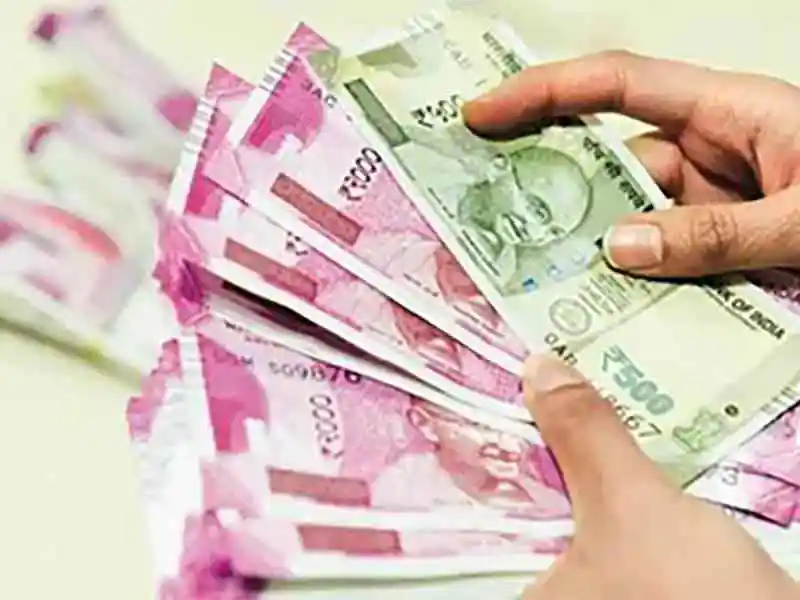
To mitigate the risks of sustained period of relatively low growth and removal of financial, socio-economic and mental stress and strain of the industry and people associated with it, the government had announced a $20 million Stimulus Package to help businesses and people to cope with impact of the pandemic and slowdown spell.
Feeling that there is room for more, the government has announced a set of two new packages:
Package -1: Rs 20.9 lakh crore of which Rs 3 lakh crore is for the working capital for businesses; Rs 2 lakh crore for Kisan credit cards; Rs 90,000 crore as liquidity for power discoms; and Rs 1.7 lakh crore for poverty alleviation schemes.
Package-2: A huge amount for demand boost through holiday travel schemes, interest-free loans to government and state employees, which could be extended to the private sector employees.
The focus of these economic packages is to give incentives to the manufacturing and service sectors and encourage people to spend instead of keeping their money in banks.
Views on Stimulus Packages
Commenting on the merits and demerits of these packages, the IMF has advocated for a better fiscal stimulus to assist India’s growth. According to it, the composition of the package should be towards more direct support rather than indirect credit guarantee. It strongly recommends fiscal support in terms of tax cuts or cash transfer as the prime need of the time. More direct funding support that include the urban poor and migrant workers would have helped even more, but monetization of deficit is not advisable, according to Gita Gopinath at Harvard University.
India’s latest packages highlight the country’s weak fiscal position and would not help much in boosting economic growth as being envisaged in the packages, according to Moody’s Investors Services.
Focus on Infrastructure Projects
Keeping aside these views, the experts strongly feel that infra projects could be antidotes to economic contraction as they can deliver a multiplier effect and be monitored in real time.
The next round of economic stimulus may focus on infra projects that can be executed quickly, create demand for many products and services, which can lead to sustainable recovery, says Dr. Rajiv Kumar, Vice-Chairman, NITI Aayog.
Creating Demand
The next round of discussions should be on creating demand for products and services, and generating the steps to increase consumer demand. No industry is going to invest and take loans unless there is a demand for their products and services. Now is the time for thinking out of the box for demand generation. Demand may grow in the coming months due to pent-up consumer desire for shopping and the attractive festive season offers and discounts.
Construction and manufacturing could be a major demand/growth propellant. If adequately addressed, these sectors could be pivotal in creating the type of demand we are aiming at. These sectors could capitalize on trends such as the shifting global supply chains. To turbo-charge these sectors, it is desirable to introduce targeted time-bound and conditional incentives and related promotional measures like production-linked incentives.
It is time to go back to the basics and bring manufacturing and construction on the central stage to push demand for any stimulus package to succeed. Simultaneously, time has come when industries should take care of themselves; review their working and policies to resurrect the situation. The object is to improve the resilience of competitive industries rather than nursing the deadwoods. At the end of the day, both the government and the industries can either swim or sink on the strengths, weaknesses and opportunities (SWO) of their own fundamentals.
Conclusion
The only long-term driver of sustained economic growth is demand. It is on this front that we have to act fast. Besides, the need of the hour is to look at the issue broadly rather than looking at the low-hanging fruits or helicopter money. We have to fix the dysfunctional system relating to effective utilization of stimulus packages announced from time to time. ‘We cannot solve problems with the same type of approach we used when we created them,’ said Albert Einstein.
As the next stimulus is likely to be a combination of demand stimulus and social safety measures, its perspective is to be viewed as per its provisions. How genuine are the efforts of the stakeholders, and in which areas that need it the most, and to sincerely understand it in letter and spirit, will make a big difference in availing the benefits of a demand-based Stimulus Package and pushing the country towards economic recovery.