
JSW Going Strong
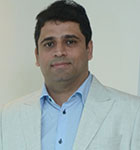
JSW Cement, is confident of an upturn in the cement industry despite the current slowdown in demand, says Rahul Akkara, Associate VP - Strategy & Brand, in an interview with S.A.Faridi.
The cement industry has been under pressure for the last few years due to under-utilized capacity. How is JSW Cement positioned currently?
The average capacity utilization rate in cement manufacturing companies in India is around 45-47%. However, JSW Cement is functioning at a capacity utilization rate of 65%. This is due to the demand that we have created in all our operating markets. Inspite of the downturn in the cement industry, we have continued to grow and achieve a modest growth rate.
With the real-estate industry facing a slowdown, which other infra sectors will help drive demand?
JSW Cement is catering to consumers' right from large builders to small contractors in both urban and rural markets. Economies of scale in residential sector and commercial usage of cement is constant. Since we have a strong distribution and reseller network, the real-estate slowdown is not affecting our business to an extent as reported. Most of the Central and State government initiatives are gaining traction over the past couple of years, so increase in Infrastructure development of our country will definitely help us and the industry to grow in the coming years.
In your view, what is the outlook of the cement industry in the wake of smart cities being developed?
Smart cities development also includes development of airports, roadways, highways, bridges, etc. Due to smart city development, requirement for cement has increased extensively. Out of the 98 smart cities declared by the Government of India, around 30 – 32 are in southern India where JSW Cement has a strong presence and a definite advantage as two of our main plants are at Bellary and Nandayal in south India. Thus, it becomes easier to access these markets and feed demand.
Smart cities are still in the planning stage, implementation could happen in coming years. As of now, all companies have geared up to meet the demand. Foreseeing the opportunity, JSW Cement plans to expand in 2016-17. New facilities would get operational in Salboni - 2.4 MNT and Bellary will scale upto 3.00 MNT from the current 0.6 MNT. JSW cement's current capacity of 6 MNT will increase to 10 MNT with the expansion plans made for the year 2016-17. A 2.4 MNT cement grinding unit has been set up at Salboni in West Bengal. This is a new addition to our existing facilities in Vijayanagar and Dolvi. We are also expanding our Bellary plants current capacity of 0.6 MNT to 2.4 MNT.
JSW Group, one of the largest names in India's infrastructure sector, entered into the cement business relatively late despite having the raw materials available at its steel plants.
It was a strategic move. We did a detailed evaluation of the market, the cement sector and the consumer behavior before entering into cement manufacturing. We did not want to manufacture OPC. We wanted to enter the market with a differentiated product. A lot of thought was put into how we would differentiate our product and communicate the same to our target audience in the last 3 - 4 years.
JSW Cement was established in 2006 with supplies restricted to Karnataka. Later we launched in other southern states like Maharashtra and Goa in 2009; as of now we have more than 2500 dealers and 5000 retailers and could be able to create Portland Slag Cement market with 8 percent market share. We are an environment-friendly company utilizing byproduct of JSW Steel plants for making JSW PSC, for which we got an award from CII “GREEN PRO” certified green product. We can proudly announce JSW Cement is the only company to get this prize.
The concept of sustainable development includes the ability to build the facilities and structures needed today without compromising on the resources supply for the future. Any future attempt to address global warming issues will be partly centered on the way buildings are designed and operated to be energy-efficient and environmentally sustainable.
Sustainability is becoming a benchmark in the infrastructure space. How has JSW Cement incorporated sustainability?
At JSW Cement, it is our continuous effort to look for ways to reduce dependency on the availability of natural raw materials. We enhance the mix optimization with the introduction of alternative, recycled materials to replace the use of natural resources. For instance, slag is a useful byproduct recovered from the blast-furnaces used in the production of iron. Our products are made of slag, which is regarded as a highly environment-friendly and durable material that can protect the environment by limiting the exploitation and reduce the amount of energy consumed in the mining of natural resources, and helps to achieve sustainability in construction.
Production of slag cement creates a value-added product from a material 'Blast Furnace Slag' that otherwise might be sent to the landfill. The manufacture of slag cement not only lessens the burden on landfills but also reduces air emissions at steel plants through the granulation process.
Durability, economy, energy efficiency, fire resistance, low maintenance costs, recycling and thermal mass, all add to the sustainability of concrete in our built environment, and at the end of the usage phase, concrete can easily be recycled. It works synergistically with Portland cement to increase strength, reduce permeability, improve resistance to chemical attack, and inhibit rebar corrosion.
Of the 98 smart cities declared by the GOI, 30 – 32 are in southern India, where JSW Cement has a strong presence and a definite advantage with its two main plants at Bellary and Nandayal.
What are the advantages of using Portland Slag Cement in High Performance Concrete?
High Performance Concrete is concrete with enhanced properties not found in conventional concrete. Properties include higher compressive and flexural strength, lower permeability, lower heat generation, greater resistance to alkali- silica reaction, and greater resistance to sulfate attack. Slag cement has been used effectively in producing high performance concrete.
High Compressive Strength: Slag cement is often a vital component in producing high strength concrete. The higher the percentage of slag cement used (upto 50%) in Portland cement concrete, the higher the 28 days strength will be. Although the slag dosage in excess of 50% will further enhance the long-term strength, it will result in lower 28 days strength.
High Flexural Strength: Flexural concrete strength is increased due to a stronger bond between the cement paste and aggregate particles. This improved bond results from enhanced paste characteristics that also increase compressive strength.
Low Permeability: When slag cement is used as part of the cementitious material in a concrete mixture, it reacts with water and calcium hydroxide [Ca(OH)2] to form additional calcium silicate hydrate (CSH). CSH is the glue that provides strength and holds concrete together. The additional CSH produced-modifies the pore structure of the paste resulting in lower permeability. The level of improvement is proportional to the percentage of slag cement in the mixture, normally 25-70%. Lower permeability reduces chloride ion ingress and thus reduces the corrosion potential of the structure.
Low Heat for Mass Concrete: One of the most difficult challenges in designing mass concrete structures is limiting the concrete temperature differential between the center and the surface of the concrete. If this differential becomes too large, thermal cracks can develop in the concrete. Slag cement has been used successfully to substantially reduce the temperature of mass concrete. When used at high replacement rates, slag cement will provide lower heat in mass concrete than concrete produced with low heat cement.
ASR Mitigation: Alkali Silica Reaction (ASR) occurs when the alkalis in Portland cement react with certain reactive aggregates and water to form an expansive gel that causes concrete to prematurely deteriorate. Slag cement mitigates ASR by combining with the alkalis in Portland cement and making them unavailable for the ASR reaction. It also lowers the permeability of the concrete, limiting the amount of water that is available to support the reaction.
Mitigation of Sulfate Attack: Sulfate attack occurs in hardened concrete when sulfates, found in seawater, in some soils and in waste water, react with the tricalciumaluminate (C3A) in Portland cement paste. The reaction causes a material called ettringite to form. Ettringite formation can result in concrete expansion and premature deterioration. The higher the C3A of the cement, the greater the potential for sulfate attack. Slag cement does not contain C3A so the higher the percentage of slag cement used, the lower the C3A of the mixture and lower the potential for deleterious expansion. Additionally, slag cement reduces the permeability of the concrete and limits the ability of sulfates to penetrate into the concrete.
Published on:
15 July 2016
Published in: NBM&CW July 2016
Share:
We Value Your Comment