
Builders See Silver Lining in Smart Cities and Housing for All Schemes

"Smart cities and housing for all by 2022 schemes will provide the much-needed fillip to infrastructure development across India and help to revive the demand for housing stock. If implemented well, these projects will create great opportunities for the realty sector," says Vineet Relia, Managing Director, SARE homes in an interview with Maria R.
What is the current scenario of real estate market in India?
During recent years, the overall economic slowdown, nationally and globally, and sluggish market conditions have compounded developers' liquidity woes. Slow sales and further tightening of lending norms by the RBI and banks have only increased liquidity problems. Therefore, considering the piled up inventories, developers today are focusing more on selling the unsold inventory rather than investing in new projects.
As there is also pressure of increasing price of raw materials with no further scope to lessen property prices, developers have introduced easy financing schemes to lure the potential buyer.
But the case is valid only for some projects and regions, as many other projects still face various hurdles that impact timely deliveries and sales. Therefore, it would be premature to expect too much of increase in project sales, despite the sincere efforts of all stakeholders involved, market sentiments will change gradually over a period of time.
How do you see PM's 'Housing for all by 2022' and Smart Cities Initiatives?
Both the developments will provide the much-needed fillip for infrastructure development across India and help to revive the demand for housing stock. If implemented well, the smart cities project will create great opportunities for the realty sector. To begin with, it has to be understood that urbanization works in tandem with the economic development of the country. A better infrastructure would give a much needed push to the beleaguered sector that has been facing the challenge of unsold inventory for a long time. An incorporation of ICT, energy efficiency and sustainability seeped into the core of the cities would improve the livability quotient of the city.
Also, the housing for all and focus on affordable housing will benefit vast sections of society as well as developers of low-cost, affordable homes.
Sare Homes has recently been rated as one among the top 5 real estate brands in North India. What is your USPs? How do you rate your current business growth and strategies to stay ahead in the business?
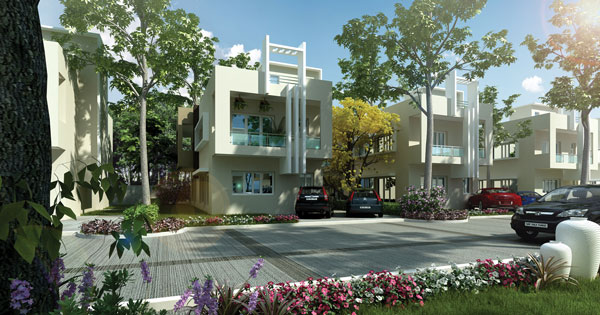
SARE Homes brand denotes high quality construction, timely deliveries and steadfast trust, which are never compromised under any circumstances. Our objective is that the customers should have implicit faith that they will receive what has been promised on the brochure and more. At SARE Homes, we seek to position ourselves as a professional organization by providing consistent quality experience to all our customers. SARE Homes takes pride in working to uncompromising quality standards and maintaining transparency in all our dealings. Our characteristics are efficient space utilization, quality of material, use of established architects & contractors, professional management services, personalized customer interactions and more.
What are Sare Homes's current important projects in hand and innovative construction practices placed in the Group to execute these projects within set time and cost targets?
Currently, SARE Homes is present in Gurgaon, Chennai, Ghaziabad, and Amritsar. For our future projects we are planning to adopt an asset light business model and taking up projects on a joint development basis. Also, within this financial year we are all set to launch our projects in Indore and Panvel. The Indore project will be spread across 50 acres and the Panvel township is spread across 75 acres. We have also entered into the theme project segment with our latest launched project Sports ParC which is focused around sports facilities within the township.
As a strategy to build productive workforce we have taken the initiative of changing the traditional model of selling through real estate agents to a more professional system of in-house sales. We believe that the company's technology infrastructure must be mature and robust enough to support the business. Considering this and the fact that securing data is paramount for any developer, SARE Homes has migrated the organization to Microsoft Office 365. This approach helps SARE in strengthening customer relationships and drives the referral business while protecting information.
What, according to you, is sustainable construction and how have you incorporated this essential ingredient in your projects?
With the current push from the government for energy conservation and climate change, green buildings are gaining acceptance from the consumers. As the construction sector in India is one of the highest consumers of natural resources and energy, there is a huge opportunity for energy efficiency in the sector. It is now being increasingly realised that sustainable development approach towards the development and construction of buildings (commercial and residential) can enhance both the economic well-being and environmental health of communities.

SARE Homes has undertaken efforts to reduce its carbon footprint as a developer and lend its mite in mitigating the devastating impact of global warming and climate change. We have measured our carbon footprint for the last two financial years using methodology based on the GHG Protocol. The emissions have been verified by third-party verifier DNV (Det Norske Veritas).
Indian Real estate sector has been plagued by several cases of project delays. What are the reasons for the same and solutions, according to you, needed to fix the situation?
A plethora of problems plague developers including the multiplicity of permissions required from different authorities and ensuring approvals which is an extremely cumbersome and time-consuming process. Moreover, rules and regulations vary between states, making matters more complex.
The Government and other regulatory authorities need to introduce major reforms that will streamline and simplify the approvals process. For example, single-window clearance can be a game-changer for the industry, the economy and the nation.
Other measures are also imperative, such as the lowering of circle rates. Gurgaon city authorities have mooted a proposal to cut circle rates by 15%. Hopefully, the Haryana Government will look beyond short-term gains to approve this and benefit the city in the long-term. Other Governments and authorities need to follow suit, since lower circle rates will help curb costs, benefitting buyers and giving a robust fillip to the lacklustre realty market. Similarly, numerous policy and reform measures are needed to revive the markets and improve buyers' sentiments.
What is your take on Real Estate (Regulation & Development) Bill 2016 and REITs? How will these steps be a win-win situation for both the buyers and the developers?
With the passage of the Real Estate (Regulation and Development) Bill, 2015, India's realty sector seems poised for dramatic transformation with the proposal to set up RERA (Real Estate Regulatory Authority) and Appellate Tribunals in the States. To begin with, RERA will introduce transparency because developers will hereafter have to disclose all project-related information to the Real Estate Regulatory Authority. This will include approvals, the project layout, land status, contractors, schedule and project completion time. Thereafter, this information will need to be passed on to buyers. Builders violating this rule will have to pay a penalty that could be up to 10% of the project cost. With this information available to prospective home buyers, they could take an informed decision about investing in projects from builders based upon their project delivery track record. RERA will be responsible for regulating real estate projects to ensure their timely completion and handover to buyers.
What do you think are the hurdles affecting the investment in the sector?
There is no doubt that lack of transparency in the real estate sector has been a major barrier for investors, national and international. With the introduction of the Real Estate Act things seem to be improving now. Since developers have to follow prescribed norms by the Act in all activities, this would ensure transparency at all levels. With transparency being assured, it is merely a question of time before foreign investors begin putting down their funds in various development projects that suit their requirements. In the coming months and years, FDI inflows will clearly gather more traction.
For developing Government ambitious project '100 smart cities,' there would be need of huge investment. What will make foreign investors interested in the Indian real estate?
Government needs to announce measures that further stimulate the Indian economy, ensure ease of doing business and facilitate investments via a robust business climate. Introduction of important legislations such as GST, the Land Acquisition Bill will give a further fillip to Indian industry, including the real estate sector. Considering the above scenario and the relatively lower price points available at present, FDI in select projects with credible developers is bound to fetch robust returns in future.
Published on:
14 July 2016
Published in: NBM&CW July 2016
Share:
We Value Your Comment