The H2MAC project will design and demonstrate an excavator and a shreeder for the construction and mining sector, setting a robust basis for the future development of hydrogen fuel cell in the off-road industry.
Paula Barbero Gallo, Head of Innovation, Hidrógeno Aragón

Please tell us about Fundación Hidrógeno Aragón and its role in the H2MAC project.
Fundación Hidrógeno Aragón (FHa) supports the development of strategic projects in hydrogen and fuel cell technologies, aiming to create employment, generate wealth, and improve the competitiveness of the industrial sector in the Aragon region. Its areas of interest include hydrogen and fuel cell technologies such as hydrogen production, storage, transportation and distribution, hydrogen applications, fuel cell systems, technology transfer, protection and economic impact, training, and public awareness.The H2MAC project (https://h2mac.eu/) is a four-year initiative involving partners such as FHa, ANMOPYC, and ITA, aimed at developing and demonstrating a modular, scalable, efficient, and low-noise hydrogen fuel cell powertrain for non-road mobile machinery (NRMM) used in construction and mining. The powertrain is specifically designed to operate reliably in harsh environments characterized by dust and vibration.
Two NRMMs will be newly designed to integrate this fuel cell powertrain: an excavator powered by a single 120 kW fuel cell module, and a shredder using two modules to reach 240 kW, thereby demonstrating the scalability of the concept. Both machines are currently in the design phase and will be demonstrated over 1,000 operating hours in a real quarry environment in southern Spain.
The project aims to establish a solid foundation for future industrialization and commercialization of hydrogen-powered NRMMs, while also providing key insights into refuelling infrastructure requirements. FHa’s role includes developing the safety plan, preparing the demonstration site, defining the hydrogen supply and refuelling solution, and leading the techno-economic analysis and market uptake assessment.
What other projects with applications in the construction and mining sectors are H2MAC partners working on?
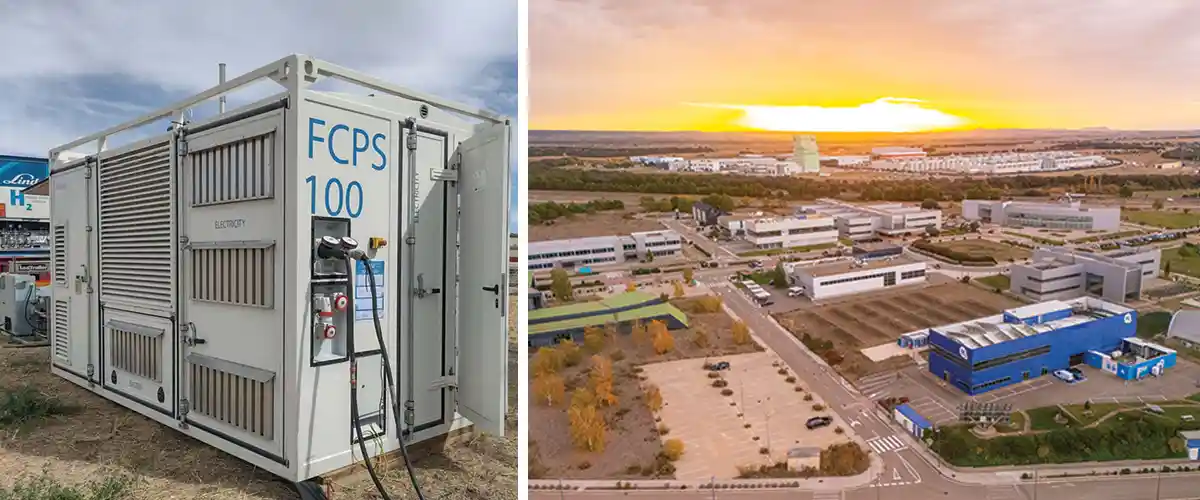
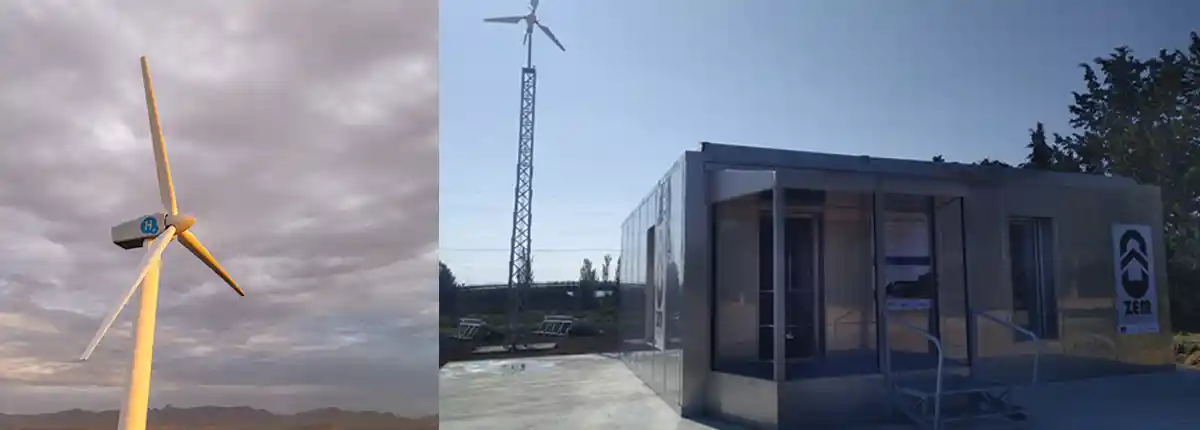
Everywhere genset (25 and 100 kW) is a solution that can provide electricity from hydrogen in locations that do not have a stable grid or do not yet have a grid (mining, civil engineering works, construction works), but also ports, music festivals, events, exhibitions, sporting events, etc. FHa led the demonstration of the gensets in Spain during 2023.FHa has coordinated the LIFE ZEROENERGYMOD project, where a modular living solution, easy to install, with low energy requirements (great insulation, Passivhaus standard) and renewable energy supply, with hybrid storage using batteries (intraday) and hydrogen (seasonal) was developed and could serve as offices, camps, temporary living, communications office.
Regarding hydrogen refuelling for trucks and machinery, FHa is working on HyCOOLER, an innovative project that aims to develop a compact and efficient hydrogen pre-cooling solution, designed for refueling heavy vehicles, which we will test at our facilities in 2026.
ITA has developed, with the support of FHa during commissioning phase, the retrofitting and conversion of a diesel truck into a hydrogen fuel cell truck. The truck is a non-homologated research and development prototype, designed and built entirely from scratch as a mobile hydrogen laboratory. It is not intended for commercial logistics or public-road operation, although a controlled demonstration of approximately 35 km was successfully completed near Zaragoza during its official commissioning.
Technically, the vehicle is based on an IVECO diesel chassis, from which the diesel engine was removed and replaced by two second-generation Hyundai fuel cells, each delivering around 85 kW of net electrical power, for a total of approximately 170 kW. The fuel cells serve as the primary energy source, enabling cruising speeds of up to 90 km/h, while a battery pack provides additional peak power during transient conditions such as acceleration or climbing, compensating for the slower dynamic response of fuel cells. An electric motor was integrated while retaining the original gearbox and driveshaft, resulting in performance comparable to or exceeding the original diesel configuration.
Design constraints imposed by the diesel chassis required all new components to fit within the original engine bay, maintaining compatibility with standard trailers. The final vehicle weight is about 0.5 tons higher due to the added fuel cell and battery systems. Thermal management represents a major engineering challenge, as each fuel cell generates heat comparable to its electrical output; this is addressed through a custom-designed cooling system with specialized radiators and water-spray-assisted air cooling. Hydrogen is stored in two 350-bar Type-III tanks with a total capacity of 7 kg, providing an estimated range of up to 800 km. The truck will next operate at MotorLand Aragón circuit to support hydrogen-related R&D and demonstration activities.