We combine our deep engineering heritage, automation-driven manufacturing, and uncompromising quality to serve ports, precast construction, defense, and the most demanding industrial environments worldwide.
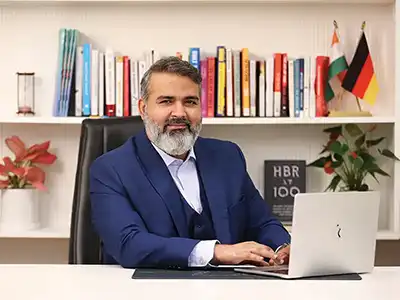
Jean Michel Aspas Arrieta, Commercial Director, UPLIFTING

Please walk us through the company’s evolution and how it became a specialist in heavy-duty lifting equipment with an extensive product portfolio.
From a village blacksmith’s workshop to engineering some of the world’s most powerful, record-breaking forklifts and reach stackers, Spain-based UPLIFTING operates under the Gaipoo Group in Spain. A defining moment came in 2010 when Luna, a nearby company specializing in forklifts and reach stackers, shut down and was absorbed by the Gaipoo Group, which subsequently launched its own lifting machines under the UPLIFTING brand. Until then, the company had only been supplying components and machinery to major OEMs such as Ros Roca, Audi, and Caivo Trucks.This transition marked the start of full in-house manufacturing, beginning from raw steel cutting, and the development of a highly specialized product portfolio for military, industrial, port, and construction applications.
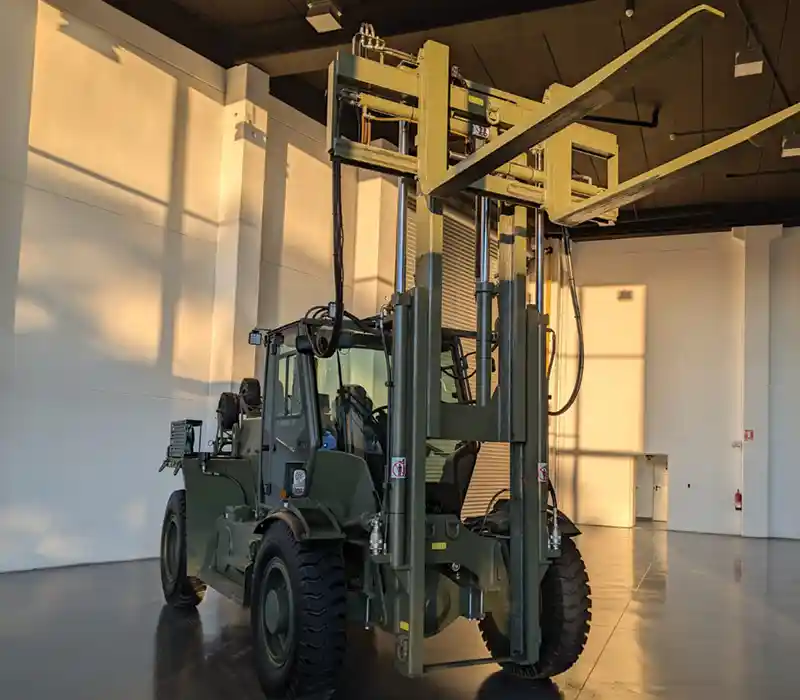
Today, UPLIFTING manufactures equipment ranging from 5-ton military forklifts to the world’s largest forklift, capable of lifting 83 tons at 4 meters and up to 150 tons at 1 meter. The company has also developed a 130-ton reach stacker for Hyundai Steel in South Korea (three of which have already been delivered), specifically designed to handle massive steel slabs within heavy industrial facilities.
Beyond steel and ports, UPLIFTING supports major precast construction projects in the Middle East, where extreme temperatures make conventional construction challenging. Its reach stackers transport precast elements weighing 80–90 tons and measuring up to 12 meters in length and 3.5 meters in height, enabling modular buildings to be assembled in as little as four days. Unlike cranes, reach stackers offer superior mobility and flexibility, allowing materials to be moved efficiently across large construction sites.
Manufacturing such large and complex machines requires exceptional capability. What defines UPLIFTING’s production processes and capacity expansion plans?
Currently, UPLIFTING produces 70–80 machines annually and aims to double output within three years. A new facility, scheduled to break ground in December, will triple production capacity. Completed machines undergo stringent quality validation and are stored in automated SAP-integrated systems, ensuring traceability and readiness for global dispatch.
Quality, reliability, and component selection appear central to your strategy. How do you ensure performance across extreme applications and environments?
UPLIFTING designs equipment for extreme environments, heavy abuse, and long duty cycles, including military and defense applications. Machines are engineered to withstand 5–7 G-forces, making them suitable even for air transport. The company holds multiple patents, including an adjustable counterweight system that allows large forklifts and reach stackers to be transported in aircraft such as the C-130 Hercules and Airbus A400M.Component selection is application-specific. Tyres vary by operating environment, with Bigotti among preferred brands. Kessler axles and ZF transmissions from Germany are regarded as top-tier solutions. Engines are selected based on application and service availability, ranging from Volvo, Caterpillar, Perkins, Cummins, and DAF, covering civilian, industrial, and military needs.
UPLIFTING operates under ISO 9001, ISO 14001, and AQAP (NATO quality standard), ensuring compliance with civilian, industrial, and defense-grade expectations.
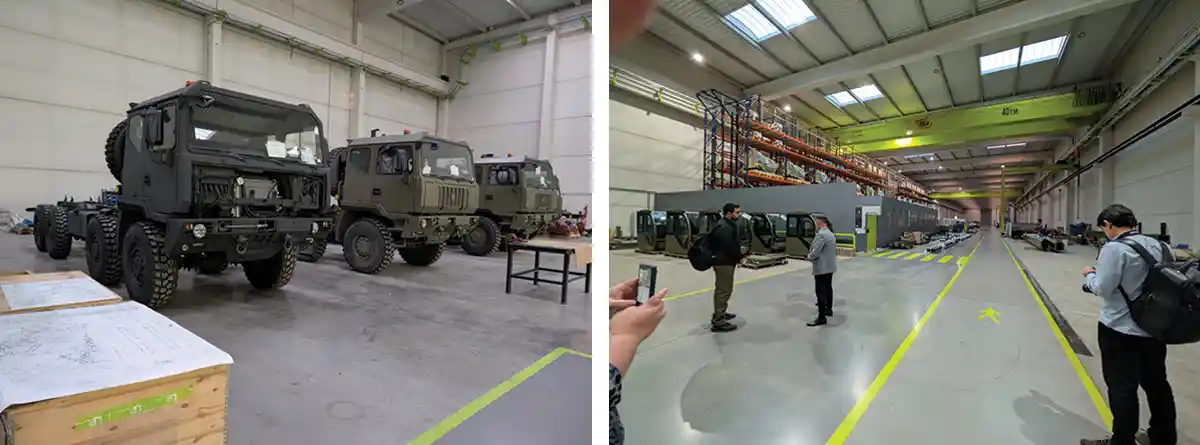
With global logistics accelerating and downtime becoming increasingly costly, how is UPLIFTING positioning itself for future demand and international growth, including India?
Customer expectations have changed dramatically — equipment is now expected to operate 12,000 to 20,000 hours before replacement. In ports and logistics hubs, even one hour of downtime can disrupt multimillion-dollar operations, making reliability non-negotiable. UPLIFTING continues to invest in engineering, automation, and capacity expansion to meet this demand.Geographically, Spain provides a strategic advantage: machines can be delivered across Europe by road within three days, offering resilience during global disruptions such as the Suez Canal or Red Sea crises. While Europe is currently experiencing slower demand for heavy reach stackers, high container imports continue to drive logistics activity. The company remains open to global partnerships, including India, where port development and logistics infrastructure are expanding rapidly with over 70 new ports planned. By combining Spanish manufacturing heritage with advanced automation and innovation, UPLIFTING continues to export globally while maintaining European standards of quality, reliability, and long-term customer commitment.