
Sobha Ltd.: Policy Initiatives bodes well for Realty Sector
What is your overview of the Indian real estate market and recent trends?
In the last few years, real estate market has definitely slowed down owing to macro-economic factors such as high interest rate and high inflation. This resulted in negative sentiments that kept prospects at bay, giving rise to high unsold inventory parked with the developers. Additionally, increasing input costs didn't allow the developers to reduce property prices as per market expectation.
Real estate sector is cyclical and we believe that the worst is behind us. We have witnessed an improving sentiments towards the end of FY 2015-16. The year saw positive developments on economic and policy fronts such as relaxation of foreign investment norms, removal of Dividend Distribution Tax (DDT) on income generated under REITs and reduction of interest rate. Another significant development has been enactment of the Real Estate (Regulation and Development) Act or RERA, which will usher in greater transparency and professionalism in the sector and help re-instill confidence among customers. We expect these factors to trigger a sustained demand recovery in the long run and anticipate a better current fiscal year.
How do you see PM's 'Housing for all by 2022' and Smart Cities Initiatives? Will these improve the supply-demand scenario?
We are optimistic that government's initiative of 'Housing for all by 2022' will address the housing shortage issue. As per the current statistics, India needs to build up about 11 crore housing units, for which government has to infuse an investments of about USD 250 to 260 billion, annually until 2022. The primary reason for this gap in supply and demand can be attributed to cost of land in the urban areas. Therefore to encourage private participation towards achieving this ambitious initiative, government should make land available at an economical price with clear titles. In addition, faster project approvals will further help in developing affordable housing. We believe that if these issues are addressed appropriately, it will set the ball rolling for this massive initiative that will benefit millions of Indians.
'Smart Cities' is another such initiative to ensure better quality of life of people, with a lot of opportunities making inroads into tier-II and tier-III cities. The various sectoral schemes announced by government will help to fuel growth in many industries, including real estate. Development of 'Smart Cities' will cover water and power supply, sanitation and solid waste management, efficient urban mobility and public transport, robust IT connectivity and e-governance.
What is your take on Real Estate (Regulation & Development) Act 2016 and REITs? How will these steps be a win-win situation for both the buyers and the developers?
The introduction of RERA is certainly a big step towards protecting homebuyers' interest. The Act is likely to enhance credibility of the industry with focus on transparency, accountability and speedy execution of projects. It also aims to bring in effective regulatory mechanism for an orderly growth of the sector.
RERA mandates full-disclosure of all registered projects by the developers to homebuyers. Further, it lays out a fast track dispute resolution mechanisms for settlement of disputes through adjudicating officers and the appellate tribunal. The Act will not only improve customers' sentiment but also help large developers in the long run by limiting competition from existing part-time developers.
Real Estate Investment Trusts (REITs) are listed entities that invest mainly in leased office and retail assets and distribute most of their income among shareholders as dividends. An exemption of Dividend Distribution Tax (DDT) on income generated under REIT will make it an attractive investment option and act as a new avenue to raise funds by developers.
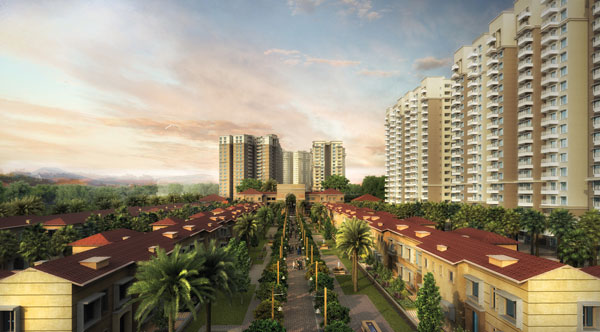
Sobha City, Bangalore
How do you rate your current business growth and strategies to stay ahead in the business?
Our current business growth has been satisfactory and our strategies have proved to be fruitful. In a tough business environment where the market was sluggish, we showed a volume growth on a consistent basis for the last three quarters. New sales volumes in FY16 was 3.2% higher as compared to FY15. Q4'16 was an improved quarter for the Company, bettering the performance of other quarters by 5% (Q1'16), 4% (Q2'16), and 10% (Q3'16) in terms of volume and 6%, 8% and 12% in terms of value. Our major market Bangalore continues to contribute a significant portion of our overall sales volume followed by Chennai and other locations. Sobha Dream Acres has emerged as the fastest selling brand and has immensely helped us to sustain the momentum.
SOBHA has once again bagged top ranks in Track2Realty's 'Brand X Report 2015-16'. This is the second consecutive year that SOBHA has been recognised as the winner across categories—Top National Brand; Top South Indian Brand; Top Residential Brand; Top Super Luxury Brand. More importantly, Sobha has been voted as The Most Trusted Brand by Consumers in an in-depth independent brand survey conducted across India by Track2Realty. Findings were based on factors such as developers' commitment towards transparency and fair trade practices, leading to consumer satisfaction. This reiterates our commitment to quality, timely delivery, and transparency, enabling us to stay ahead of competition.
What are Group's current important projects in hand and innovative construction practices placed in the Group to execute these projects within set time and cost targets? Tell us about your Backward Integration Model.
Last year, SOBHA launched 'Sobha Dream Acres', the first of its kind under its new segment - 'Sobha Dream Series' at Balagere, Bengaluru. This project is a unique residential development to cater to the aspirations of salaried professionals, perfectly suited to the requirements of nuclear families and those who prefer premium quality compact luxury homes replete with world-class amenities. Aligned with our 'never compromise' philosophy, this project is being developed using cutting-edge integrated Precast technology employing best-in-class machinery imported from Germany and Italy installed at the project site. The 'Sobha Precast' plant erected at the project site is probably one of the largest and most modern set up catering to large scale construction with unmatched quality and speed.
Precast technology gives SOBHA a better control on construction cost and quality. Using precast minimizes rework and plastering, reduces dependence on work force and ensures quicker construction time (faster cycle time of slab). On a conservative basis, precast technology is expected to bring down the construction cost by 10 to 15 per cent. Additionally precast offers advantage of factory discipline as compared to conventional site set up.
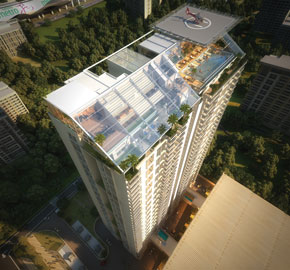
Sobha Indraprastha, Bangalore
What, according to you, is sustainable construction and how have you incorporated this essential ingredient in your projects?
In simple terms, sustainable construction refer to the elements that go into every stage of a construction development with environmental considerations. Its importance is emphasised on resource efficient design, energy and water savings and the project's overall impact on the environment. As a responsible developer, we ensure sustainability in all our projects. Every project has a large area dedicated for greenery and follows green practices that meet Indian Green Building Council (IGBS) standards such as rainwater harvesting, sewage treatment plant, advanced electrical energy management, wastage recycling, optimum use of natural resources etc.
While there are many methods of constructing a green building, implementation of Value Engineering (VE) has played an important role in effectively executing such projects. In recent times, VE is being implemented in high-rise buildings that are gaining popularity. It is a technique through which value of an output in a system is maximized by associating its performance with costs.
SOBHA has implemented the technique in many of its high-rise building projects. VE has helped in lowering the cement composition in every cubic meter of concrete, mitigating carbon dioxide (CO2) emissions into the atmosphere. Not only does VE helps in containing CO2 emission but also results in lot of operational cost savings. Additionally, SOBHA uses eco-friendly products like GGBS (Ground granulated blast furnace slag) for manufacturing products such as concrete blocks and paver units.
We are strictly hooked to sustainable practices of water conversation, recycling of waste, effective use of natural resources and emphasize on green construction through adopting value engineering method. These practices ensure quality and environment-friendly buildings that result in reducing carbon footprints. We have been recognized for our efforts and won accolades such as 'Construction Health, Safety & Environment' at 6th CIDC Vishwakarma Awards.
According to a report, tier-II and tier-III cities are being reckoned as the growth engines of the future. How do you see your business growth in these cities?
We are already present in non-metro cities with our unique projects. The changing lifestyle patterns, increasing purchasing power and importantly, extensive job opportunities created due to the emergence of mobile technology and eCommerce players in these cities have set in the growth wave for other industries too. This, along with the Smart Cities concept focused on tier-II and tier-III, will certainly drive the demand for housing needs. Availability of land parcel at economical rates and better infrastructure facilities offered in these cities will attract more investors in the coming days.
Sobha Limited has once again bagged top ranks according to Track2Realty's 'Brand X Report 2015-16'. How has the Group been able to sustain its public image delivering assured end-result to the satisfaction of its clients in the present competitive scenario? Would you like to share your experience of the past three decades with our readers?
As you may already know, being India's premium and largest real estate company, Sobha Limited was founded in 1995 by Mr. PNC Menon. We believe culture flows from the top. It was Mr. Menon's vision and foresight that SOBHA was always pegged at excellence hinging on creating international quality products and timely delivery. He would never compromise on his highest quality standards and ethical practices. These became our moral code of conduct since then.
The reason SOBHA is one of the most trusted real estate brands in India is because we give utmost importance to quality. We have adapted to changing requirements of the real estate eco-space and we believe in continuous innovation processes that help us meet ever-changing needs of today's discerning customers. In order to ensure that we are able to consistently deliver the highest-quality products to our customers, we began the process of backward integration. Our state-of-the-art manufacturing facilities are fully-equipped to not just cater to demands of our in-house projects but also supply high-quality products to other players in the construction industry.
The Company has invested substantially in development of a robust ERP system, established world class processes, shaped benchmark products and created leaders in the country. Our transparent operations and full disclosure policies have garnered faith of all our investors.
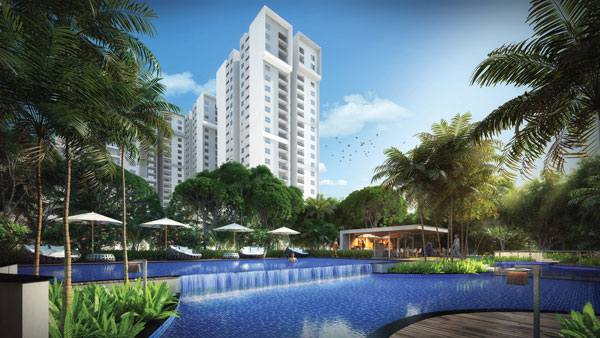
Sobha Silicon Oasis, Bangalore
We have recently invested in precast technology as we entered into a new segment of compact luxury homes, popularly known as Dream Series. Based on conservative estimate, precast technology can bring down the construction cost by 10-15%. An immediate and instant relief to real estate industry in general and Sobha in particular is better control on construction cost and quality. Cost benefits are due to the fact that precast results in minimum rework & plastering along with minimal dependence on work force that includes small size of site team. The whole process is quick because of flexibility to do basement and retaining walls in the fastest possible way. Also a faster cycle time of slab and a minimum impact of festival, holidays and other social issues gives us an edge over competitors in completing our projects quickly.
All our activities are customer centric and we understand the need to listen to our customers' requirements. Our marketing and sales teams are equipped to analyze the need of the customers and cater to their demands. We also set up Customer Care Cell – a channel for the customers to voice their concerns and provide their feedback. Our adept CRM team takes charge post the sale of a property and goes all-out to ensure that our customers always remain happy and content.
Our mantra for success is - focus on delivery. At Sobha we have an enthusiastic team who truly believes in and upholds Sobha's philosophy of 'Passion at Work'. Today, SOBHA has become a brand synonymous with trust, transparency and quality. We strive to uphold our reputation and create new industry benchmarks.
How is company's financial performance this year and how are you raising funds for your projects?
We are pleased to report that the Company has generated positive net operational cash flows of `1.55 Billion during the fiscal. The EBITDA margins have improved from 25.75% in FY'15 to 27.51% in FY'16. There has been a rationalisation of borrowing costs as well, which stood at 11.83% as at March 31, 2016 as compared to 12.60% in the previous year coupled with improved liquidity in the market. The new sales volume is higher by 3.2% as compared to FY'15, indicating a sustained momentum in sales. However, lower revenue recognition and higher provisioning for tax have impacted the top line and bottom line of the Company.
In fiscal 2016, the Company completed and handed-over 9 real estate projects and 16 contractual projects aggregating to 11.10 square feet of developed area. The Company strives to ensure that the key parameters of launch, execution, delivery and sale of projects are structured judiciously which has resulted in negligible levels of unsold finished goods inventory.
Our projects are funded by banks and on self-financing basis.
Published on:
14 July 2016
Published in: NBM&CW July 2016
Share:
We Value Your Comment