A Design-Phase HTMD Case Study
A Hysteretic Tuned Mass Damper (HTMD) is being integrated into a high-rise residential tower by Signature Global in Gurugram. Design-phase analyses indicate peak seismic response reductions of up to 25%, floor acceleration reductions above 20% under wind loads, delivering enhanced occupant comfort and multi-hazard resilience in Seismic Zone IV.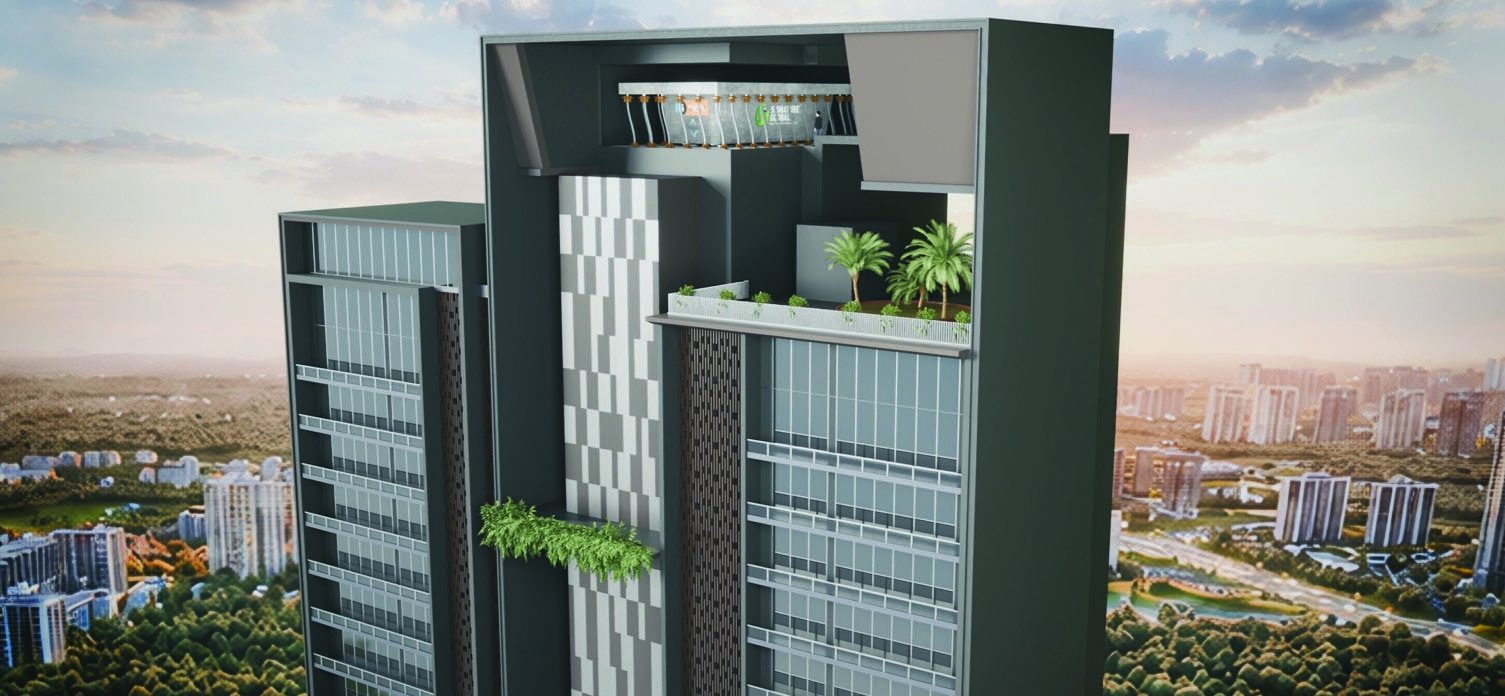
Designing Beyond Code Compliance
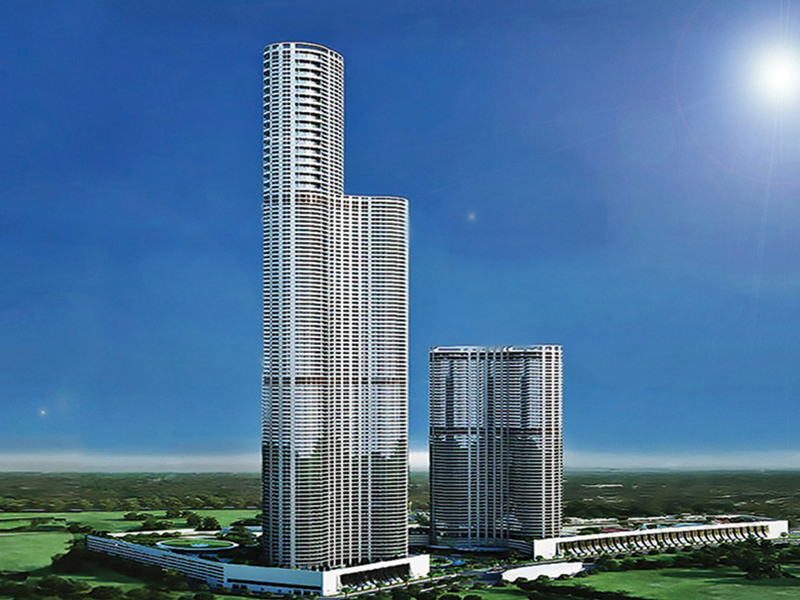
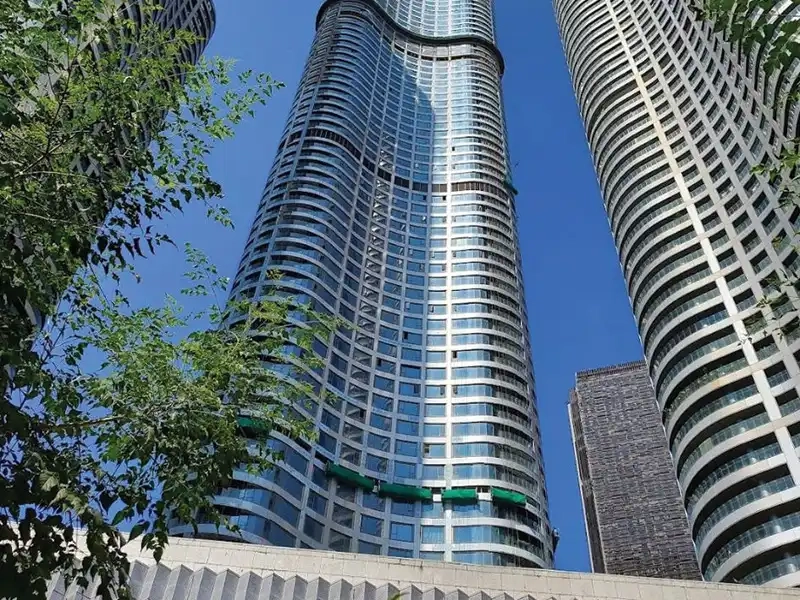
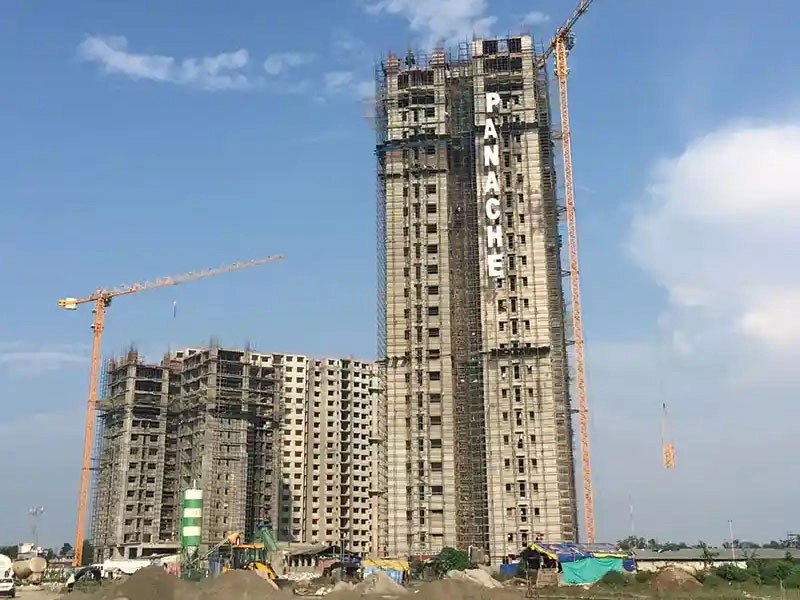
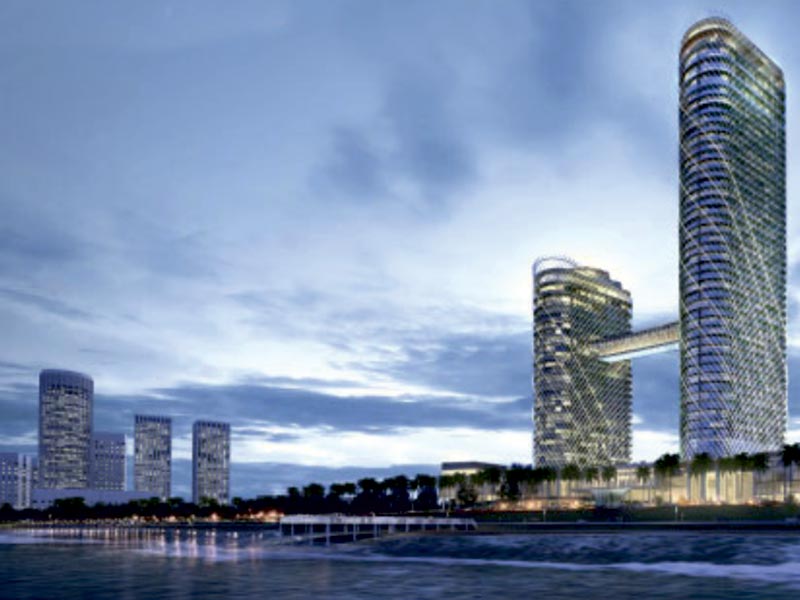
Residential towers exceeding 150 m are increasingly being introduced in Delhi NCR, a region classified under Seismic Zone IV. Conventional code-compliant design primarily focuses on collapse prevention and life safety through ductile detailing and prescribed strength requirements. While serviceability checks such as drift control are incorporated, occupant comfort under wind and post-earthquake functional recovery are generally not primary design objectives. For many slender towers in the 150–200 m height range, fundamental periods can approach 4–5 seconds, making wind-induced accelerations, occupant comfort, and broader resilience considerations important design drivers alongside conventional strength and stability requirements.The case study presented here concerns a 173 m tall, 41-storey residential tower currently under construction in Gurugram, being developed by Signature Global. The tower is being equipped with a Hysteretic Tuned Mass Damper (HTMD) at roof level to control wind-induced accelerations and reduce seismic demand. Engineering Challenges
Delivering structural resilience and occupant comfort within a single design framework required overcoming several interconnected dynamic and integration challenges. To verify robustness under seismic loading, the HTMD was evaluated using an unreduced elastic response spectrum, providing a conservative benchmark independent of the response reductions normally associated with structural ductility and overstrength. Wind performance posed a different challenge. With a fundamental sway period of approximately 4.4 seconds, the upper occupied floors exhibited increased susceptibility to wind-induced accelerations, making occupant comfort an important design consideration.
The first torsional mode also occurred sufficiently close to the primary translational modes to necessitate attention to coupled sway–torsion behavior. From an implementation perspective, the rooftop installation of a substantial damper mass required early coordination between structural and architectural teams to preserve functional and usable floor areas.
The resulting control system therefore needed to perform reliably under both the broadband frequency content of seismic excitation and the resonance-dominated response associated with wind loading an objective that ultimately motivated the adoption of a seismic-optimised HTMD rather than a conventional vibration-control solution.
Selection of a Wire-Rope HTMD
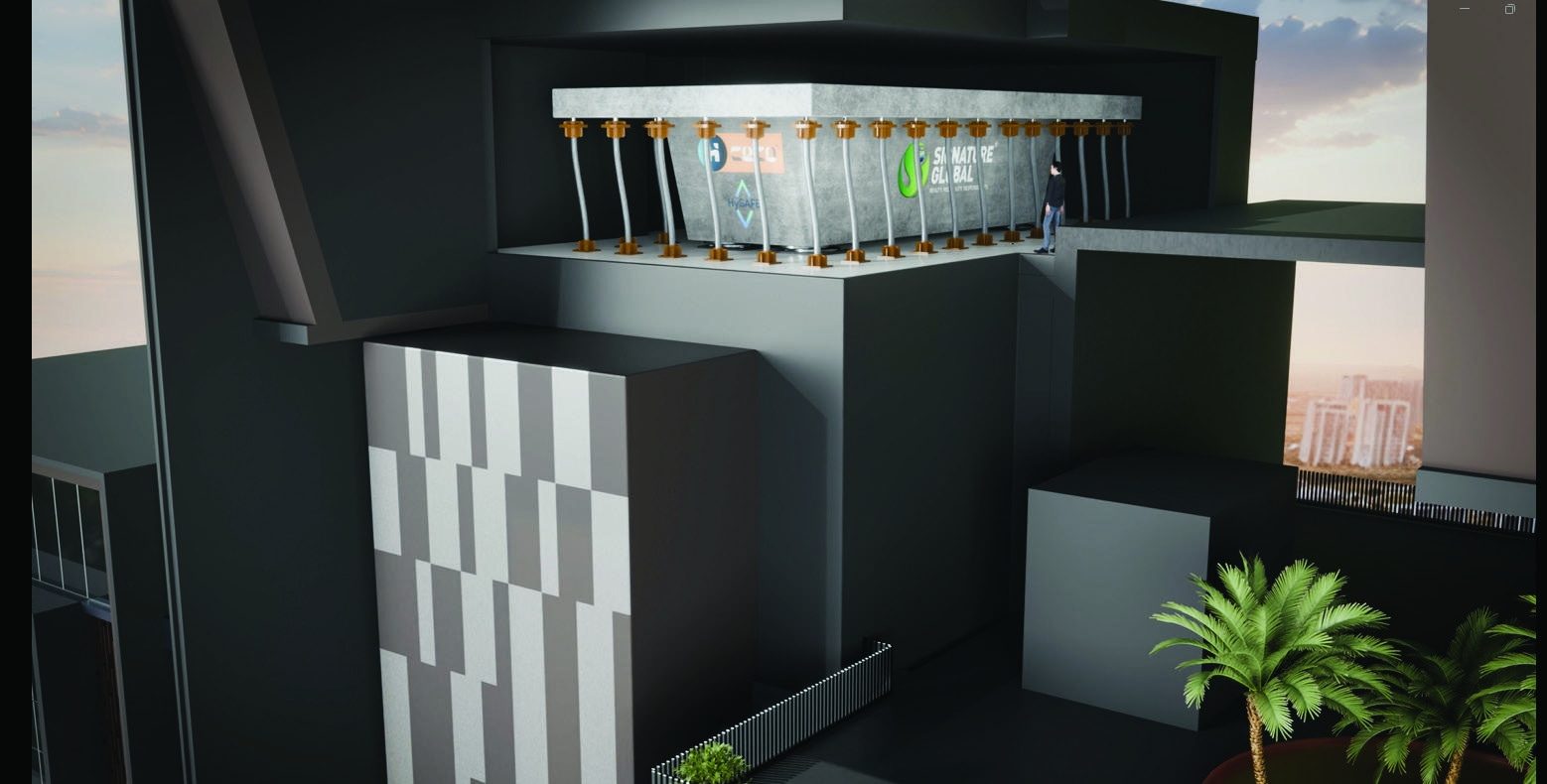
Signature Global's design team evaluated several supplementary damping solutions, including viscous dampers, friction dampers, and conventional tuned mass dampers, before selecting a wire-rope Hysteretic Tuned Mass Damper (HTMD). The complete HTMD design methodology, analytical framework, tuning strategy, and performance verification approach have been developed and provided by HySAFE Srl. The system will be commissioned and implemented by CECO Hirun, which is responsible for the supply, installation, testing, and commissioning of the HTMD on the building.Unlike conventional TMDs, which rely primarily on viscous damping, the wire-rope HTMD dissipates energy through the hysteretic behavior of specially engineered wire ropes, providing enhanced energy dissipation and increased effective damping. The system is designed to control the two principal sway modes as well as the fundamental torsional mode of the structure, thereby improving both structural resilience and occupant comfort under wind and seismic excitations.
The device is installed at the top of the tower, where lateral motion is largest and control is most effective. Its moving mass corresponds to a mass ratio of approximately 0.33% of the participating structural mass sufficient to influence the tower's dynamic response without imposing structural or architectural penalties. The system is modular and re-tuneable, allowing performance to be maintained as the structure's dynamic properties evolve over its service life.
Design Methodology
A three-dimensional finite-element model was developed to characterize the tower's dynamic behaviour. Modal analysis identified two dominant translational modes and a torsional mode, with the first six vibration modes representing the primary dynamic characteristics considered during HTMD optimisation. Seismic performance was evaluated using suites of ground motions matched to the target elastic response spectrum and applied along the principal structural directions. Wind response was assessed through time-domain simulations using stochastic wind fields generated to reflect the terrain exposure and wind characteristics prescribed by IS 875 (Part 3). Key response metrics, including displacement, acceleration, and drift demand, were compared between the baseline and HTMD-controlled configurations to quantify the effectiveness of the vibration-control system.Seismic Performance
Comparative analyses across a large suite of ground-motion scenarios confirmed that the HTMD delivers consistent and, in many cases, substantial improvements in structural response. Peak seismic response reductions reached up to 27% in individual scenarios, with positive improvement observed in every evaluated case — a rare kind of consistency, and one that confirms the device's effectiveness under the broadband seismic demands characteristic of Seismic Zone IV.The most significant benefit was observed in the control of deformation demand. Mean floor displacements were reduced by up to 20% in the principal directions, and inter-storey drift ratios were brought fully within the IS 1893 limit under the HTMD configuration.
Wind Performance
The HTMD proved particularly effective where it matters most to the people inside the building—vibration levels tied to occupant comfort. Across the evaluated wind cases, peak top-floor accelerations at the most sensitive upper occupied levels dropped by up to 25%, bringing the response comfortably within the project's comfort target. In the crosswind direction typically the troublemaker for slender towers the HTMD absorbed roughly 30% of the total wind input energy. Think about what that really means: nearly a third of the wind's push on the building is quietly siphoned off into the damper and turned into heat, more than doubling the tower's effective damping.These gains showed up, as one would expect, in the primary structural system as well. Under the serviceability wind event, the controlled structure comfortably satisfied the adopted inter-storey drift limit, and peak corner accelerations stayed well within the project's comfort target. The tower, in other words, does exactly what a good tall building should do: in the wind it sways, but it never lets its occupants feel that it is working hard to stay still.
A Multi-Hazard Damper
The design philosophy adopted a two-step verification, and the logic behind it is worth pausing on. The HTMD was first optimally tuned under the more demanding robustness condition seismic excitation and then verified under wind loading. A seismic-optimised HTMD, which must remain effective across a broad range of frequencies and modal combinations, also performs reliably under the narrower-band, resonant behaviour typical of wind. The result is a single integrated system that quietly does two jobs at once: reducing structural demand under earthquakes and softening the occupant-comfort response under wind.Lessons Learned
• Supplementary damping systems should be introduced early during structural and architectural coordination, not after the building layout is finalised.• For slender towers with strong torsional coupling, damping devices must control torsion in addition to sway; single-direction TMDs are insufficient.
• Sizing the device by the more demanding seismic case, and verifying under wind, produces a solution effective under both hazards without over-optimisation.
• Modular, re-tuneable devices are preferable in tall residential buildings, where long-term drift in dynamic properties is expected.
Key Outcomes
• Peak seismic response reductions of up to 25% across the evaluated ground-motion scenarios, with positive improvement in every case.• Up to 20% reduction in mean floor displacements, bringing the response fully within the IS 1893 drift limit.
• Up to 25% reduction in peak top-floor accelerations under design wind conditions.
• Approximately 30% of wind input energy dissipated by the HTMD, more than doubling the tower's effective damping.
• Simultaneous sway and torsional control delivered by a single, modular, re-tuneable device.
Concluding Remarks
The design-phase integration of a wire-rope HTMD in this 173 m tower illustrates how supplementary damping can extend the performance of tall residential buildings beyond code compliance improving occupant comfort under wind, reducing deformation demand under earthquakes, and delivering multi-hazard resilience through a single device.For Signature Global, the project is an early step in a broader engineering programme aimed at making performance-based design a standard part of tall-building practice in India. Field measurements following commissioning will subsequently validate the analytical predictions.