
Low-Carbon Concrete for Sustainable Infrastructure Lessons from India’s Pradhan Mantri Awas Yojana and Pradhan Mantri Gram Sadak Yojana
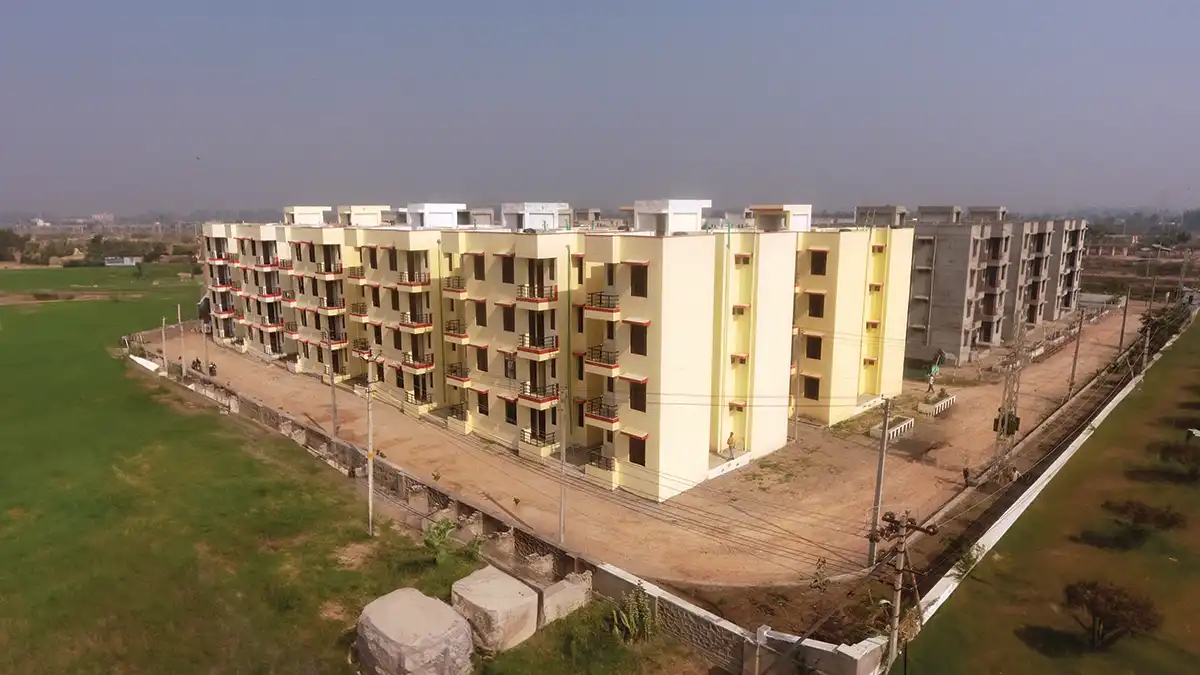
India’s PMAY and PMGSY have delivered millions of homes and roads, but at a high carbon cost due to the heavy cement use. In this study, Dr. S. B. Hegde, Professor, Department of Civil Engineering, Jain College of Engineering and Technology, Hubli, and Visiting Professor, Pennsylvania State University, explores how low-carbon concrete, through alternative binders and innovative technologies, can cut emissions by up to 50%, reduce costs, and enhance climate resilience, thereby aligning India’s infrastructure growth with its net-zero commitments, and offering valuable lessons for sustainable construction worldwide.

India’s large-scale infrastructure initiatives, namely the Pradhan Mantri Awas Yojana (PMAY) and the Pradhan Mantri Gram Sadak Yojana (PMGSY), have delivered approximately 30 million rural homes, 9 million urban homes, and 784,000 kilometres of roads by August 2025. However, the cement consumed in these projects contributes nearly 300 million tonnes of CO2 annually, posing a significant challenge to India’s commitment to achieving net-zero emissions by 2070.
Low-carbon concrete presents a viable alternative, as it incorporates supplementary cementitious materials such as fly ash and slag, innovative binders including calcined clay and alkali-activated systems, and emerging technologies such as CO2-sequestering and bio-based concretes. These approaches have demonstrated the potential to reduce emissions by 20–50%, lower costs by 10–20%, and enhance resilience of built structures against climate-induced stresses such as flooding, heat, and seismic events.
Drawing on pilot project data from 2025, this study critically examines barriers to large-scale adoption, including cost implications, material availability, and performance validation. It further highlights enabling mechanisms such as advanced testing protocols and targeted subsidies. The Indian experience provides important lessons for the global community, underscoring pathways to reconcile rapid infrastructure growth with environmental sustainability.
Introduction
India’s flagship infrastructure programs have significantly transformed rural and urban landscapes in recent years. The Pradhan Mantri Awas Yojana (PMAY) has emerged as a cornerstone of affordable housing delivery, with 35 million rural and 12 million urban units sanctioned, and 30 million rural along with 9 million urban homes completed by August 2025, as reported by the Ministry of Housing and Urban Affairs.Similarly, the Pradhan Mantri Gram Sadak Yojana (PMGSY) has enhanced rural connectivity by constructing 784,000 kilometres of all-weather roads out of 839,000 kilometres sanctioned, according to the Ministry of Rural Development.
These initiatives have enabled millions of households to access safer housing and reliable transport networks, with demonstrable socio-economic benefits in disaster resilience, market access, and livelihood opportunities.
However, the environmental implications of these achievements remain a critical concern. The large-scale reliance on cement-based concrete in housing and road construction has resulted in substantial carbon dioxide emissions, contributing significantly to India’s industrial carbon footprint.
As cement production is among the most carbon-intensive industrial processes, the continued expansion of infrastructure without parallel adoption of low-carbon alternatives risks undermining national commitments toward net-zero emissions by 2070.
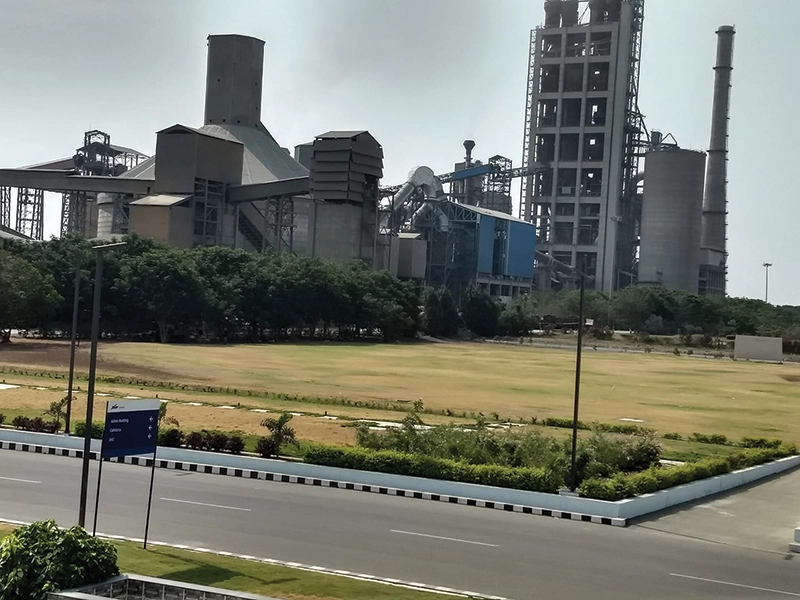
Cement serves as the essential binding phase in concrete; however, its production is highly carbon intensive. The process requires calcining limestone at approximately 1450°C, fuelled predominantly by coal and natural gas, with CO2 released both from fuel combustion and the decomposition of calcium carbonate. On average, each tonne of cement produced results in 0.8–1.0 tonnes of CO2 emissions.
In 2024–25, India’s cement industry manufactured an estimated 400 million tonnes of cement, generating nearly 300 million tonnes of CO2, as reported by the India Brand Equity Foundation. At the project level, a typical 25 m² dwelling constructed under the Pradhan Mantri Awas Yojana (PMAY) requires 4–5 tonnes of cement, corresponding to 3.2–5.0 tonnes of CO2 emissions. Similarly, the construction of a one-kilometres stretch of rural road under the Pradhan Mantri Gram Sadak Yojana (PMGSY) consumes 200–300 tonnes of cement, resulting in 160–240 tonnes of CO2.
Future program targets further amplify this challenge. With an additional 20 million rural homes planned under PMAY and 62,500 kilo meters of new road construction under PMGSY-IV, projected emissions attributable to cement use alone could exceed 100 million tonnes of CO2. Such levels pose a direct contradiction to India’s long-term commitment to achieving net-zero greenhouse gas emissions by 2070.
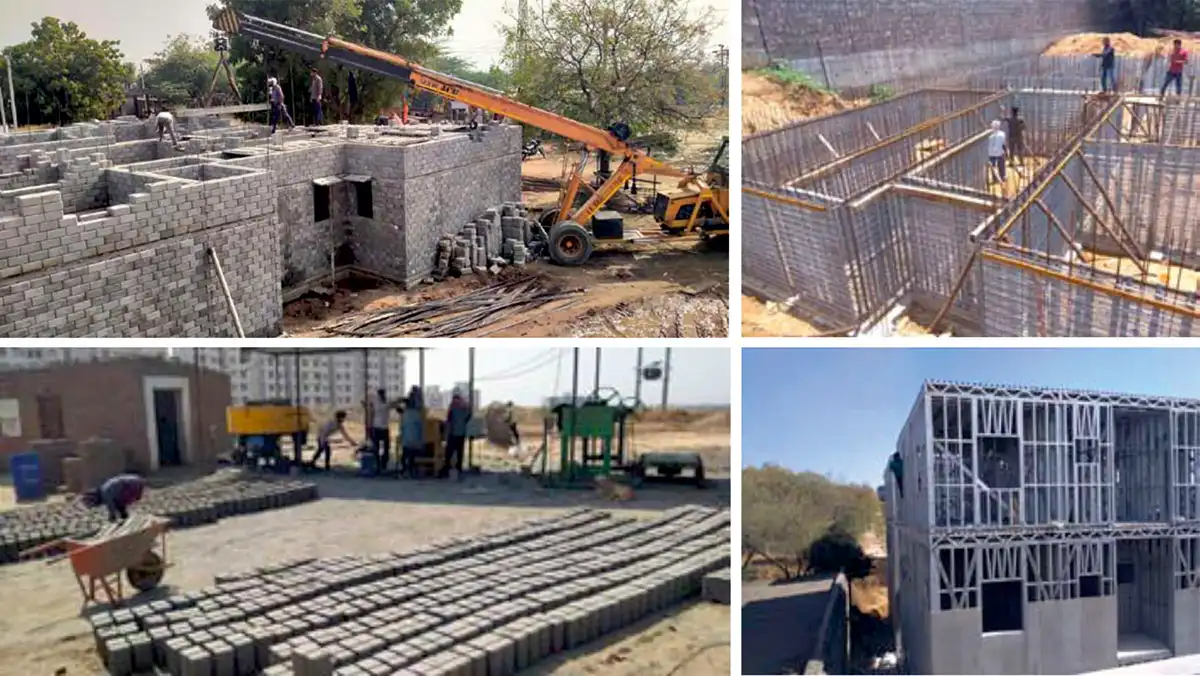
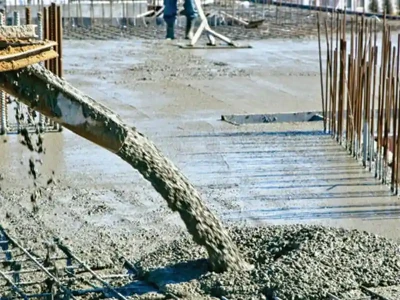
Low-carbon concrete offers a promising pathway to reduce emissions from large-scale construction. The principle is to minimize or replace the use of ordinary Portland cement while maintaining strength, durability, and cost-effectiveness in buildings and roads. Such concretes incorporate industrial by-products such as fly ash from coal power plants, slag from steel manufacturing, or calcined clay, and in some cases, integrate CO2-sequestering technologies or renewable plant-based materials such as bamboo.
This study examines the application of these alternatives within the Pradhan Mantri Awas Yojana (PMAY) and the Pradhan Mantri Gram Sadak Yojana (PMGSY), drawing upon real-world data and pilot projects from 2025.
The main question addressed is whether it is possible to meet the pressing demand for housing and rural connectivity while simultaneously reducing the carbon footprint of construction. Further, it considers how India’s innovations in low-carbon concrete can provide replicable models for sustainable infrastructure development globally.
Materials and Methods
Low-Carbon Concrete Types
Low-carbon concrete encompasses a range of innovative formulations designed to reduce CO2 emissions while maintaining the strength and durability required for housing and road infrastructure. The principal categories relevant to India are outlined below:- Fly Ash Concrete: Generated as a by-product of coal-based thermal power plants, fly ash is commonly used as a supplementary cementitious material, replacing 20–40% of ordinary Portland cement (OPC). India produces approximately 200 million tonnes of fly ash annually, with a utilization rate of about 65%, in accordance with Indian Standard IS 3812:2013.
- Ground Granulated Blast Furnace Slag (GGBS) Concrete: A by-product of the steel industry, GGBS can substitute 50–70% of OPC. Its use improves durability and enhances resistance to chloride-induced corrosion.
- Limestone Calcined Clay Cement (LC3): Produced by blending calcined clay with limestone, LC3 reduces the clinker factor of cement by up to 50%, significantly lowering process-related CO2 emissions.
- Alkali-Activated Binders (Geopolymers): These systems utilize fly ash or slag activated with alkaline solutions, enabling cement-free concrete production with potential emission reductions of up to 80% compared to OPC.
- Carbon Capture and Utilization (CCU) Concrete: This technology incorporates captured CO2 into fresh concrete, where it mineralizes during curing. Pilot projects initiated in India in 2025 under the Department of Science and Technology have demonstrated its feasibility.
- Bio-Based Concretes: Agricultural residues such as rice husk ash or plant fibers like bamboo are incorporated to partially replace cement while improving thermal insulation and sustainability.
- Optimized Mix Designs: The use of advanced admixtures, particularly high-range water-reducing superplasticizers, enables lower cement contents without compromising compressive strength (typically 30–40 MPa for housing and pavement applications).
- Community Batching Approaches: Deployment of decentralized, small-capacity batching units (0.5–1.0 m³) reduces transportation requirements, with reported CO2 savings of 50–80% compared to centralized batching and delivery.
These approaches are consistent with global trends, such as CO2-injected concretes developed by CarbonCure in North America and ongoing geopolymer demonstrations across Europe.
Methodology
This study draws upon pilot projects conducted in 2025 under the Pradhan Mantri Awas Yojana (PMAY) in Chennai, Lucknow, Gujarat, and Tamil Nadu, and the Pradhan Mantri Gram Sadak Yojana (PMGSY) in Jharkhand, Odisha, and Gujarat. Data collection focused on key performance indicators, including carbon dioxide emissions, compressive strength (measured in megapascals, MPa), cost efficiency (expressed in USD), and durability under environmental stressors such as flooding and corrosion.Primary sources included official reports from the Ministry of Housing and Urban Affairs, the Ministry of Rural Development, and the Building Materials and Technology Promotion Council, supplemented by field trial data. Carbon footprint assessments were conducted using an emission factor of 0.8–1.0 tonnes of CO2 per tonne of cement, consistent with values reported by Scrivener et al. (2018).
In addition to quantitative data, qualitative insights were obtained through expert interviews and a review of relevant scientific and technical literature. Particular attention was given to identifying challenges associated with cost, material availability, and supply chain limitations. Results are presented in tabular format and supplemented with interpretive analysis to clarify both successful outcomes and areas requiring improvement.
Results and Discussion
Low-Carbon Concrete in PMAY Greener and More Affordable Housing
The Pradhan Mantri Awas Yojana (PMAY) delivers affordable housing at a cost of approximately USD 1,500–2,000 per unit, with designs intended to withstand regional hazards such as flooding in Bihar and seismic activity in Assam. Conventional cement-based concrete poses multiple challenges: cement is priced at USD 5–6 per bag and subject to a 28% tax, transportation to remote locations is costly, and production releases 3.2–5.0 tonnes of CO2 for each 25 m² dwelling. Pilot projects conducted in 2025 demonstrated that low-carbon concrete alternatives can mitigate these limitations by reducing both emissions and overall costs.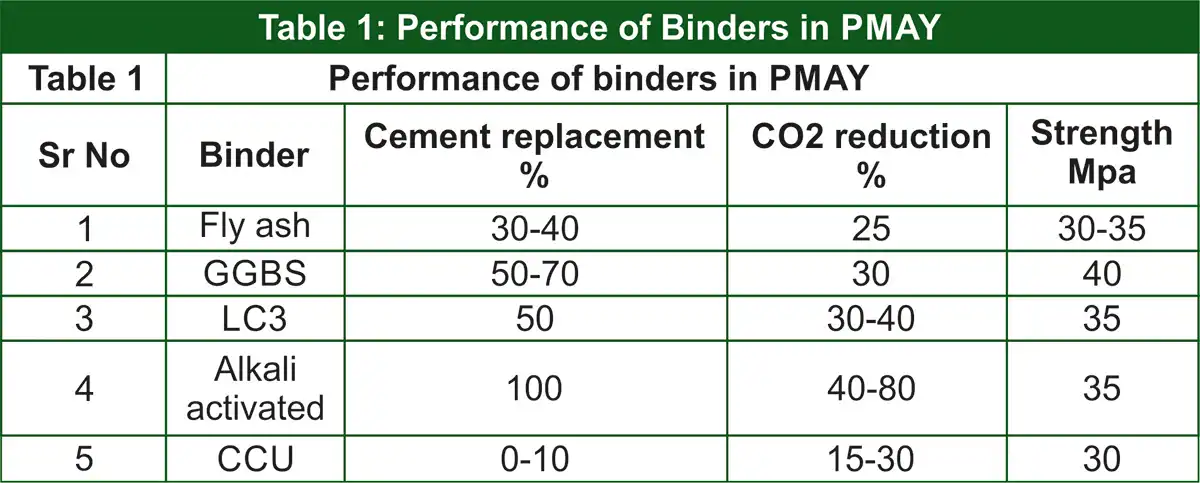
Alternative Binders
- Fly Ash Blended Concrete (Chennai Light House Project, 2025): Fly ash, a by-product of coal combustion, was used to replace 20–40% of cement. This substitution reduced CO2 emissions by approximately 25%, lowering the footprint from 3.2–5.0 tonnes to ~2.4 tonnes per house. Cost savings of about 15% brought construction costs down to ~USD 1,200 per unit. The resulting compressive strength was in the range of 30–35 MPa, meeting the requirements of IS 456:2000 for residential construction, with improved resistance to chloride exposure in coastal conditions.
- GGBS-Based Concrete (Lucknow, 2025): Ground granulated blast furnace slag (GGBS), sourced from steel manufacturing, was used to replace 50–70% of cement. This led to a 30% reduction in emissions (~1.6 tonnes CO2 per house) and provided enhanced durability, with up to 50% greater resistance to corrosion in humid conditions. Compressive strength achieved 40 MPa, exceeding the structural requirements for low-rise housing.
- LC3 Concrete (Gujarat, 2025): Limestone calcined clay cement (LC3) was applied to reduce clinker content by ~50%. Emissions were lowered by 30–40% (to ~2 tonnes per house), while costs decreased by 10–15%. The material achieved a compressive strength of ~35 MPa, with reduced thermal cracking under high-temperature exposure compared to ordinary Portland cement concrete.
Tamil Nadu tested alkali-activated concrete in 2025, using no cement at all. It cut emissions by 50% and matched 35 MPa strength, saving 20% on costs. A new 2025 pilot project by India’s Department of Science and Technology used CCU concrete, which traps CO2 as it hardens, cutting emissions by 15–30% while keeping 30 MPa strength.
Local and Plant-Based Materials
Several pilot projects explored the use of locally available and plant-based materials to reduce dependence on conventional cement and aggregates.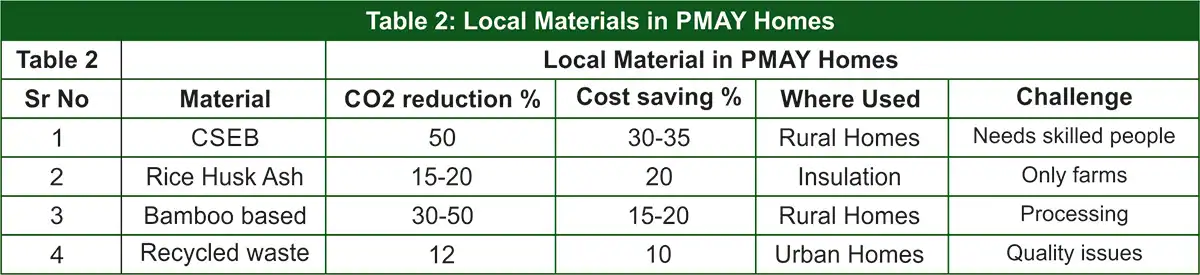
- Compressed Stabilized Earth Blocks (Assam): Blocks were produced using local soil stabilized with only 5–10% cement. This approach reduced CO2 emissions by ~50% and lowered costs to USD 10 per m², compared to USD 15 per m² for conventional concrete. The blocks complied with seismic safety requirements under IS 1893:2016, making them suitable for earthquake-prone regions.
- Rice Husk Ash Blended Concrete (Bihar): Rice husk ash, an agricultural by-product, was used to replace 15–20% of cement. This substitution reduced CO2 emissions by ~15% and improved thermal comfort, lowering indoor temperatures by 2–3 °C during peak summer conditions.
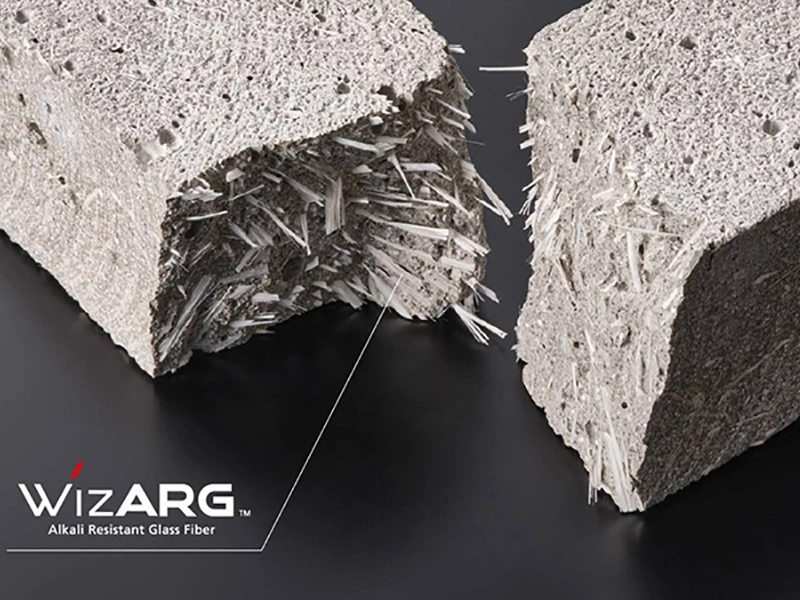
- Bamboo-Modified Concrete (Northeast India): Incorporation of bamboo Fibers allowed for a ~50% reduction in cement content, while also enhancing thermal comfort in hot climates.
- Recycled Aggregate Concrete (Indore): Construction and demolition waste was processed and used to replace 20–30% of natural sand. This resulted in a ~12% reduction in emissions and ~10% cost savings, without compromising structural performance.
Community Batching
Decentralized concrete production at the construction site was shown to significantly reduce emissions and costs. In Koraput district, Odisha (2025), women’s self-help groups employed small-scale mixers to produce fly ash concrete for approximately 500 PMAY homes. This approach reduced transportation-related CO2 emissions by ~80%, lowered construction costs by nearly USD 900 per unit, and generated ~200 local jobs per mixer deployed. In addition, a pilot project integrating carbon capture and utilization (CCU) technology further enhanced the environmental benefits by directly incorporating captured CO2 into the concrete mix.Enhanced Climate Resilience
Beyond emission reduction, low-carbon concrete demonstrated improved resilience to environmental stressors. GGBS- and LC3-based concretes exhibited ~20% lower water permeability, as measured in accordance with IS 3085:1965, making them suitable for flood-prone regions such as Bihar. Bamboo-reinforced blocks provided enhanced ductility under seismic loading, while rice husk ash blends improved thermal comfort by lowering indoor temperatures in hot climates such as Rajasthan. Collectively, these innovations extend service life and reduce long-term maintenance costs.Global Relevance: The outcomes of India’s pilot projects highlight the feasibility of applying low-carbon concrete to affordable housing at scale. Similar regions in Africa and Latin America, where demand for cost-effective, durable housing is high, could adopt these approaches. However, successful transfer requires structured training for construction workers and reliable supply chains for alternative materials.
Low-Carbon Concrete in PMGSY: Stronger and More Sustainable Roads
The Pradhan Mantri Gram Sadak Yojana (PMGSY) has played a critical role in improving rural connectivity, with 784,000 kilo meters of all-weather roads completed by August 2025 and an additional 62,500 kilometres planned under PMGSY-IV. Conventional concrete pavements, however, present sustainability challenges: each kilometres emits an estimated 160–240 tonnes of CO2 and requires large volumes of sand, contributing to riverbed degradation. Moreover, maintenance needs are amplified under monsoon conditions and extreme heat, increasing lifecycle costs.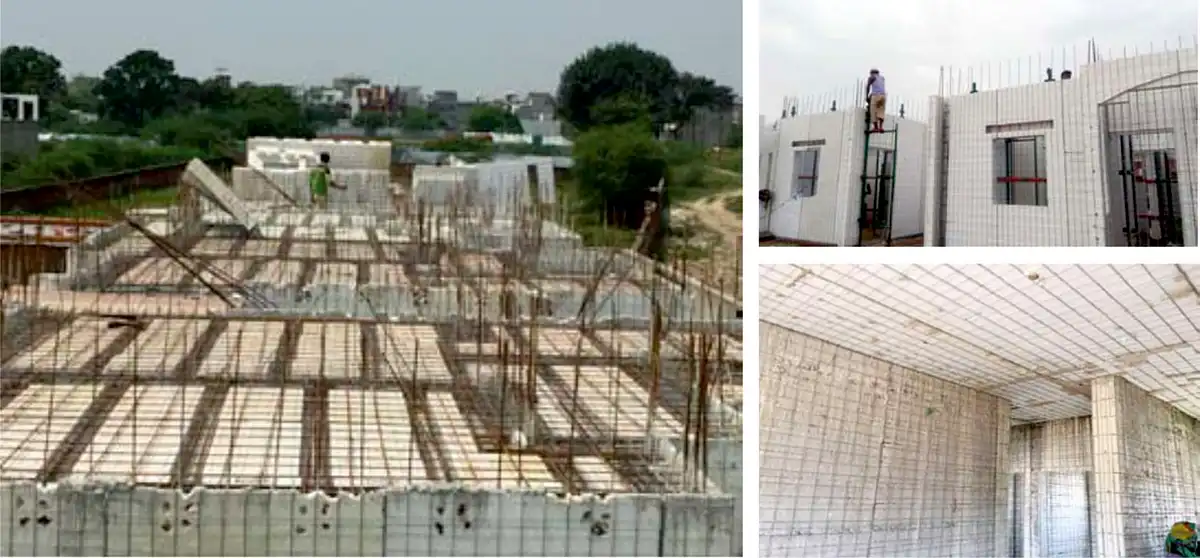
Local Materials and Toughness
In Madhya Pradesh, partial replacement of sand with soil stabilized by cement reduced sand use by 50% and lowered emissions by nearly 20%. In Kerala, the use of coir Fibers, derived from coconuts, improved road performance by reducing cracking by 30%, thereby extending service life. Pilot projects in Gujarat demonstrated that geopolymer concrete roads exhibited 15% greater resistance to erosion during heavy rainfall compared to conventional concrete. Similarly, carbon capture and utilization (CCU) bases maintained structural stability under flood conditions, confirming their durability in extreme environments.Community Batching
In Himachal Pradesh, mobile concrete batching units introduced in 2025 reduced construction costs by about 30%. Each unit also created employment opportunities for approximately 150 local workers. This model illustrates how decentralized batching not only supports sustainable construction but also strengthens local economies.Global Relevance
Experiences from PMGSY projects highlight that low-carbon concrete can withstand heavy traffic and harsh climatic conditions. These practices hold promise for adoption in countries such as Indonesia and Brazil, where remote regions and intense rainfall present similar challenges. However, international standards and regulatory frameworks will be essential to enable large-scale global implementation.
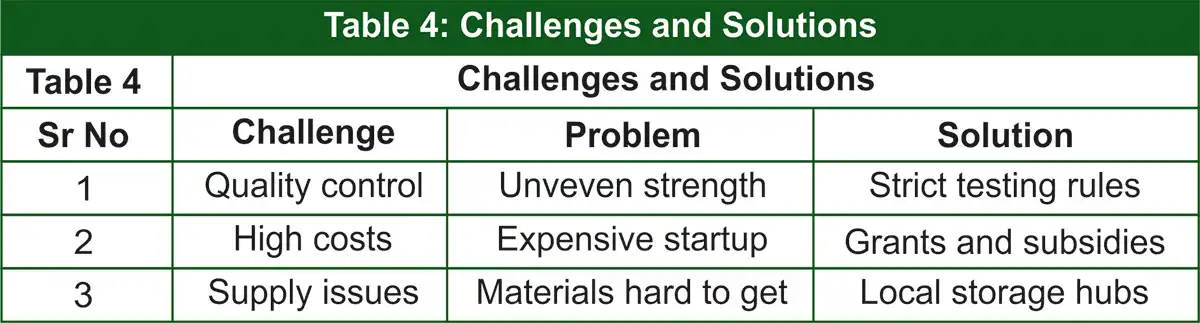
Challenges and Solutions
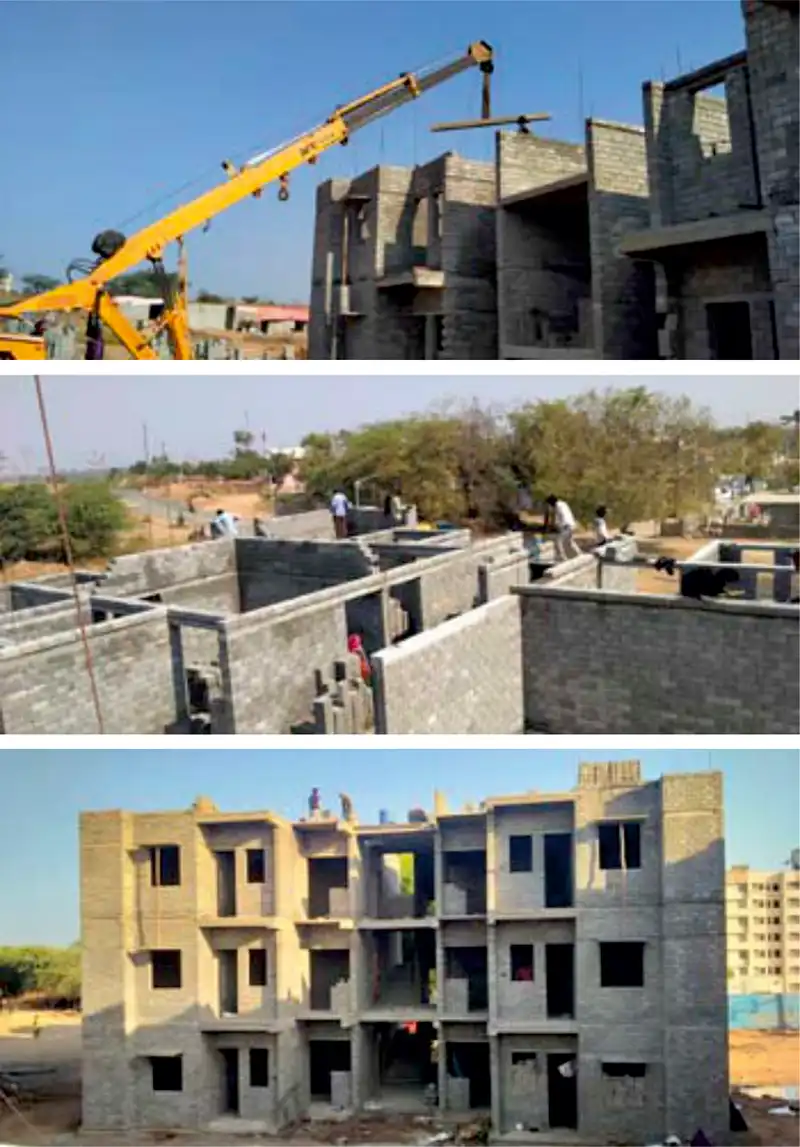
Conclusion
Low-carbon concrete is transforming construction practices in India. Recent pilots under PMAY and PMGSY in 2025 demonstrated that the use of fly ash, slag, geopolymer binders, and CO2-trapping mixes can reduce emissions by 20–50% and lower costs by 10–20%. At the same time, these approaches improved resilience of homes and roads to floods, heat, and earthquakes.However, large-scale adoption requires further progress. Consistent quality testing, affordable equipment, and reliable supply chains are essential for ensuring performance and scalability. India’s experience provides a strong case study for other countries, highlighting that low-carbon construction can deliver both environmental and social benefits. Moving forward, engineers and policymakers must strengthen standards, support research, and encourage international collaboration.
The key challenge remains: are we building only for the present, or are we preparing for a more sustainable future?
Acknowledgements
The author gratefully acknowledges the Ministry of Housing and Urban Affairs, the Ministry of Rural Development, and the Building Materials and Technology Promotion Council for their support and for providing the necessary data.References
- Building Materials and Technology Promotion Council (BMTPC). (2025). Guidelines for low-carbon concrete. New Delhi: BMTPC.
- India Brand Equity Foundation (IBEF). (2025). Cement industry report. Retrieved from
- International Energy Agency (IEA). (2022). Cement technology roadmap. Paris: IEA.
- Ministry of Housing and Urban Affairs (MoHUA). (2025). PMAY progress report. New Delhi: MoHUA.
- Ministry of Rural Development (MoRD). (2025). PMGSY dashboard. New Delhi: MoRD.
- Scrivener, K. L., John, V. M., & Gartner, E. M. (2018). Eco-efficient cements: Potential economically viable solutions for a low-CO2 cement-based materials industry. Cement and Concrete Research, 114, 2–13.
- Department of Science and Technology (DST). (2025). CCU concrete testbeds launch. Retrieved from
- Bureau of Indian Standards (BIS). (2013). IS 3812: Specification for pulverized fuel ash. New Delhi: BIS.
- Bureau of Indian Standards (BIS). (2000). IS 456: Plain and reinforced concrete – Code of practice. New Delhi: BIS.
- Bureau of Indian Standards (BIS). (2016). IS 1893: Criteria for earthquake resistant design of structures. New Delhi: BIS.
- Indian Roads Congress (IRC). (2018). IRC:37 – Guidelines for the design of flexible pavements. New Delhi: IRC.
Published on:
15 October 2025
Published in: ICCT, September-October, 2025
Share:
We Value Your Comment