
Budget Reaction

Manish Agarwal, Partner and Leader- Infrastructure, PwC India

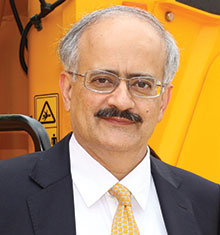
Amit Gossain, MD, Kone India

The other positive is the announcement of upgrading 600 major railway stations, and all railways stations with more than 25,000 footfalls to have escalators to enable 'ease of living'. We are well equipped to provide heavy-duty, technologically strong and long-lasting escalators for high traffic areas as seen in metro stations, but the government has to announce the specifications. The budget has also set the right course for the Aviation Sector's growth by announcing substantial increase in airport capacity.
Mr. Sandeep Singh, M.D, Tata Hitachi

Targeted disinvestment in 2017-18 is expected to be significantly exceeded - boosting revenue. On the flip side, relaxation of fiscal deficit both for 2017-18 (3.2% to 3.5%) and 2018-19 (3.0% to 3.3%) could impact the rupee and add to inflation. This, along with the increase in customs duties for certain components and aggregates of automotive industry, and 10% social welfare surcharge, will drive up cost of manufacturing.
Vinod Aggarwal, MD & CEO, VECV

From the CV industry perspective, we are extremely happy to see the government's continued focus on infrastructure. With 21% more expenditure towards infrastructure and allocation of Rs. 5.97 lakh cr, the government is ensuring India continues to charge ahead and remain one of the fastest growing economies in the world. The FM also confirmed exceeding the highway construction target of 9000 km by end of FY18. India is continuously evolving on the back of improving road connectivity and pace of urban development and Smart Cities.
Sorab Agarwal, Executive Director, ACE

Budget is also strengthening the railway network and enhancing railways' carrying capacity. The capex for Railways pegged at Rs 1,48,528 crore for FY2018-19, will not only boost the transport system but also create a huge opportunity for ancillary industries. UDAAN initiative is also set to escalate the Airways sector and provide opportunities for companies in the infrastructure space.
Affordable housing schemes and government's investment of 2.04 lakh crore for building 100 Smart Cities will further enhance development in the Infra sector. Overall, this is a growth budget with high emphasis on infrastructure, health, education and agriculture sectors."
Yadupati Singhania, CMD, JK Cement Ltd

The focus of the government will likely remain on effective and timely execution of existing projects, with the FM promising construction of 9,000 km highways by the end of FY19. Also, it was encouraging to see the reinforcement of the government's commitment to the Bharatmala Project, which will boost demand in the next financial year. Announcement of the Affordable Housing Fund will create an impetus for the housing sector, which contributes around 65% to India's cement demand."
Peeyush Naidu, Partner, Deloitte India

The budget has maintained focus on required capital expenditure for Indian Railways for the year 2018-19 for modernization and safety-related initiatives as well as capacity expansion. The key imperatives, going forward, would be for the Ministry to focus on leveraging technology and private sector involvement in effectively and efficiently meeting mobility solution expectations of its different clients (freight, different passenger segments, etc)."
Jayant Mhaiskar, VC & MD, MEP Infrastructure Developers

The government continues to boost the infrastructure sector, (which is the backbone of the country's overall development), with a proposed Rs 5.97 lakh crore additional budgetary allocation. The Bharatmala Pariyojana has been approved for providing seamless connectivity of interior and backward areas and borders of the country to develop about 35000 kms in Phase-I at an estimated cost of Rs.5,35,000 crore. To raise equity from the market for its mature road assets, NHAI will consider organizing its road assets into Special Purpose Vehicles and use innovative monetizing structures like Toll, Operate and Transfer (TOT) and Infrastructure Investment Funds (InvITs). Overall, a populist budget, which adheres to the fiscal discipline, with emphasis on growth and development of the economy.
R Shobha, National Director, Project Management, Colliers International India


Ashwin Sheth, CMD, Sheth Group
The government has taken a step in the right direction by focusing on infrastructure development with respect to road and rail connectivity as this will catalyze growth of the housing sector. Initiatives to boost the Mumbai suburban railway network will significantly boost the residential and commercial market in the city. Moreover, focus on the smart cities project will help in improving the standard of living.
However, clarity on single window clearance and GST was much anticipated. We also expected incentives for first-time home buyers, which would have helped increase demand and create equilibrium in the demand-supply gap. Most importantly, granting industry status to the real estate sector, which is one of the largest contributors to the growth of the economy, was the need of the hour. While this budget focuses on the overall growth of the economy, we will adopt a wait and watch approach and hope adequate measures are taken to boost the real estate sector."
Khushru Jijina, MD, Piramal Housing Finance


EAPL would be supporting Mr. Arun Jaitley's initiative of full electrification on providing electricity connection to nearly 4 crore poor households under Sobhagya Yojana. Also, with the announcement of promoting electric vehicles. The Centre may lower GST and pass benefits to buyers, which will give a major impetus to the shift to clean energy.
However, in the renewable energy sector, there are a number of policy decisions related to import duties and domestic manufacturing, which needed to be addressed to further boost the sector. Also, achieving the target of 175 GW of renewable energy capacity and generating it by 2022 requires a lot more to be done than simply increasing the budgetary allocation.
Faizal E Kottikollon, Chairman, KEF Holdings

Samyak Jain, Director, Siddha Group

We applaud the positive outlook towards employment in rural development and healthcare services. We anticipated some announcements on income tax relief, single window clearance, granting industry status to real estate and clarity on GST with respect to subsuming stamp duty and registration charges, but we hope the government takes measures to address this in the near future. The proposed budgeted expenses in various sectors such as Rural Infrastructure, Health and Fishing will have a positive impact on the economy and we look forward to a productive year."
Ambresh Tipnis, Director, Shivalik Ventures



Kishore Bhatija, MD, Real Estate Development - K Raheja Corp

The Real Estate industry was seeking some very important amendments like the industry status, streamlining of taxation norms for REITs, rationalisation of GST, and extension of tax SOPs for SEZ units, which we hope will be addressed soon. Having said that, the progressive nature of the budget has paved way for economic growth, and we look forward to a good year.
Venkatesh Gopalkrishnan, CEO, Shapoorji Pallonji Real Estate


A wide array of steps has been announced ranging from enhanced MSP for Kharif crops, upgradation of Rural Haat-s to enable small and marginal farmers to sell directly to bulk purchasers and consumers, expansion of rural infrastructure, enhanced outlay for irrigation and adoption of cluster model for horticulture, all of which augur well for the rural sector. Allocation of funds for fishery, aquaculture, animal husbandry, dairy farming, agro-logistics services, extension of crop loans to lessee cultivators and schemes like National Bamboo Mission can fuel entrepreneurship at the rural level. I welcome the setting up of an Agri-Market Infrastructure Fund with a corpus of Rs 2,000 crore. The decision to set up 42 Mega Food Parks can give a fillip to the agro-processing industries, however there is not much clarity on how the government intends to build those - on its own or in collaboration with private sector.
In infrastructure sector, two areas of focus have been on roads and railways. The envisaged investment of Rs 5.35 lakh crore (for Phase I of Bharatmala programme) for roads and capex of Rs 1.46 lakh crore for railways will also result in growth for construction equipment manufacturing companies, construction companies and contractors, and infrastructure financing institutions. It will boost employment generation as construction is the second largest employment generator after agriculture.
Another laudable step taken by the government is to develop the corporate bond market and the amendments proposed in the stamp duty structure. It is quite important to develop the capital market which has been our request for the last few years in order to bring more depth into the debt capital market. There are certain steps to be taken so that the conceptual thinking of the government can be converted into implementable actions. One of the most important areas to be addressed is to enable, facilitate and encourage Pension Funds, Provident Funds and Insurance Companies to invest in bonds issued by infrastructure companies even if those bonds are investment grade and do not fall in the category preferred by these fund repositories.
The introduction of the tax on long-term capital gains could have been delayed by another few years, especially keeping in mind that the equity capital market is the only option for many companies for mobilising resources as the banks are presently shy to lend to manufacturing and infrastructure companies. This would surely dampen the buoyant investment spirit which has been prevailing.
Published on:
03 February 2018
Share:
We Value Your Comment