
DBL Calculated Moves

When you look back at your 30 years of experience in infrastructure construction sector, what are the moments/decisions, you recall have made Dilip Buildcon one of India's largest infrastructure construction companies?
I look back at 30 years of building a vast array of projects, ranging from roads, tunnels, and bridges, it has been a journey of experience and evolution. Each project is different and teaches you new things but some projects have helped us to scale new heights of excellence. Among many that come to my mind, the one that stands out is the Ahmedabad-Godhra road project, built between 2010 and 2013. It was a defining moment for the company, as the scale and extent of the project was greater than any other we had taken on in the past. Signing the contract and delivering a quality product was a mammoth task, but by the time we completed the project, our company had set new benchmarks regarding performance. We adopted the latest technology, which had its inherent challenges, but in the end, the experience stood us in good stead for future projects and helping us stand out amidst the clutter. All our decisions, regarding projects, are made with the belief that we have the capability and skills to deliver quality, every time.
What is DBL's organizational structure, and the infra areas where it has its presence and operations?
If there is one structure that defines Dilip Buildcon, it is Meritocracy. We believe, instead of a rigid hierarchy, there has to be fluidity and flexibility in responding to challenges. While we emphasize values like integrity and loyalty, we encourage honesty and openness between executives, managers, and assistants. We are a professionally managed firm and it is our belief that frank exchange of opinions and ideas is the driving force of our success in this competitive field. Our common corporate goal is to deliver good quality products with greater transparency and punctuality. We also give great importance to innovation and technological advancements and always strive to adopt the latest methods in our projects.
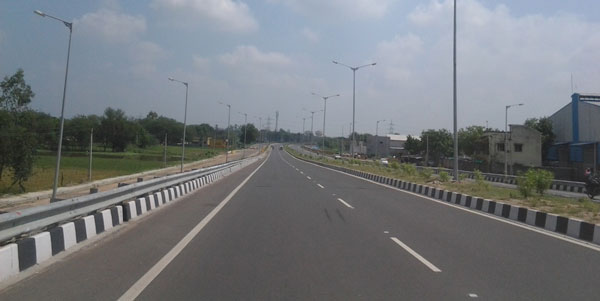
We are present in 15 states from Punjab to Karnataka, and are doing the whole range of infrastructure projects from roads, bridges, dams, canals and water supply to buildings and mining.
In this (quite) tough economic scenario, where most companies are registering negative growth, it's good to see that DBL has registered impressive growth. What strategy paid you back and has kept you insulated from high head wind?
Yes we have grown almost 10 times in the last 5 years when many of our peers went bust. This became possible because we followed a very calculated strategy of focusing on our EPC strengths and staying away from irrational bidding just to build an order book. When we started our operations, one thing we wanted was to remain a low debt company. We will not be like many of our peers, perpetually drowning in debt and constantly experiencing a strain on their resources. We chose not to bid aggressively for toll projects, but instead we sub-contracted from larger companies. This decision helped us avoid inherent risks in these projects, and we received a fixed sum with the decided profit margin, at the completion of the project.
What, according to you, is the core strength of DBL?
To cite a cricketing analogy, just like every batsman has his signature style, something he is known for and excels at; we too have our defining trait. Dilip Buildcon's distinguishing factor is undoubtedly the speed with which we deliver high-quality projects with most of them being completed well before their deadlines. At Dilip Buildcon, we acknowledge discipline and punctuality as two principal values and expect everyone to follow. In India, unfortunately, when delays in road projects are the norm, being able to complete our projects before the due date puts us a notch above others. The government has also awarded us bonuses for our efforts in delivering projects before time, a feat which is unique to us.
DBL is known for its quest for acquiring world-class technology. Please tell us about your equipment strength and latest technologies you're contemplating to induct in your equipment bank?
How do you assess the government's last two years efforts to bring infrastructure sector's glory back on track?
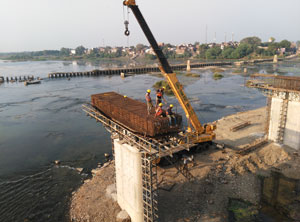
We highly appreciate the efforts taken by the Government under our very visionary minister, Shri Nitin Gadkari ji, to bring the infrastructure sector back on track. They have made an impact by tackling three major pitfalls in the infrastructure space and thus giving a fillip to road development. They aggressively restarted the stalled projects and took bold decisions, improved award activity and broke through regulatory hurdles. The Ministry of Road Transport and Highways (MoRTH) took projects in their hands and set up Project Implementation Units (PIUs) in states, apart from implementing work through the National Highways Authority of India (NHAI). The record length of road works in the last two years can be attributed to these actions. Environmental hurdles were also overcome in this timeframe.
Seeing MoRTH's effort to step up roads construction from 30 – 40 km per day; do you think that we have this much expertise and workforce strength to take this daunting task into a reality and can we build quality roads at such high speed within the stipulated time frame?
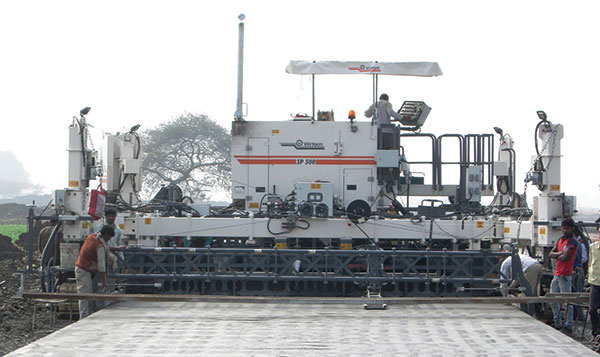
Well, I believe that Dilip Buildcon has the experience and expertise to do its bit in meeting the aggressive targets set by the government. First of all, we have an experienced team ably led by our dynamic CEO, Devendra Jain. Then we have over 20,000 trained manpower working full time for the company. Adding to that, we own about 7,000 pieces of equipment, granting us the flexibility to allocate our resources, which include manpower and machinery, within the stipulated time-frame of each project. We are also very deeply backward-integrated, so we make bricks, pipes, signage, and anything else that can be done in-house. So, basically we are a full service vertically integrated infrastructure player with in-house expertise for each aspect of any project. Thus, we believe, as a sector, we are ready to adhere to the responsibility given to us by the government. Currently, DBL alone is building 2-3km of the government's target.
How is DBL preparing itself to play a major role in nation building?
I believe that infrastructure is the basis of development for any country. Roads, Railways, Dams, Canals, Ports, Power Plants, etc., all help in the economic growth of a country. At DBL, we have taken on numerous projects all over the country to play our role in helping the nation grow. We eagerly await the direct and indirect impact of our projects on the economy. For the time being, we are happy with our position and want to continue to deliver high-quality infrastructure, before time.
The government is trying its best to address all the issues of the infrastructure sector's stakeholders. In your view which issues should be given priority to bring back investors and contractors confidence?
Yes, the government has already done a lot in the last two years, though there are many things that still need to be done. Generally speaking, investors and contractors look at the same thing - clarity on policy, fair and equitable treatment to all, on-time payments, easy dispute resolution mechanism and quick decision making. The primary concern for contractors and developers are the regulatory hurdles slowing down the pace of road development. We hope one day these regulatory issues can be done away with altogether since after all we are building government assets. The government should also focus on improving the quality of DPRs, so that there is little or no arbitration later. This can be done only by getting better consultants. We also hope to see the bidding process improving from the current lowest bid mechanism. There should be a more holistic approach on evaluating bids such as looking at other parameters besides price. Government should look at company's track record, employee strength, and equipment strength besides just price which will ensure a project to be done on time. Finally, the government should foster innovation and be open to new cost-effective technologies.
Published on:
12 July 2016
Published in: NBM&CW July 2016
Share:
We Value Your Comment