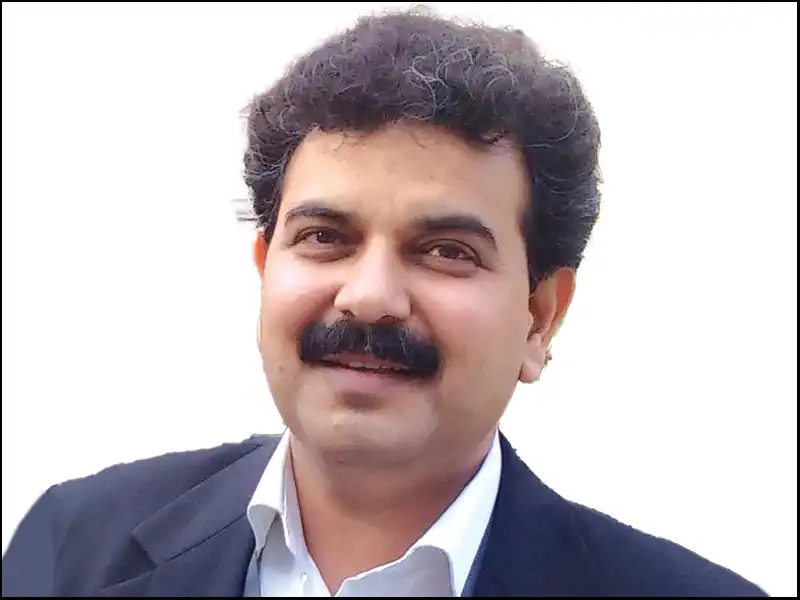
As I look at where India stands today, one thought keeps coming back to me: every phase of our nation's development has had its defining challenge. The 1990s were about economic liberalisation. The following decades were about creating infrastructure at an unprecedented scale. But I believe the decade we are now entering will be remembered for something entirely different. It will not be judged by how many projects we announce or how much money we allocate. It will be judged by how efficiently, how quickly, and how well we execute them.
India has truly entered the Age of Execution.
The vision of Viksit Bharat 2047 has placed infrastructure at the centre of India's economic transformation. Never before has the country witnessed such sustained policy support for capital investment. Public capital expenditure has grown from about ₹2.6 lakh crore in FY2017-18 to
₹11.21 lakh crore in FY2025-26, and the Union Budget has proposed increasing it further to ₹12.2 lakh crore for FY2026-27. The government's commitment to infrastructure-led growth is evident, and so is the confidence that infrastructure will continue to be the engine of India's economy.
For years, the industry argued that the biggest obstacle to infrastructure development was inadequate funding. Today, the argument no longer holds. The question is no longer whether we are investing enough. The question is whether we are delivering enough.
However, the numbers suggest otherwise.
According to data monitored by the Ministry of Statistics and Programme Implementation (MoSPI), nearly 2,000 central infrastructure projects, representing investments exceeding ₹42 lakh crore, are together burdened with cumulative cost overruns of more than ₹5.6 lakh crore. Hundreds of projects continue to miss their scheduled completion dates, delaying not only economic returns but also locking up valuable public resources and placing enormous financial pressure on contractors, consultants, suppliers, equipment manufacturers and the entire construction ecosystem.
The slowdown is becoming visible even in sectors that have traditionally driven India's infrastructure growth. ICRA estimates that execution by the Ministry of Road Transport & Highways could moderate to about 9,000-9,500 kilometres during FY2026, roughly 25-26 kilometres per day –– the slowest pace in nearly five years. Land acquisition delays, environmental clearances, prolonged project preparation, slower awarding of contracts, payment delays, and fragmented decision-making continue to affect execution despite strong policy intent.
Beyond these execution delays, several systemic issues continue to undermine project delivery. Procurement decisions still tend to favour the lowest initial cost instead of lifecycle value. Digital planning is often treated as optional rather than essential. Mechanisation is improving, but not uniformly. In many projects, conventional practices continue to dominate despite the availability of far better alternatives.
The industry has repeatedly demonstrated that it has the capability to deliver world-class infrastructure. The Delhi Metro, the Chenab Bridge, the Atal Tunnel, the Mumbai Trans Harbour Link, and numerous expressways, airports and metro systems are a testimony to what Indian engineers, contractors and technology providers can accomplish when planning, execution and accountability come together.
The encouraging reality is that India does not need to reinvent the solution. What it now needs is to institutionalise the practices, technologies and governance frameworks that make such successes repeatable across every project.
The next leap forward will depend not on how much we build, but on how well we deliver. The Age of Execution has begun.Digital twins, Building Information Modelling (BIM), AI-enabled project monitoring, drone-based surveys, telematics, predictive maintenance, intelligent machine control, advanced construction materials, and highly productive equipment are no longer futuristic concepts. They are commercially available, increasingly manufactured in India, and already delivering measurable results in many parts of the world. Yet their adoption across Indian projects remains inconsistent. The technology gap, therefore, is not India's biggest challenge. The execution gap is. The priority is no longer finding solutions, but implementing them effectively across every project.
What we now need is consistency.
We need stronger project preparation before tenders are floated. We need realistic DPRs, predictable approvals, timely payments, greater accountability across the project lifecycle, wider adoption of digital technologies, and procurement systems that reward quality and long-term value rather than simply the lowest bid. Speed, scale and quality cannot exist independently. Infrastructure built quickly but poorly becomes a liability. Infrastructure built well but delivered years late loses much of its intended value. The future belongs to projects that achieve all three together.
The theme of this 32nd Anniversary Issue reflects precisely this challenge. Our cover story ‘Building Viksit Bharat: Speed, Scale & Quality in Infrastructure Delivery’ brings the perspectives of over 80 contractors, project owners, equipment manufacturers, consultants and technology providers to understand what it will take to consistently deliver projects on time, within budget, and to the highest quality standards. Alongside it, we examine why project allocations continue to rise while execution is slowing in several sectors, and what structural reforms are necessary to restore momentum.
For more than three decades, NBM&CW has remained committed to documenting not only the achievements of this industry but also the conversations that can help shape its future. We have always believed that progress comes not from celebrating success alone, but from asking difficult questions and encouraging meaningful dialogue.
As we celebrate this 32nd milestone, we reaffirm the commitment. India's infrastructure ambition has never been greater. The resources are available. The technologies exist. The expertise is here. The next leap forward will depend not on how much we build, but on how well we deliver.
The Age of Execution has begun.
As always, I look forward to your comments, whether they validate, challenge, or build upon the thoughts shared here. After all, it is your perspective that keeps this dialogue alive, relevant, and meaningful.
S.A. Faridi
Managing Editor