Anyone who has spent real time on large infrastructure projects knows that the tension between speed, quality, and cost plays out every single day on site. The projects that consistently deliver on all three tend to share a few things in common.Localised manufacturing, predictive maintenance, and fuel-efficient equipment are what determine whether a project finishes within budget and continues to deliver value long after handover.
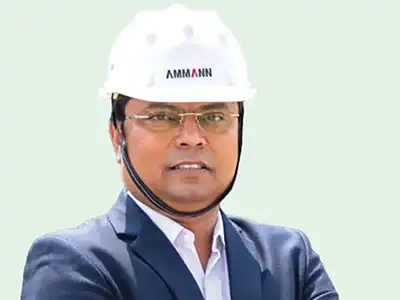
Dheeraj Panda
Managing Director
Ammann India
Equipment capability is the starting point. High-capacity asphalt plants outputs ranging from 120 to 260 tonnes per hour, with modular foundation free designs, mean teams can mobilise quickly and keep operations running without interruption. When you are working to aggressive deadlines, every hour of downtime has consequences. Digital control platforms reduce that risk by taking variability out of continuous mixing and paving operations.
But speed means nothing if what you are building does not last. Quality must be built into the process from the start. Advanced plant control systems handle precise material proportioning automatically. Intelligent compaction technologies give operators real time density readings, reducing rework and producing pavements that perform over time.
Sustainability has also changed character. It used to be treated as a constraint that added cost and complexity. That is no longer the case. Using Reclaimed Asphalt Pavement, warm mix asphalt technologies, and industrial byproducts like steel slag and fly ash reduces emissions and conserves resources whilst also bringing material costs down. The environmental and economic arguments now point in the same direction. On cost, the conversation goes wrong when it starts with the purchase price. The real economics live in the lifecycle.
The projects that execute well on all these fronts are the ones where these decisions were made together at the planning stage, rather than in silos. When that happens, speed, quality, and cost efficiency stop working against each other.
India is building at a pace that few countries have attempted, and the technology available to support that ambition has advanced significantly. Across project sites today, the shift from labour intensive conventional processes to smarter, connected systems is already well underway.
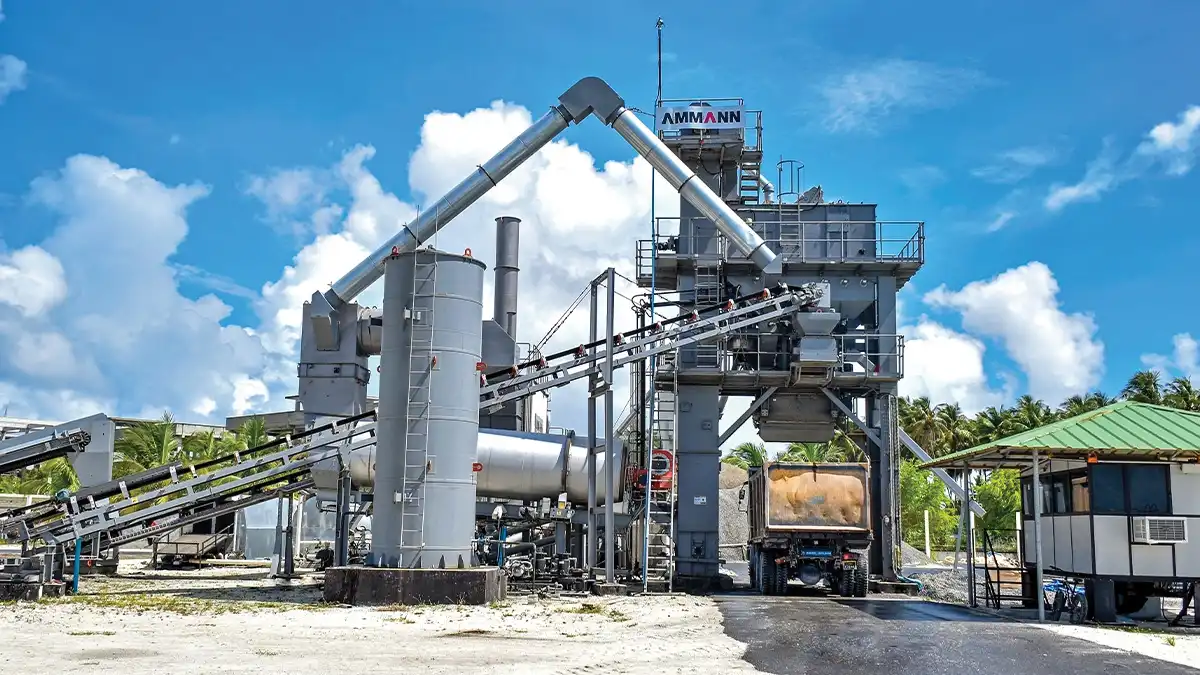
The Ganga Expressway project illustrates what is now achievable. Three Ammann VT 180 asphalt plants produced over 20,105 metric tonnes of bituminous concrete in a single 24-hour period, enabling the construction of 34.24 lane kilometres in one day. That was not simply a matter of putting more machines on site. It came from modular foundation free plant design and advanced automation working together, keeping operations running with minimal downtime and consistent mix quality throughout.
Digital quality control has changed the dynamic on site in practical ways. When plant control systems handle aggregate dosing, material metering, and temperature regulation automatically, mix quality stops depending on individual judgement calls and becomes consistent by design. Paired with intelligent compaction technologies giving operators real time density readings, rework reduces significantly and pavement performance improves over the long term.
Safety has advanced considerably as well. Features like 360 degree camera systems, collision avoidance, and automated braking are now standard on well-run construction programmes. The use of advanced simulators, where operators train in a virtual environment before working on live projects, has also made a real difference. Workforce readiness improves and sites carry less risk.
The sustainability picture has shifted in ways that matter commercially. Reclaimed Asphalt Pavement utilisation at up to 60 per cent, moving toward 100 per cent, cuts both environmental impact and material costs. Warm Mix Asphalt technologies lower production temperatures by 50 to 60 degrees Celsius, reducing fuel consumption by around 25 per cent. Electric rollers and hydrogen ready burners are already in use on Indian project sites today.
Predictive maintenance has also changed how contractors manage their fleets. When AI enabled platforms can identify potential failures before they occur, the breakdowns that derail schedules and inflate costs become far less frequent, and total cost of ownership comes down across the board.
What all of this adds up to is straightforward. Technology has reached a point where delivering quickly and delivering properly are no longer in conflict. Given the scale of what India needs to build over the coming years, this matters a great deal.