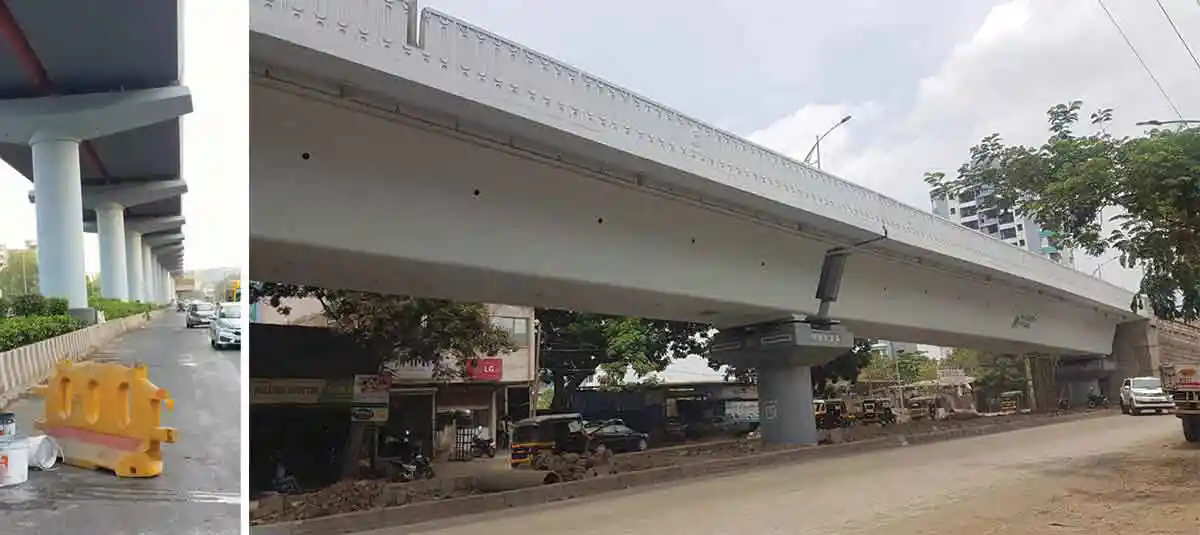
Faircoat Anti-Carbonation Coating Protects Concrete Structures Like Flyovers, Bridges & Buildings

To protect concrete structures like Flyovers, Bridges, Parking areas, Big Commercial and Residential Buildings, the normal decorative exterior paint will not serve the purpose as these paints are not vapour permeable; so the paint will peel off in humid weather. In fact, concrete structures need anti-carbonation coating that has special properties. For example, Fairmate’s ‘FAIRCOAT’ is well known and is protecting several renowned structures in India.

Faircoat Anti-Carbonation Coating Protects Concrete Structures Like Flyovers, Bridges & Buildings

Properties of FAIRCOAT Anti-Carbonation Coatings
This ready-to-use aliphatic elastomeric-based coating contains special polymers and fillers. It provides extremely tough protective decorative coating that allows the surface to breathe. It has been specially designed for the decoration and protection of concrete against attack from atmospheric carbon dioxide, airborne chlorides, acid rain, weathering etc. Properties include the following:
  • High flexibility with crack bridging capabilities up to 2mm
  • Breathable in nature
  • UV resistant
  • Very good bonding characteristic with the substrate
  • Chloride ion diffusion is zero as per ASTM C 1202
  • Resistance to carbon dioxide diffusion is > 50mm thickness of equivalent air layer as per EN 1062
  • Non-toxic and non-flammable
  • Good weathering properties (anti-algal & anti-fungal).
A wide range of exposure conditions such as atmospheric carbonation, polluted urban/industrial environment, and marine and chemical atmosphere, can damage concrete and its embedded steel reinforcement. A major factor in concrete decay is carbonation, caused by carbon dioxide (CO2) in the atmosphere. Carbonation occurs when carbon dioxide reacts with calcium hydroxide of concrete and deposits as calcium carbonate, which reduces the protection of embedded steel reinforcement. This, in turn, results in reinforcing steel becoming susceptible to attack by water and oxygen, causing corrosion of the steel and eventually spalling of the concrete.

Chloride ingress, in which chloride ions from the de-icing salts or from salt water, can penetrate the concrete structure and cause fast pitting corrosion of the reinforcement bars. The faster CO2 and chlorides penetrate into the concrete, the more severe will be the aggression. This aggression is faster in coastal areas (due to presence of chloride ions in seawater) and areas with very high density of vehicles as the high emission of carbon monoxide from vehicles converts into carbon dioxide.

Application Areas
  • New Buildings & Bridges: FAIRCOAT can be applied as an anti-carbonation coating in new buildings and bridges, which will enable it to resist attack by carbon dioxide, airborne chloride, and rain.
  • Existing Building & Bridges: It can be applied as a protective coating in existing buildings and bridges to protect them from carbon dioxide, air borne chloride, and rain.
  • Interior Decoration of Buildings: As FAIRCOAT is non-flammable and has excellent waterproof characteristics, it can be used in interior decoration.
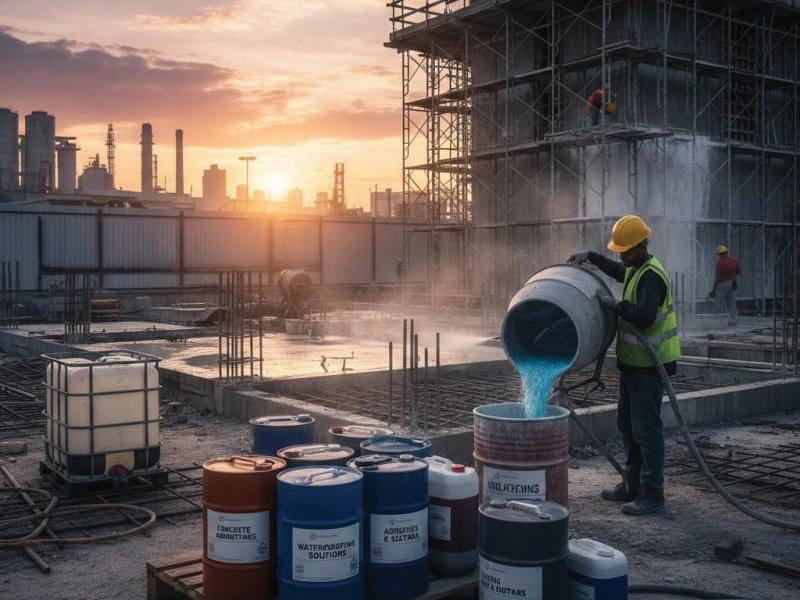
To achieve effective anti-carbonation coating, a two-coat application is recommended. FAIRCOAT covers 3-4m2 per kg with a recommendation of two coats for a dark shade. The surface texture and porosity must be taken into account while estimating quantities.

Want to connect with the manufacturer or get more details?

Get in Touch
📅 Published on: 08 June 2021
📖 Published in: NBM&CW June 2021
🔗 Share:
We Value Your Comment
How useful is this information?

NBM Media

30+ years of reporting on infrastructure, construction, architecture, & real estate across print, digital, and social media.