India’s construction chemicals market is growing fast but the story isn’t as straightforward as the numbers suggest. With most demand still coming from infrastructure, this article looks at why companies may need to rethink their approach and build a stronger presence in the renovation segment before the cycle shifts.
India's construction chemicals market is one of the most compelling growth stories in the building materials sector right now. Rs 40,500 Crore in 2025. Rs 1,44,000 Crore by 2035. A compound annual growth rate of 13.4%. Waterproofing and adhesives already commanding 34.31% of total market share, with waterproofing growing at the fastest CAGR of any product segment in the category. The numbers, by any measure, are arresting.
But buried inside that growth story is a structural risk that almost none of the companies riding it are talking about. And the one company that has quietly insured against that risk has done so not through a new product, not through a government relationship, and not through a certification programme. It has done so through a distribution model that most of its competitors do not have and cannot build in less than a decade.
The question that every construction chemicals’ CEO in India must answer in 2026 is not about product. It is about customer. When the NIP cycle slows, and all capex cycles slow, whose customer keeps buying?
The Rs 40,500 Crore Market with a Single Engine
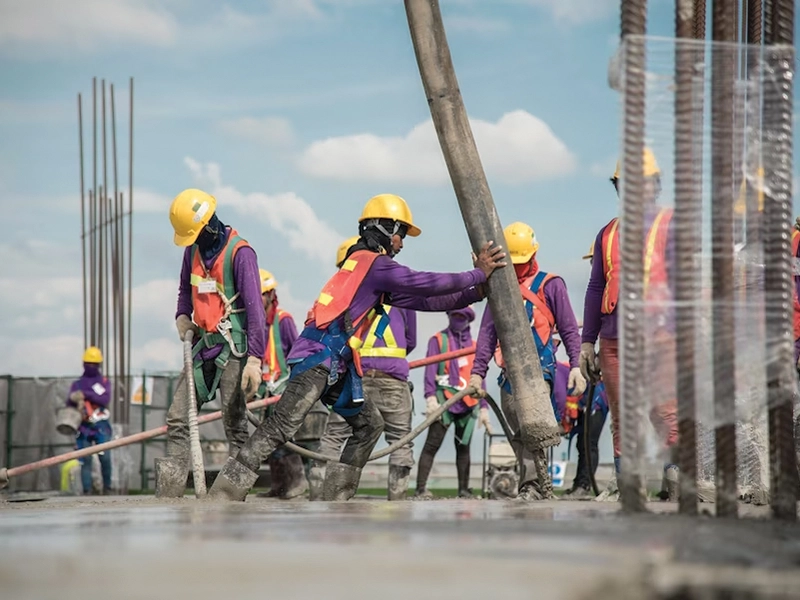
The first thing to understand about India's construction chemicals market is that its growth is not broad-based. It is concentrated. Infrastructure applications command 62.6% of total market share in 2025. Highways, metro rail, ports, industrial corridors, expressways, and government-funded affordable housing are not one driver among several. They are the market. The remaining 37.4% is shared between residential, commercial, and industrial applications, with residential renovation the most underdeveloped of these segments relative to its actual population-level demand.The numbers behind this concentration are specific and verifiable. The National Infrastructure Pipeline has committed Rs 111 lakh crore through 2025. PM Gati Shakti is embedding infrastructure investment logic into every state-level planning process. The Delhi-Mumbai Expressway alone, at 1,386 kilometres, has driven sustained demand for high-performance admixtures, waterproofing compounds, and protective coatings along its entire corridor. The metro rail expansion in Bengaluru, Pune, Hyderabad, and Chennai has created multi-year demand for tunnel waterproofing, structural repair chemicals, and concrete admixtures. The Bharatmala and Sagarmala projects have added port and highway corridor construction to the infrastructure chemicals pipeline.
Government capital expenditure grew 32.4% during April-October FY2026, and a proposed new NIP of Rs 1,50,00,000 Crore for 2026-32 is under discussion. On the surface, this looks like an infrastructure chemicals company's ideal operating environment. Visibility, scale, and continuity of demand.
But here is the problem that infrastructure visibility creates: it trains entire businesses, cultures, sales forces, and distribution systems to serve one type of customer. The NHAI project manager. The metro rail engineering procurement construction contractor. The state PWD. And when that customer's budget compresses, as it has in every infrastructure capex cycle in India's economic history, the company that has built itself entirely around that customer finds that it has no shock absorber.
This is not a hypothetical. India's infrastructure capex has followed a consistent pattern: 3 to 4 years of high acceleration, followed by 12 to 24 months of consolidation driven by election cycle conservatism, state government fiscal tightening, or external shocks. In FY2020 and FY2021, government infrastructure spending compressed significantly. In FY2024, state capex execution fell short of central commitments in multiple large states. The consolidation always comes. The question is which construction chemicals company is positioned to absorb it.
The Market Structure Nobody Is Building Against
India has approximately 6 crore urban housing units built before 2000. The vast majority were constructed without systematic waterproofing specifications. Without tile adhesive requirements in the building plan. Without the construction chemical product categories that are now standard in new residential projects. These structures are aging in a climate that is among the most demanding on building materials anywhere in the world. India's monsoon season is 4 months of intensive water stress on every roof, wall, bathroom, terrace, and foundation in the country. Buildings built before 2000 face this stress with materials and systems that were not designed to resist it.The repair and renovation cycle this creates is not occasional. It is structural and recurring. A residential waterproofing application lasts 5 to 7 years under Indian climate conditions. A tile re-grouting or adhesive application is triggered by renovation every 8 to 12 years. A leaking balcony or bathroom is not a warranty claim — it is a consumer purchase decision made at the point of frustration, not at the point of project specification. This demand does not correlate to government spending. It does not appear in any infrastructure project pipeline. It does not require a tender. It happens 365 days a year, in every city and town in India, driven by the same force that drives every consumer market: accumulated need reaching a purchase threshold.
The residential renovation chemicals market in India is estimated to be growing at a 14.9% CAGR through 2032, the fastest of any application segment in the construction chemicals category. This is being driven by rapid urbanisation pulling people into cities where they occupy existing housing stock, rising middle-class income enabling renovation spending that was previously deferred, and the increasing awareness of branded waterproofing and adhesive solutions among homeowners who were previously using cement as a substitute for construction chemicals.
Despite this, the overwhelming majority of construction chemicals companies in India are organised, staffed, and incentivised to serve the infrastructure market. Their sales teams carry project specifications, not consumer brand materials. Their distribution reaches construction sites, not hardware shops. Their technical service engineers are trained to solve concrete admixture problems at a metro tunnel, not waterproofing system failures at a 15-year-old residential terrace. The channel infrastructure for residential renovation simply does not exist in most of these companies because it was never built.
Two Business Models Operating in the Same Category
To understand the residential renovation gap, it helps to map the commercial architecture of the two dominant models in India's construction chemicals market.The Infrastructure-Led Model
BASF Master Builders Solutions, Sika AG, Fosroc (now acquired by Saint-Gobain in a transaction completed in February 2025), and Ardex Endura are all fundamentally infrastructure-led businesses in India. Their commercial engines are built around specification selling: getting construction chemicals written into project documents at the design and engineering stage, then executing supply agreements with EPC contractors and construction companies. Their sales organisations have deep relationships with structural engineers, project management consultants, and government agencies. Their technical expertise is concentrated in high-specification infrastructure applications: metro tunnel waterproofing, expressway concrete admixtures, industrial flooring systems, bridge repair and rehabilitation.This is a high-value, technically demanding, and well-defended market position. Infrastructure projects have long lead times, which gives these companies visibility. They have high technical barriers to entry, which limits commoditisation. They carry strong brand credibility among the engineering community, which creates specification stickiness.

The Renovation-Led Model
Pidilite Industries is not, at its commercial core, a construction chemicals company. It is a branded consumer and applicator network company that happens to operate in the construction chemicals space. This distinction is the most important strategic fact in the category.70% of Pidilite's revenue comes from repair and renovation applications. 30% comes from new construction. The company's consolidated revenue crossed Rs 14,500 Crore in FY2024-25 with EBITDA margins sustained at 21 to 22%. The construction and paint chemicals segment alone contributes approximately 20% of standalone revenues under the Dr. Fixit and Roff brand families. These are not infrastructure project revenues. They are consumer and small contractor revenues generated through a distribution architecture that has no parallel in the category.
Pidilite has built a network of 4,800 distributors servicing over 2,00,000 dealers, retailers, and contractors across India. Its rural reach initiative, Small Town Gold, is targeting penetration into more than 65,000 villages with populations under 10,000. Its Dr. Fixit Centres have created branded service touchpoints that convert homeowner awareness into purchase. Its applicator training programme, built over two decades, has created a community of certified waterproofing and adhesive applicators who recommend Dr. Fixit by name at the point of homeowner decision. The Fevicol Champions Club has done the same for adhesives in the carpenter ecosystem.
This distribution architecture took 20 years and systematic investment to build. It cannot be replicated in 2 or 3 years. And it produces a revenue stream that has a structural characteristic no infrastructure revenue can match: it does not stop when the government pauses capex.
The Competitive Landscape Is Beginning to Move
The strategic gap between the infrastructure-led model and the renovation-led model is not a secret. The market is beginning to respond to it, though most of the responses are still in early stages.The New Entrants Signal
Ramco Cements launched its Hard Worker construction chemicals brand in August 2025 with a stated revenue target of Rs 2,000 Crore in 4 to 5 years. Ramco's entry is significant not because of its current scale but because of what it signals: a large, distribution-rich cement company is entering construction chemicals specifically to access the renovation and home improvement channel, not to compete in infrastructure project specification. BigBloc Construction initiated trial production at its new construction chemicals plant in Gujarat in April 2026, entering adhesives, putty, and waterproofing — all renovation-segment products. Nippon Paint India entered construction chemicals in March 2023 with a similar renovation channel logic.These are not random product extensions. They are distribution arbitrage plays. Companies with existing retail and hardware store access are recognising that construction chemicals margins in the renovation segment are substantially higher than in the infrastructure project segment, and that the access barriers are distribution and brand rather than technical specification.
The Consolidation Signal
Saint-Gobain's acquisition of Fosroc, completed February 2025, and UltraTech's acquisition of Wonder WallCare Private Limited in April 2025 at 600,000 metric tonnes annual capacity are both consolidation moves that create infrastructure-side scale. These transactions strengthen specification relationships and manufacturing depth in the infrastructure segment. But they do not solve the renovation channel gap. A combined Saint-Gobain-Fosroc entity is still fundamentally a project specification business. A UltraTech with wall putty capacity is still primarily serving new construction through its cement dealer network, not serving renovation through a consumer brand channel.The consolidation is happening on the infrastructure side. The renovation side remains structurally underserved by everyone except Pidilite.
The Policy Signal
Why Most Construction Chemicals Companies Have Not Built the Renovation Channel
If the renovation opportunity is structurally attractive and growing at 14.9% CAGR, why have the infrastructure-heavy players not built the channel to access it? The barriers are not strategic blindness. They are organisational and commercial.The Sales Force Misalignment
A construction chemicals sales engineer who has spent a career winning specifications from metro rail engineers and highway contractors is not equipped to build relationships with 2,00,000 hardware dealers and train 50,000 applicators. The sales motion is completely different. Project specification selling requires technical depth, engineering credibility, and patience across 18 to 36 month sales cycles. Renovation channel selling requires brand awareness investment, distributor management, applicator training, and consumer pull generation. These are not adjacent skills. They are different professions.The infrastructure-led companies have invested in the first type of sales capability. Transitioning to the second requires not retraining existing sales forces but building parallel organisations that most boards, focused on current infrastructure project margins, are reluctant to fund.
The Distribution Investment Timeline
Building a hardware and dealer network capable of reaching 2,00,000 retail touchpoints across urban, semi-urban, and rural India takes a minimum of 7 to 10 years of systematic investment. This includes distributor appointment, training, credit extension, brand building at the retail level, and consumer demand generation that pulls product through the channel. The companies that are beginning this journey in 2025 or 2026 will have a functional renovation channel by 2033 to 2035. By that point, the NIP consolidation cycle that triggered the urgency will already have passed. The value of building the renovation channel is that it provides a buffer during infrastructure slowdowns. That buffer is only valuable if it is built before the slowdown, not in response to it.The Margin Accounting Distortion
Infrastructure project margins in construction chemicals are often quoted as high because they include the premium for technical complexity and specification lock-in. But renovation channel margins, when measured correctly across the full consumer brand economics, are structurally higher. Branded waterproofing sold through a hardware shop at 15 to 18% price premium over unbranded alternatives, with the applicator endorsing the brand, generates a repeat purchase cycle that infrastructure project supply cannot produce. The infrastructure project is a one-time transaction with a contractor. The renovation customer is a periodic repeat buyer who becomes an advocate.Companies that measure construction chemicals margin only through the lens of project P&Ls are systematically undervaluing the renovation channel and underinvesting in it.
The Capex Cycle Test: What Happens to Each Business Model
The Infrastructure-Led Model Under Consolidation
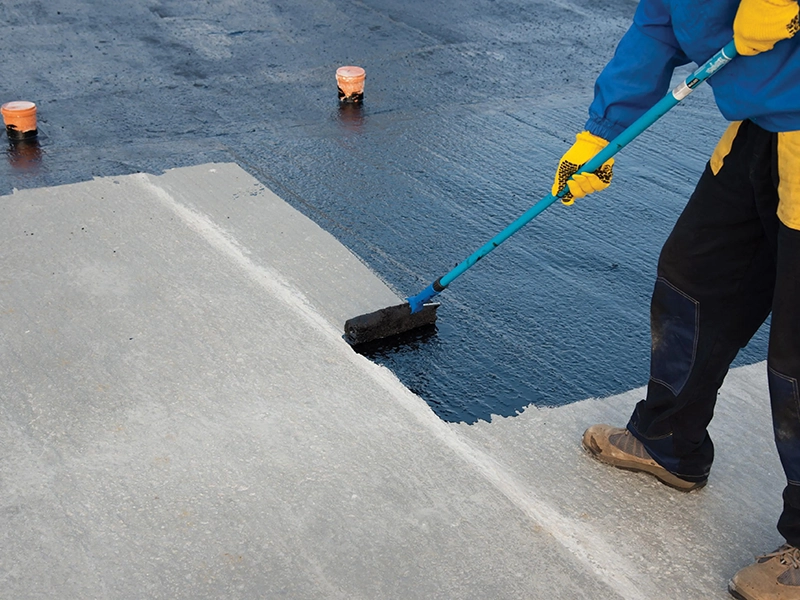
Project awards slow. Existing projects in execution continue to consume chemicals, providing a 6 to 12 month lag buffer as committed project volumes complete. But new project wins compress. Revenue guidance is revised. The technical sales organisation, built for 18 to 36 month specification cycles, has nothing new to specify. The manufacturing facilities, sized for project demand, run at reduced utilisation. Pricing power, previously derived from specification lock-in, comes under pressure as contractors look to reduce input costs. The renovation channel, which was not built, cannot absorb the volume gap.This is not a stress test scenario. It is a description of what happened to infrastructure-heavy building materials companies in India in FY2020-21 and in the Q3-Q4 FY2024 state capex shortfall. The companies that navigated it best were the ones with the most diverse end-market exposure.
The Renovation-Led Model Under Consolidation
A homeowner's leaking terrace does not correlate to the NIP project pipeline. A middle-class family's decision to retile the kitchen does not require a government tender. A residential building's waterproofing cycle is driven by the monsoon calendar, not the infrastructure budget. The renovation channel continues to operate in an infrastructure consolidation because its demand drivers are structurally independent of government capex.Pidilite's revenue mix, 70% renovation and repair versus 30% new construction, means that in an infrastructure slowdown, the company's addressable market compression is limited to the fraction of its 30% new construction exposure that is government-infrastructure-linked. The renovation base continues to compound. The applicator network continues to generate repeat purchases. The consumer brand continues to pull product through hardware stores regardless of what is happening in the infrastructure project pipeline.
This is the structural buffer that the 13.4% CAGR infrastructure growth story does not include in its risk model.
The Three Paths Available to Infrastructure- Heavy Players
For construction chemicals companies currently positioned in the infrastructure-led model, the renovation gap is not academic. It is a strategic decision that needs to be made while the infrastructure cycle is still running hot. There are three paths available.Path 1: Build the Renovation Channel Organically
This is the right path for companies with Rs 500 Crore-plus revenue, patient capital, and a willingness to fund a 7 to 10 year channel-building programme. It requires appointing dedicated renovation sales and distribution leadership separate from the infrastructure sales organisation. It requires brand investment in consumer-facing waterproofing and adhesive categories. It requires applicator training programmes modelled on what Pidilite has built with Dr. Fixit and Roff. It requires presence in hardware and building materials retail at the Tier 2 and Tier 3 level where the bulk of India's renovation demand is generated.The investment required is substantial: Rs 50 to 150 Crore over 5 years to build meaningful renovation channel depth across 5 to 10 states. The return is a revenue stream that provides buffer against infrastructure cycle volatility and generates superior lifecycle margins. The companies that begin this investment in 2026 will have the buffer by 2032. The companies that wait for the infrastructure slowdown to motivate them will build it too late.
Path 2: Acquire the Renovation Channel
For companies with access to capital and a shorter time horizon, acquisition of a renovation-positioned brand is the fastest way to access the channel. India's construction chemicals market has several mid-tier regional players with functional renovation distribution in specific geographies. An acquisition of Rs 200 to 500 Crore targeting a company with 1,500 to 5,000 retail dealer touchpoints and an established applicator network in 3 to 5 states buys 5 to 7 years of channel-building at a fraction of the organic cost. The acquired brand provides the renovation customer relationship that the acquirer's infrastructure sales organisation cannot generate.
Path 3: Accept Infrastructure Concentration and Manage the Cycle
The third path is to acknowledge that the renovation channel will not be built, accept the infrastructure concentration risk, and manage the capex cycle through operational levers: cost flexibility, working capital management, and geographic diversification to states where government capex cycles are less synchronised.This is a legitimate strategy for companies whose infrastructure specification capabilities are genuinely differentiated and whose investors have long time horizons. But it requires complete honesty about what the business is: a capex-cycle business, not a structural growth business. The 13.4% CAGR story is an infrastructure story. Without renovation channel diversification, that CAGR is conditional on the government spending engine running continuously. It has never done so.
The Numbers That Define the Strategic Choice
The strategic choice facing India's construction chemicals industry can be defined with five numbers that, taken together, describe both the opportunity and the risk with precision.Rs 40,500 Crore: India's construction chemicals market size in 2025 (Future Market Insights, 2025). The market is real, growing, and attracting capital from cement companies, paint companies, and private equity.
62.6%: Infrastructure's share of total construction chemicals demand in 2025 (Future Market Insights, 2025). This is the concentration number that defines the risk. More than three-fifths of a Rs 40,500 Crore market sits on one demand engine.
70/30: Pidilite's revenue split between repair-and-renovation and new construction (Pidilite investor materials, FY2025). This is the single number that most clearly expresses the difference between the renovation-led business model and the infrastructure-led business model.
14.9%: Residential construction chemicals CAGR through 2032 (Persistence Market Research, 2025). Residential is growing faster than infrastructure within the construction chemicals category. The renovation engine is accelerating, not decelerating.
7 to 10 years: The time required to build a renovation-channel distribution network comparable to what Pidilite has built. This is the entry barrier that makes the renovation channel a genuine moat, and the timeline that makes the build-or-buy decision urgent.
The Question India's Construction Chemicals Industry Must Answer
The construction chemicals market in India is genuinely exceptional. The growth trajectory is supported by structural drivers: urbanisation, infrastructure investment, rising construction quality standards, and the formalisation of building practices that previously operated without construction chemical products. The category will grow. The question is not whether to be in it.The question is which part of it to be in. And when to build the parts you are not yet in.
The NIP cycle is running hot in 2026. Infrastructure awards are being made. Mega projects are executing. The construction chemicals companies serving this market are growing well. The temptation is to stay in the infrastructure lane, invest in more project specification capability, and defer the renovation channel build to the next strategic planning cycle.
That decision, made by every infrastructure-heavy construction chemicals company in India right now, is the decision that Pidilite made differently 20 years ago. Pidilite looked at the same infrastructure opportunity and chose to build the renovation channel instead. Not in addition to infrastructure — instead of making infrastructure its primary channel. The result is a business that is largely insulated from the capex cycle that its competitors are entirely exposed to.
For the companies currently watching Pidilite's margin profile, its revenue resilience, and its brand equity with envy, the lesson is not complex. The lesson is: the renovation channel is a 7-to-10-year build. It does not get shorter. Every year of deferral is a year of compounding disadvantage.
The NIP cycle will slow. It always does. The question is not whether construction chemicals companies have a government-spending-independent strategy.
The question is whether they will build one before the NIP slowdown makes them wish they had.
About the Author