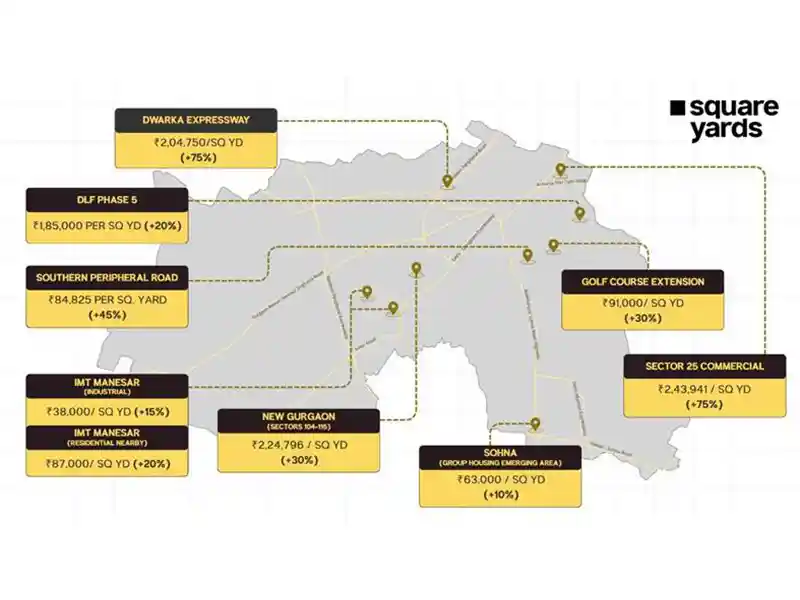

Delhi-NCR, Bengaluru, and Hyderabad led the surge, with prices rising 19%, 15%, and 13% respectively. In the Delhi-NCR region, Gurugram emerged as the top-performing market. Micro-markets such as Golf Course Extension Road and Dwarka Expressway saw rising demand among high-net-worth individuals and working professionals, driving up property values.
Ashok Kapur, Chairman, Krishna Group and Krisumi Corporation, said, “The sharp rise in property prices across Delhi-NCR clearly reflects the strong and sustained demand for quality homes. Infrastructure growth in the region, including the recent inauguration of the Delhi stretch of the Dwarka Expressway and UER-II, has further improved connectivity and boosted buyer confidence. Rising disposable incomes, supported by affordable loan rates and GST reforms, have also strengthened purchasing power.”
“Demand remains particularly robust in the premium segment, driven by the growing appetite of end users seeking better living standards. Together, these factors are not only reinforcing Delhi-NCR’s position as one of India’s most attractive real estate markets but also paving the way for continued growth and transformation in the years ahead,” he added.
Meanwhile, the Mumbai Metropolitan Region (MMR) retained its position as India’s most expensive property market, with average property prices climbing to INR 13,250 per sq. ft., marking a 7% YoY increase.
Among other prominent cities, Pune saw average property prices reach INR 7,250 per sq. ft., reflecting a 9% annual increase, supported by its excellent connectivity to employment hubs and a vibrant migrant population. Chennai also recorded a 9% uptick, fuelled by steady housing demand along the OMR corridor and expanding manufacturing activity.
In Kolkata, prices rose 8%, as market stability encouraged end-user participation, whereas Ahmedabad experienced a 7.9% rise, driven by a gradual transition from affordable to premium housing and ongoing infrastructure upgrades.
Overall, the steady rise in property prices across major Indian cities highlights the sector’s resilience and long-term potential. With sustained end-user demand, improving infrastructure, and favourable policy support, the real estate market is poised for continued momentum in the coming quarters.