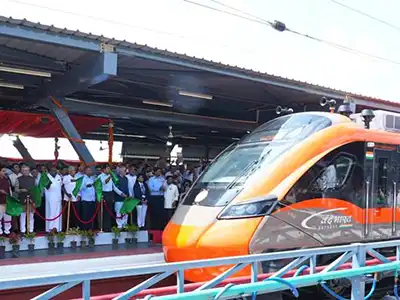
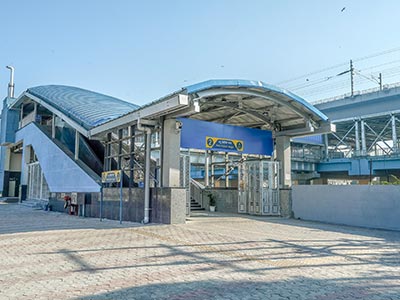
The National High-Speed Rail Corporation Limited (NHSRCL) has planned to build two stations in the district; one will come up in Noida Sector 144 and the other at Noida airport terminal one in Jewar. This stretch is a part of the Mumbai-Ahmedabad High-Speed Rail Corridor and NHSRCL officials have started a preliminary discussion with the Gautam Budh Nagar administration over land requirements. With the newest development, real estate in Noida and Greater Noida appears to gain out of several infrastructure projects announced in the past few years. With already efficient road connectivity and the upcoming Noida Airport in Jewar, the region has again gained limelight for bullet train connectivity. The Delhi-Varanasi high-speed rail corridor will have 12 stations including Delhi, Noida, Jewar Airport, Mathura, Agra, New Etawah, South Kannauj, Lucknow, Raebareli, Prayagraj, New Bhadohi and Varanasi. More than 160 hectares of land is required from GB Nagar for the Delhi-Varanasi high-speed rail (DVHSR) bullet train corridor. Out of this, a little over 60 hectares needs to be acquired from farmers as the rest of the land belongs to the government. The height of the elevated corridor for the bullet train will be 9-10 metres. The light detection and ranging survey (LiDAR) survey for the proposed Delhi-Varanasi high-speed rail corridor was conducted on January 10 from Greater Noida. LiDAR works on the principle of light detection and ranging where laser pulses are red from the helicopter to scan the ground. The Delhi to Varanasi corridor, which is approximately 800 km, will also be connected to Ayodhya.