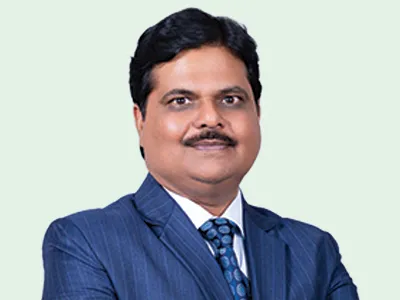
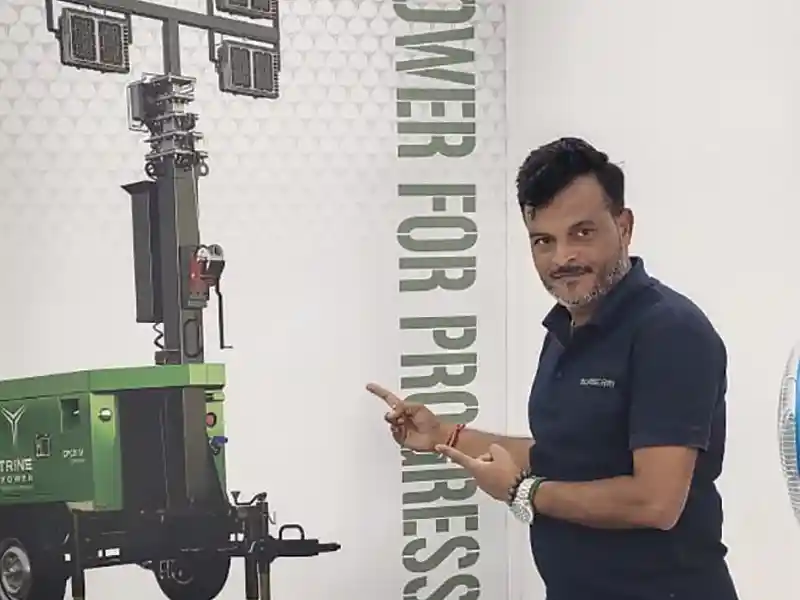
Informed Omprakash Yadav, Managing Director, “In light towers, the most critical element is the quality of light. At Trine-Yash, each lens profile is custom-designed, application-specific, and developed in collaboration with an Indian manufacturer, and not simply assembled off-the-shelf LEDs. Our lenses are engineered to deliver different illumination patterns for different applications. The lighting system has a lifespan of 1,20,000 hours, maintaining consistent luminous output. At an average usage of 10 hours per night, this translates to nearly 10 years of operation.”
“Our biggest differentiator is technology: we have integrated IoT, cloud connectivity, AI, and Industry 4.0 features into our machines. As fleets grow, machine management becomes complex. Our systems provide real-time data on mobile and desktop platforms, predictive maintenance alerts, and sensor-based diagnostics. The system can indicate whether maintenance is required at 300 or 1,000 hours—or whether it can be deferred based on actual operating conditions. This prevents breakdowns and improves uptime, he informed.
Trine-Yash light towers use Kohler engines which are electronically controlled CPCB4+ compliant engines, widely used by leading OEMs. “For export markets such as the Middle East, customers sometimes prefer water-cooled engines due to extreme temperatures, while our current design is air-cooled with a blower system," Yadav added.
The company’s upcoming new model is a hybrid light tower that combines a diesel engine with a lithium-ion battery backup; it is being developed primarily for defence applications and will be available within the next three months. Also on the anvil is a solar-powered model with lithium-ion battery backup that charges during the day and operates at night with zero engine load.
“Customers such as L&T have already approached us to retrofit their existing machines with our solar systems. Some customers that operate fleets of nearly 50 machines, want phased retrofitting to reduce their carbon footprint.”
“The future will see more battery-based systems and possibly green hydrogen, although hydrogen adoption in small machines will take time due to safety and control challenges. Not everything can be electrified. Even today, over 80% of construction equipment runs on diesel, and IC engines will continue to play a role.”
The company offers a 1-year onsite warranty for its light towers, and a 2-year replacement warranty on the lights. Chassis and fabrication support are also covered, and service support is provided through Kohler and NSM’s established service network.
“We have been supplying chassis and assemblies to Atlas Copco for over 10 years, and warranty claims are extremely rare; they are mostly due to accidents rather than product failure. And despite offering IoT features, superior lighting, longer lifespan, Deep Sea control panels (a global US brand), and heavier build quality, our pricing remains competitive,” he averred.
“Our aim is to become a specialist in construction lighting to meet all lighting-related requirements in the industry. We are working on 4–5 light tower variants, inspired by successful US manufacturers, and will eventually increase the number to 8–10 variants.”
The current Indian market for light towers is approximately 10,000 units per year, including imports from China. Contractors are working day and night to complete projects on time—whether in real estate or infrastructure — making lighting an essential component of construction work.
“Buyers and contractors are becoming more quality conscious now. Even small contractors are managing projects worth ₹500–1,000 crore, so reliability and long-term performance of machines are important factors in their purchase decisions,” Yadav concluded.