
iCEMA Calls for Overall Improvement in the CE Industry
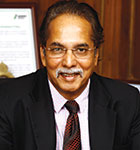
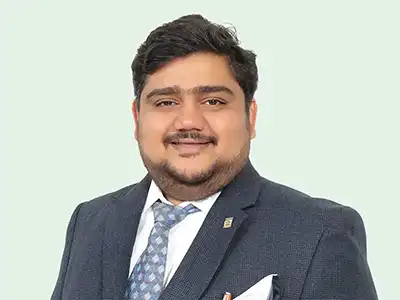
At the outset please accept our congratulations on being elected as the President of iCEMA. What are your plans and agenda for the next two years as President of the organization?
First of all, thank you very much for your greetings. iCEMA in the last decade has emerged as a true representative body of the Indian Construction and Earthmoving Equipment Industry. Almost all the world class equipment manufacturers who have set up shop in India are members of this association.
In the last few years, iCEMA has been representing the Indian equipment manufacturers' concerns with respect to tax reforms, import duty concessions, budget policies, skill development, etc., with various Ministries, directly and also through other industrial associations like CII. We have now reached the next level and the idea is to have close interaction with different Ministries, in representing our concerns with respect to capital goods policies, partnering with Government agencies in formulating specifications, testing processes, skill development, etc., with respect to improving the construction quality, performance of equipment, improving productivity, and so on.
There are various tasks which iCEMA is contemplating in the next few years. The following are to name a few:
- Submitting a draft proposal for introducing a separate regulatory framework/act for off-highway equipment, similar to CMVR.
- Setting up an independent test and certification center for the construction equipment, in particular for off-highway equipment.
- Interacting closely with the Ministry of Road Transport & Highways. Drawing out detailed specifications of the minimum standards that are necessary for the equipment of highway projects.
- Interacting with the Central and State Governments with regard to specific equipment and technology for building rural roads.
- Supporting the Infrastructure Equipment Skill Council (IESC) to scale up skill development activities for equipment operators, mechanics, etc.
- Creating visibility for iCEMA by close interaction with both Central and State Governments by conducting regular seminars and presentations on latest technology, on infrastructure development, rural roads, highway equipment and financing / leasing of equipment.
- Strengthening iCEMA's interaction with international associations, with a view to share and learn the latest development worldwide.
The infrastructure industry has been passing through severe crisis in the last 3 to 4 years. The equipment industry has witnessed a steady decline since 2012. Fortunately, the Ministry of Road Transport and Highway has taken certain positive initiatives and has announced various new projects.
Since the beginning of this year, almost 5000 kms of road contracts have been awarded, which has definitely benefited the road building equipment manufacturers. We understand that many more road contracts will be awarded in the near future, which will certainly help the road construction machinery manufactures. The road construction network in India is quite large, so there is enormous scope for further development.
Therefore, we foresee that the roads and highway sector will continue to grow in the coming years as well. Having said that even though this will give a boost to the road equipment industry, it does not have a very significant impact on the entire range of earthmoving machines. Therefore, for the overall development of construction, earthmoving and material handling equipment, there should be similar initiatives on other infrastructure projects like power, metros, airports, dams, and so on, in order to bring an overall improvement in the CE industry as a whole.
Coinciding with Excon, iCEMA organizes a Conference to discuss important issues confronting the CE sector. What are the issues likely to be on the agenda this year and how over the years the deliberations of these conferences have helped articulating CE sector's concerns to the government important policy making and implementation bodies?
The iCEMA Conference during EXCON 2015 will focus on tabling the challenges and discussing the ways to achieve accelerated growth and utilize opportunities that are available ahead.
The conference will focus on the following topics:
- Infrastructure Development and Industry Growth
- Market opportunities and gaps in key end use sectors of Earthmoving & Construction Equipment (ECE) – Roads & Railways, Urban infrastructure, Irrigation etc.
- Bottlenecks in terms of successful project execution and regulatory policies
- ECE financing: Global best practices and scope in India
- Skill & Manpower Development - Key to Sustainable Growth
- Smart City Projects - Idea to Implementation
- Component & aggregate manufacturers - Make in India
At the end of the seminar, we will come out with a summary note on the deliberations, which will be shared with the policy makers and leaders in the industry and we will work towards implementing some of the good suggestions from them.
What is your take on the government proposal to constitute a Development Council for the Highways sector? How would iCEMA like to play its role to further the aims and objectives and mandate of the proposed council?
Of course, it is a very good idea to have a development council for the highway sector. The council can play a very important role on policy framework, timely execution of highway projects, equipment requirements, their specifications, performance criteria and performance assessing procedures, quality of construction, etc.
iCEMA is actively involved with Ministry of Road Transport & Highways (MORTH) to be a part of this council. A similar development council is already set up by the Department of Heavy Industry (DHI) for earthmoving, construction and mining machineries. ICEMA is actively involved in this council as well. All major recommendations and issues of the industries were discussed at this meeting which was chaired by the Secretary, Department of Heavy Industry.
Don't you feel that there is a dire need of having an independent equipment performance certification agency that can help the buyers to know about the output they will get out of the machine bought?
Definitely this is one of our agenda. Currently, the construction equipment industry, especially the wheeled equipment which can ply on the road come under the purview of ARAI certification, and under the CMVR rules. Whereas, the non-wheeled vehicles like tracked vehicles / off-highway equipment do not come under the purview of any certification.
iCEMA has proactively submitted a draft proposal for introducing a separate "Construction, Earthmoving, Mining and Material Handling Equipment Act" (CEMM Act), which will cover all off-highway equipment, with regard to emission norms, safety standards, etc.
iCEMA has already requested the Government to set up an independent test and certification center for off-highway equipment, similar to ARAI.
These are at various stages of discussion with the Government.
A brief on iCEMA's collaboration with IESC for imparting training to the CE operators in operating and maintaining the equipment.
During the last 3-4 years iCEMA has been working very closely with the National Skill Development Corporation (NSDC) to create a skill council for imparting training to construction equipment operators and maintenance crew. This iCEMA promoted skill council called "Infrastructure Equipment Skill Council" (IESC) is already approved by NSDC and is operative for the last one year.
iCEMA members are actively involved in the working group of this council. In the last one year, IESC has progressed quite a bit and many of the equipment manufacturers' training centers are already accredited as NSDC-IESC approved training centers. This skill council is aimed to train over 2 million operators and maintenance personnel, in the next 7 to 8 years.
From time-to-time, iCEMA has been urging the government to regulate import of used equipment but it is of no use. How as the new president of iCEMA you would like to proactively pursue the matter highlighting how import of second hand equipment is hurting the domestic CE sector? What could be your suggestions to regulate the import of second hand equipment?
This is a long standing issue of the industry which was taken to the Government 10-12 years back.
iCEMA is not against import of second hand equipment. We do understand that it makes a lot of sense to import the second hand equipment, especially very high value equipment like huge crane, mining equipment, etc. iCEMA is only requesting that the import of the second hand equipment be regulated in such a way that India should not become a dumping ground for outdated equipment that are not meeting the emission norms, safety features, etc.
Therefore, iCEMA's recommen- dation for these equipment are:
- Equipment should be imported only through one or two identified ports.
- Imported only through the subsidiary companies or joint venture companies of the original equipment manufacturers (OEMs), operating in India.
- Meet all the CMVR stipulations on homologation.
- Meet the emission / noise pollution control, which means clearance from ARAI.
- Charged with higher rate of import duty, to secure the local industry.
Published on:
09 October 2015
Published in: NBM&CW October 2015
Share:
We Value Your Comment