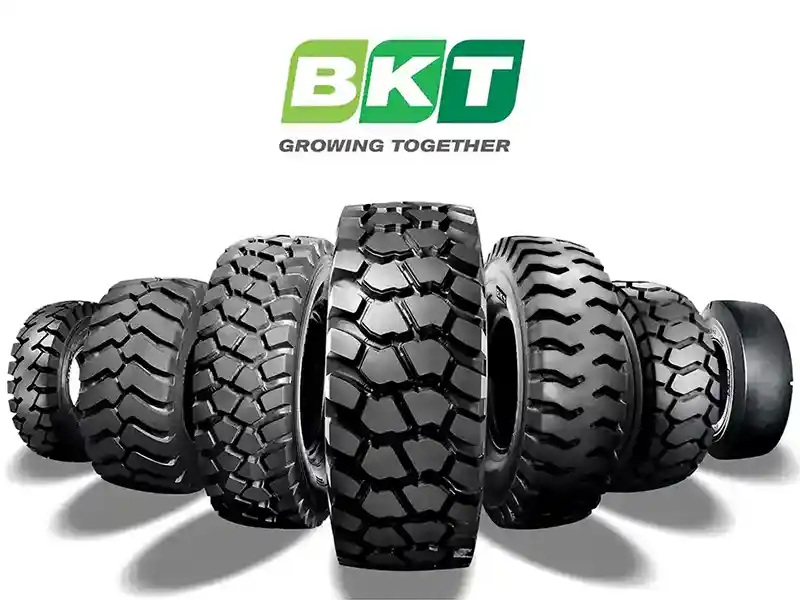
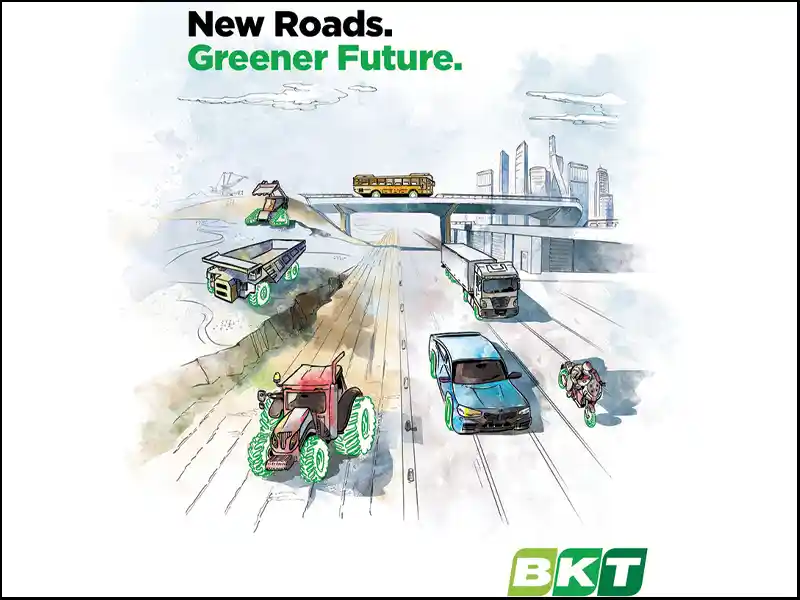
The report highlights the company’s progress over the years, and initiatives that have helped strengthen its technical and technological capabilities, while reducing the environmental footprint of its operations and production processes, as well as ensuring a working environment for its employees that complies with the highest occupational health and safety standards.
During FY 2024-25, BKT made meaningful progress in reducing its environmental footprint while strengthening its operational resilience. Research, design, and development were guided by a clear mission where technology and sustainability work together to create safe and efficient products that reduce emissions, conserve natural resources, and protect ecosystems. This shift towards more conscious manufacturing improved process and cost efficiency and was supported by circular practices, including the use of recycled and recovered materials such as reclaimed rubber, crumb powder, and carbon black.
During this period, over 106,000 MT of renewable materials were used to manufacture primary products. Circularity remained a key focus, supported by investments in vertically integrated carbon black manufacturing, higher use of renewable and recycled raw materials, and strong waste management outcomes, with 98.17% of waste recycled or reused and a 14.92% reduction in total waste generation.
There was a 11.39% reduction on an annual basis in groundwater withdrawal from areas subject to water stress and a 2.03% YoY reduction in water intensity per metric ton of production. No less than 35,701 new trees were planted, covering a total area of over 19,000 sqm.
There was a 21.37% increase in energy consumption from renewable sources and reduction in the non-renewable energy intensity per metric ton of production, with greater integration of renewable energies and energy efficiency measures. People continued to remain at the heart of BKT’s sustainability journey with a delivery of 5,08,743 hours of training to employees and workers, reinforcing a culture of continuous learning.
BKT's commitment to ESG issues is reflected in its desire to actively contribute to responsible production, both in terms of the environment and through compliance with strict quality and safety measures, which have always been two of the company's distinguishing features in the tyre industry.
Rajiv Poddar, Joint Managing Director, BKT, informed: “The last financial year has been a powerful catalyst for BKT’s transformation process, with progress driven by purpose. We combined strategic foresight with operational excellence, expanded our product portfolio, strengthened vertical integration, and reinforced our commitment to sustainability. Our long-term vision has enabled us to enhance governance and integrate ESG criteria across the entire organization. This vision continues to guide us as we build a business that is resilient, responsible, and ready for the future.
Said Dr. Anurrag Khandelwal, General Manager ESG, BKT, “For BKT, sustainability is an integral part of every strategic decision we make. We have conducted a comprehensive assessment of Scope 3 emissions, initiated Life Cycle Assessment studies, and we prioritise integrating circularity into operations to develop low-carbon products. Our business model includes long-term environmental management, community development, a strong supply chain, strong corporate governance, building stakeholder value, and developing a resilient, future-ready company.”
With a proactive approach to environmental compliance and a strong commitment to contributing to the United Nations Sustainable Development Goals (SDGs), BKT continues to strengthen its position as a sustainability leader and a pioneer on the path to a greener future.
BKT’s Sustainability Report is available on https://www.bkt-tires.com/downloads/16377/12482/BKT_SustainabilityReport_2024-2025.pdf