Construction has always been a challenging profession, requiring the successful coordination of people, processes, resources, and information. Even today, many projects continue to face delays, cost overruns, coordination issues, and rework despite the availability of advanced engineering tools. The difference increasingly lies not in technical capability, but in how effectively information is managed and shared throughout the project lifecycle.Er. Ananda Babu Kota, BIM Consultant, IGBC AP & ECBC Expert, gives insights into how rapid adoption of BIM and emerging digital technologies is reshaping the future of construction project management. He outlines the growing role of integrated digital workflows, real-time collaboration, predictive decision-making, and smart construction practices in improving project efficiency, reducing coordination challenges, and enabling more sustainable and technology-driven infrastructure development.

In the past, project managers relied heavily on drawings, spreadsheets, site meetings, telephone calls, and physical documentation to manage projects. While these methods served the industry for many years, increasing project complexity has made it difficult to achieve desired outcomes using traditional approaches alone.
Over the last decade, the construction industry has witnessed a significant shift towards digital working methods. Technologies such as BIM, AI, drones, IoT, and Digital Twins are changing the way projects are planned, executed, monitored, and delivered. As a BIM consultant, I believe these technologies are empowering project managers to make better decisions and deliver projects more efficiently.
Challenges Faced in Traditional Project Management
Most construction professionals are familiar with common project challenges. Delays in receiving information, coordination issues between different disciplines, design changes during construction, cost overruns, and communication gaps often affect project performance.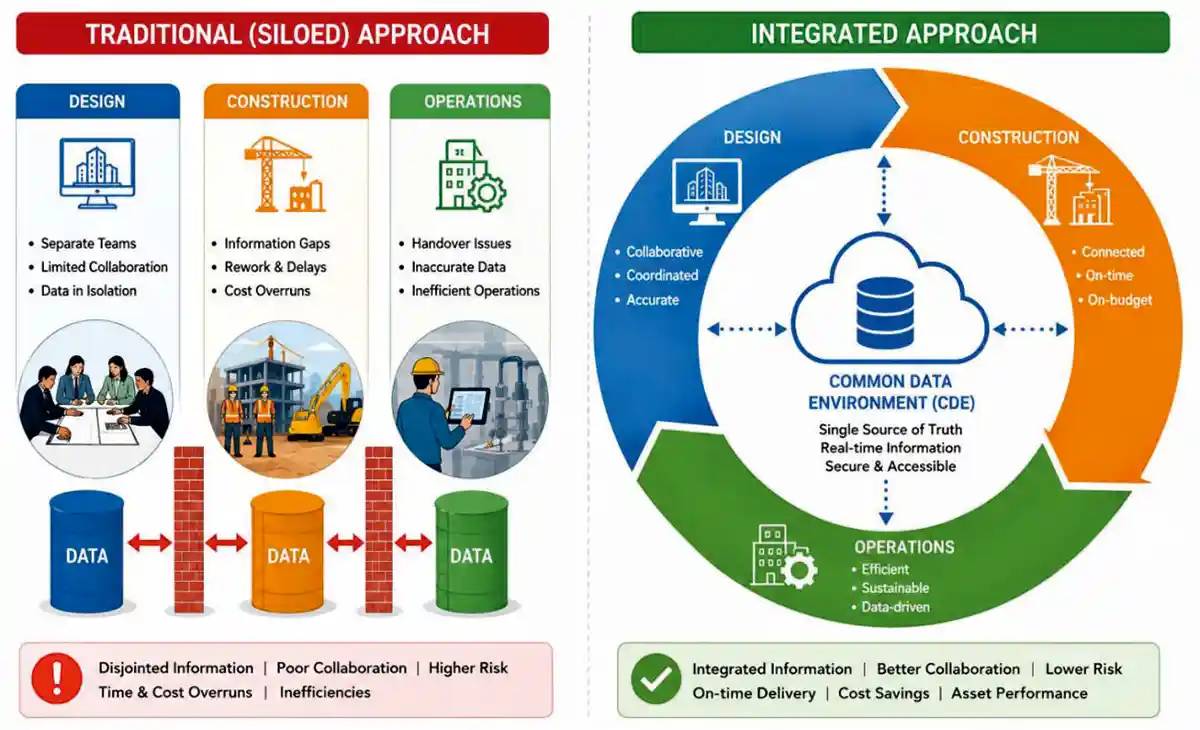
Figure 1: Shifting from fragmented, traditional project phases to a continuous, integrated project lifecycle.
Traditional project management often treats project phases such as design, procurement, construction, and operations, as separate, isolated steps. In many projects, architectural, structural, and MEP teams work independently, and conflicts are identified only after construction begins. This results in rework, additional costs, and schedule delays.
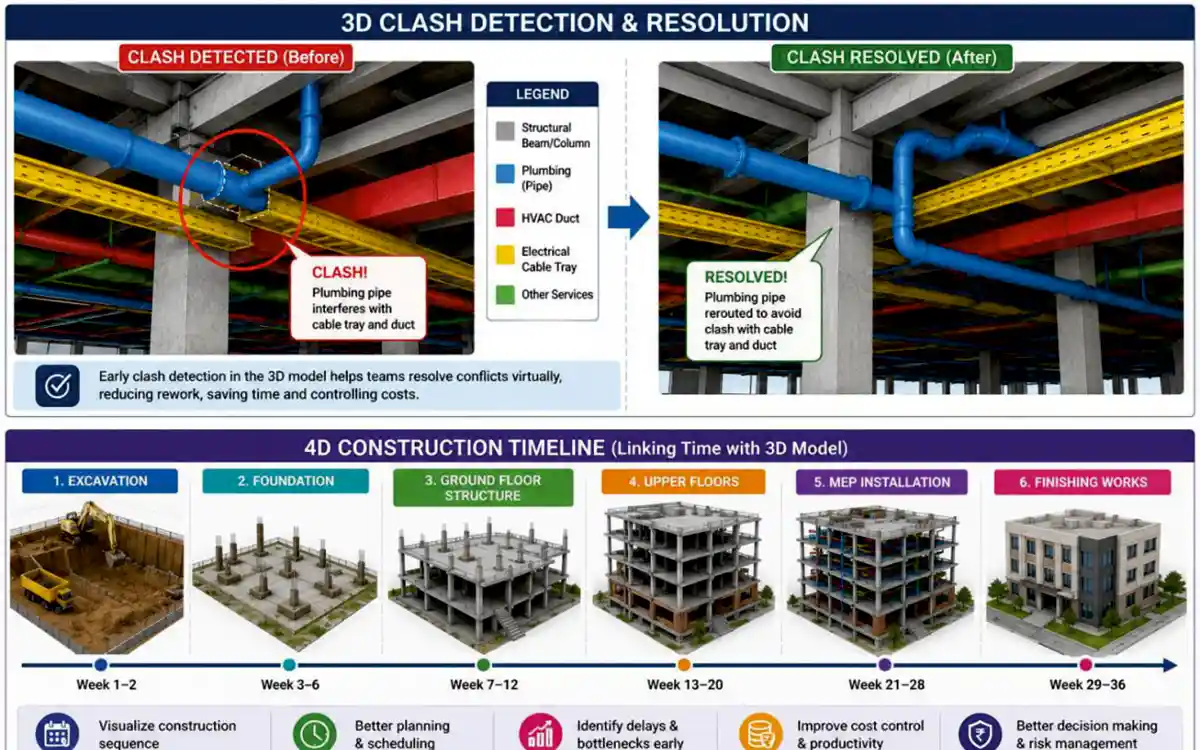
Figure 2: Digital coordination allows teams to spot and resolve physical design conflicts virtually before actual site execution begins.
Another challenge is information management. Different stakeholders often work with different versions of documents, leading to confusion and mistakes. Project managers spend considerable time collecting information from various sources before making decisions. These challenges highlight the need for a more integrated, collaborative, and continuous flow of information from day one.
BIM: A Game Changer for Modern Project Delivery
Among the many technological advancements in recent years, Building Information Modeling (BIM) has had perhaps the greatest impact on the way construction projects are planned and managed.Many people still think BIM is simply 3D modeling software. In reality, BIM is a collaborative process that enables project teams to create, manage, and share project information efficiently. It helps stakeholders visualize projects, improve coordination, and manage information more effectively. Design clashes can be identified and resolved before construction begins, reducing rework and delays. For example, a clash between a plumbing pipe and an electrical cable tray can be detected within the BIM model and corrected during the design stage itself, avoiding costly modifications on site. Through 4D BIM, schedules can be linked to models for construction sequencing, while 5D BIM supports cost planning and control. By improving collaboration and decision-making, BIM has become a key enabler of modern project management.
Emerging Technologies Supporting Project Management
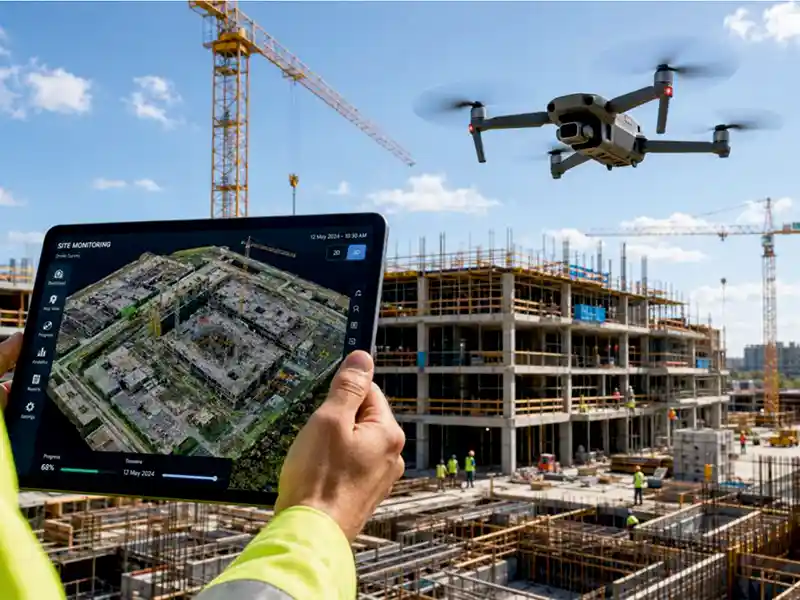
While BIM forms the foundation of digital construction, several emerging technologies are further enhancing project planning, monitoring, and decision-making. Artificial Intelligence (AI) is helping predict risks and delays through data analysis. Drones are improving site monitoring and progress tracking. IoT sensors provide real-time information on equipment and site conditions, while Digital Twins support asset management throughout the operational lifecycle. Cloud-based collaboration platforms ensure that all stakeholders work with a single source of accurate and up-to-date information.The Triple Bottomline: Efficiency, Transparency, and Sustainability