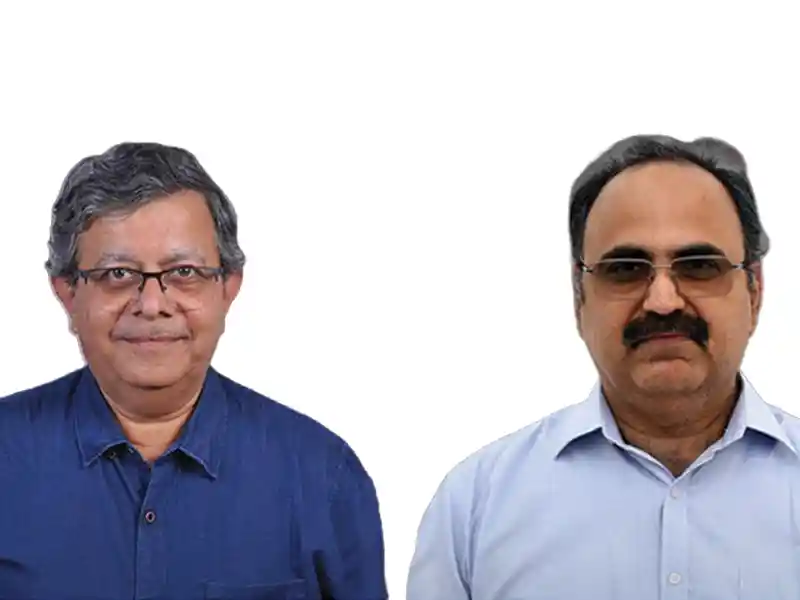
Spanning nearly 8 million sq ft of built-up area across 16 acres in the heart of South Mumbai, the project demonstrates how meticulous planning, advanced concrete technologies, and robust quality systems are transforming one of the city's most densely populated precincts into a modern, sustainable, and community-centric urban development. The project spans some of the busiest streets in South Mumbai. The high density of development and ultra-high-rise construction add to the complexity, while managing logistics on the busy streets further compounds the challenges.Er. Santosh Deodhar, Assistant Vice President, SBUT, and Er. Mahesh Tendulkar, General Manager, SBUT, present the engineering, construction, and project management strategies behind the landmark Bhendi Bazar Community Redevelopment Project in Mumbai, and give valuable insights into managing scale, complexity, time, and cost in such large-scale redevelopment projects.
The ROI of the project is “Happiness and Growth in the Lives of Customers,” reflects its true character as a community development initiative. However, as this is a redevelopment project, more than 2,500 families and 1,500 shops had to be relocated for a period of 5–7 years to make the land available for development. The recurring expenses on rehabilitation, rentals, transit camps, and new construction continuously added to the financial burden of such a large-scale community development project.
Maintaining a balance between expenditure and time is essential and a managerial distinction between conventional construction projects and a redevelopment project of this scale. The key aspects of the project are outlined below:
Project Planning: Delivery Strategy and Model
Constructing the project using the right model was decided after looking at the internal and external strengths versus the requirements, given the size of the project and the allowed time and cost.Pre-construction planning stage: This involved BPD, master planning, materials, etc., as part of the offsite enabling works, design development, and tendering process alongside approvals.
Project construction: This involved site enabling works and project logistics, mobilization and de-mobilization, and critical parameters for over 180 m high buildings, getting them constructed and handed over in phases. Infrastructure development for phase-based handover adds to the challenges for the design and construction team.
Budget, time, and cost control: Projects of such magnitude need proper budgets and controls, as they have very different patterns of cash flow. In such projects, when transit costs mount up, it is important to have control over expenditure and time.
QMS: The defined PQ process for material selection and in-house standardisation of materials for this project adopted the philosophy, “Do it right in the first place itself.”
Value engineering: This is the most critical part, as such projects require continuous improvements and better cost management. The interventions are made during the design and construction phases.
Interface management: Such high-profile projects are complex and have many challenges related to design, construction, and delivery. Hence, coordination among all the departments is important to prevent misinformation and delays.
In-house Captive RMC Plant for Efficient Planning and Cost Benefits
South Mumbai experiences heavy traffic congestion due to narrow roads, vehicle movement restrictions, and limited access for construction vehicles. Delays in transit mixers can adversely affect concrete workability and quality.Concrete has a limited workable life after batching. Industry references indicate that delivery and placement generally need to occur within a relatively short time window, often around 90–120 minutes, depending on the mix design and admixtures. Longer haul distances increase the risk of slump loss, rejected loads, and quality variations.
Hence, for the continuous supply required for large concrete pours such as raft foundations, transfer girders, core walls, and aluminium formwork structures, an uninterrupted supply of concrete is essential. Interruptions can result in cold joints, construction delays, additional remedial measures, and concerns related to structural performance and durability.
A captive plant established exclusively for a project provides dedicated batching facilities, greater control over raw materials and production parameters, a dedicated laboratory, continuous quality monitoring, and improved traceability of concrete batches. This is particularly important for M60 and higher-grade concretes, self-compacting concrete (SCC) used in critical structures such as transfer girders, mass concrete applications, and low-permeability, durable concrete.
Although the initial investment in establishing a captive plant is substantial, it can become economical when the total concrete quantity exceeds approximately 1–2 lakh m³, the project duration extends beyond 4–5 years, and the daily concrete demand remains high and sustained.
Cost benefits and savings arise from reduced transportation expenses, lower waiting charges, a reduced risk of rejected loads, and, most importantly, improved production and pour planning.
Use of Supplementary Cementitious Materials (SCM)
We have designed concrete mixes with SCMs such as GGBS, Fly Ash, and Microfine Cementitious Materials, which have helped us in the following ways:- Reduced heat of hydration, especially in mass concrete such as raft foundations. We have designed concrete for raft foundations to achieve the characteristic strength in 56 days by replacing 63% of the cement with GGBS. This has helped us in controlling the peak core temperature within permissible limits and preventing thermal cracking.
- Improved rheology of concrete and enhanced the plastic properties of concrete (flow, cohesiveness, and retention time).
- Even though early strength gets affected because of the use of SCMs, we have designed our concrete mixes to achieve the desired strength for the de-shuttering time of formwork and the planned slab cycle. The use of SCMs has helped us enhance the concrete strength at 56 and 90 days.
- The use of SCMs has helped in the refinement of pore structure and reduced permeability, resulting in reduced chloride penetration, improved sulphate resistance, reduced water absorption, and better corrosion protection for reinforcement. In short, SCMs have helped us enhance the durability of the concrete structures.
- Sustainability and a reduced carbon footprint.
Monitoring Concrete Temperature and In-Situ Strength Using Maturity Sensors
We used maturity sensors extensively for monitoring the concrete temperature and in-situ strength of critical structures such as raft foundations and transfer girders.Concrete maturity is a method of estimating the in-situ compressive strength of concrete by measuring its temperature history over time. Since concrete strength development depends on both time and temperature, maturity combines these factors into a single index.
We established a Strength-Maturity Relationship before using maturity sensors for strength prediction. Following this, the calibration process was carried out for each concrete mix in the laboratory before casting the concrete structure. This involved:
- Prepare trial mix
- Cast cubes/cylinders with embedded temperature sensors
- Record maturity values continuously
- Test specimens at various ages such as 1 day, 3 days, 5 days, 7 days, 10 days, 14 days, 21 days, 28 days, 45 days, and 56 days.
- Developed strength vs maturity curve.
To summarize, the integrated approach of detailed planning, stringent quality monitoring, deployment of a captive RMC plant, and strategic incorporation of SCMs played a pivotal role in achieving superior concrete durability and performance. The captive RMC facility ensured consistency in production, timely supply, and effective control over concrete properties, while SCMs enhanced long-term strength, reduced permeability, mitigated heat of hydration, and improved resistance to aggressive environmental conditions. Collectively, these initiatives delivered substantial value engineering by optimizing material consumption, improving constructability, reducing life-cycle maintenance requirements, and enhancing the project's sustainability.