Delivering Integrated Project Lifecycle Management Across Global Developments
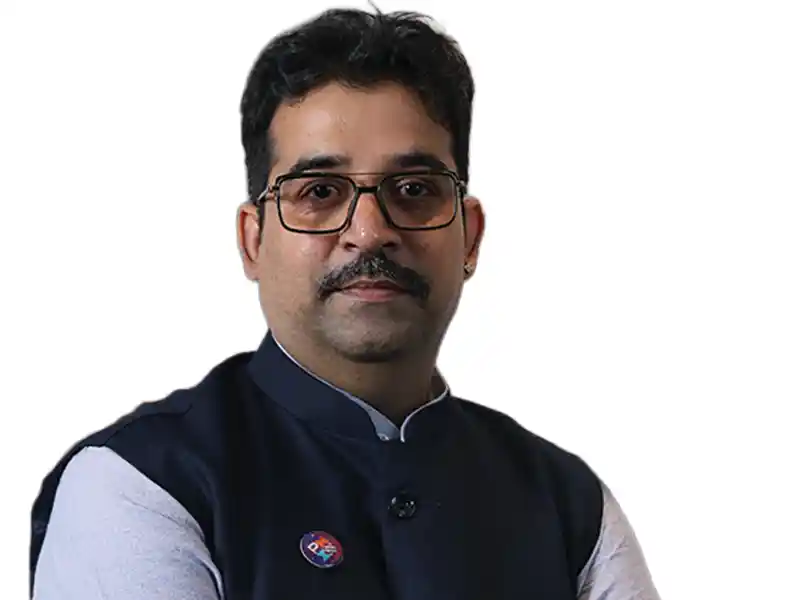
The global construction industry is undergoing a significant transformation. Modern projects are no longer defined only by engineering complexity or architectural scale; they are increasingly shaped by aggressive timelines, stakeholder expectations, sustainability requirements, technological integration, and commercial performance pressures. In this evolving environment, the true measure of project success is not merely the completion of construction activities, but the ability to convert project vision into measurable operational and commercial value.Ar. Deepak Tulsiram Patil, Managing Director – Elite Edge Group, explores how modern construction leadership is evolving beyond conventional project execution toward integrated lifecycle-driven delivery models, and why coordination, strategic planning, stakeholder integration, sustainability, and digital technologies are becoming critical to delivering long-term value in increasingly complex construction and infrastructure projects.

An Integrated Project Lifecycle Management (IPLM) enables successful delivery across complex developments as lifecycle thinking, coordination, execution discipline, and leadership integration contribute to successful project outcomes.
Traditionally, project success in the construction industry was measured through the “triple constraint” of time, cost, and quality. However, global project environments today demand a far broader perspective. Projects are now expected to achieve:
- long-term operational efficiency
- sustainability integration
- stakeholder satisfaction
- commercial viability
- adaptability to future demands.
Project failures are rarely sudden. Most projects gradually deteriorate through fragmented decision-making, weak stakeholder coordination, delayed approvals, procurement misalignment, and lack of execution visibility. These issues often begin during early planning stages and progressively compound throughout the project lifecycle. Therefore, integration across all project phases becomes the foundation for predictability, coordination, and value delivery.
Given below are two practical case studies demonstrating the importance of lifecycle integration in complex project environments:
The first case study examines a high-rise hospitality development in Dubai, Hotel Tower Project. The project experienced a major late-stage scope expansion during construction, where the original tower configuration was reinstated after substantial structural progress had already been completed under a revised scope. Despite the expanded scope, the project completion deadline remained unchanged. This created significant challenges involving acceleration, manpower mobilization, procurement compression, trade coordination, and execution sequencing. Through 24×7 operations, rapid decision systems, vertical zoning strategies, and integrated recovery planning, the project successfully adapted to changing client requirements while maintaining execution control.
The second case study focuses on a large-scale mixed-use global development involving residential, commercial, retail, and smart building components. Unlike the hospitality project, the complexity here emerged primarily from multidisciplinary coordination challenges, simultaneous execution activities, and conflicting operational requirements between residential and commercial functions. The project involved multiple international consultants, overlapping trade interfaces, tenant customization pressures, and fast-track delivery commitments. To stabilize the project, integrated coordination systems, BIM-based interface management, phased execution planning, and lifecycle-oriented operational strategies were implemented. The project demonstrated how disciplined coordination and stakeholder alignment can transform highly complex developments into commercially successful and operationally efficient outcomes.
Another important point is the changing role of leadership in global project environments. Modern construction leadership is no longer limited to reporting progress or managing schedules. Today’s project leaders must operate as integrators — balancing technical, commercial, operational, and stakeholder considerations simultaneously. Leadership now requires:
- decision-making under uncertainty
- cross-functional coordination
- execution adaptability
- commercial awareness
- strategic integration across all project stages.
- BIM-integrated delivery
- AI-assisted project controls
- digital twins
- smart construction systems
- data-driven execution planning
The article ultimately reinforces one core principle:
“Vision alone does not deliver projects. Successful project delivery occurs when strategy, coordination, execution, and leadership operate as one integrated system.” In an era of rapidly evolving global construction environments, Integrated Project Lifecycle Management provides the framework necessary to transform complex project visions into measurable long-term value.