
Ajay Chaudhari Expert in Infra & Real Estate Projects shares views on L1 Bidding System
Cost overruns across infrastructure projects still stand at Rs 3.15 lakh crore. That is the real price of treating L1 as gospel without factoring in DPR quality, risks, and lifecycle costs. Unless procurement evolves, India will continue paying more for what initially looked cheaper.
Ajay Chaudhari
Expert in Infrastructure & Real Estate Projects

A Double-Edged Sword>
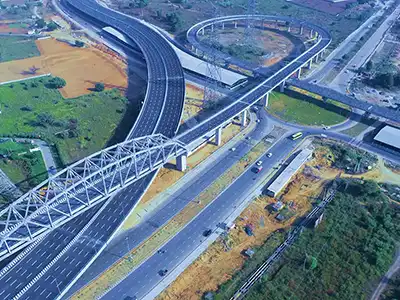
The L1 bidding system remains a double-edged sword: while it enforces strict cost controls in government tenders, it too often sacrifices project quality, innovation, and long-term sustainability. Aggressive low bidding frequently leads to defects, cost overruns, and extended timelines in centrally-funded projects with escalations now totaling ₹2.89 trillion as of June 2025 (as reported in Business Standard).In government contracts, L1 is treated as gospel: award to the lowest bid, no questions asked. The result is cut-throat underbidding that eliminates risk buffers and slashes contingencies. On a highway project that I recall, the L1 bidder compromised on materials, leading to a six-month delay and a 15–20% spike in corrective costs. Quality plummets as corners are cut on steel strength, manpower, and safety, while disputes drag projects into overruns.
The private sector fares slightly better. Here, L1 is often blended with post-shortlist evaluations that consider technical competence, past performance, and track record. Even so, aggressive competition can backfire, with outcomes still shaped by the “lowest cost syndrome.”
Hidden Costs and Economic Fallout
While L1 bidding appears economical upfront, the hidden costs are staggering in the long run. Poorly built infrastructure demands excessive maintenance, accelerates structural failures, and causes massive delays. As of June 2025, cost overruns across central sector project cost total ₹3,15 lakh crore, down from ₹5,71,080 crore in May 2024, but still representing significant losses. Earlier data showed 438 projects with overruns of ₹5.18 lakh crore, a 62% hike from original estimates, (as reported in Economic Times).The ripple effects are severe: structural issues such as collapsing bridges and pothole-ridden roads endanger lives and disrupt economic activity. Poor maintenance and mismanagement have cost households and firms at least USD 390 billion, while infrastructure delays have resulted in losses of nearly ₹5 lakh crore. Abnormally low bids often mask shortcuts that push lifecycle expenses 17% above market-clearing prices. In one project that I had managed, an underbid L1 contractor triggered a 25% escalation during execution due to unforeseen repairs.
Even private sector PPP projects face these risks, though flexible negotiations often mitigate the damage. In the government sector, however, rigidity and bureaucratic delays amplify overruns. The economic inefficiencies reduce competitiveness, fuel inflation, and lock up billions that could have gone into new infrastructure.
DPRs: Weak Links in Project Foundations
In my project execution experience across government and private projects, DPRs are foundational yet often unreliable in reflecting on-ground realities, with differences in sectors amplifying issues. Rushed preparation, inadequate data, and lack of stakeholder consultation frequently result in unreliable reports. Poor DPRs have caused delays and accidents, underestimating terrain variations, regulatory hurdles, or social impacts, with cost hikes of 20–30% in some cases.Union Minister Nitin Gadkari has emphasized that substandard DPRs prepared by some Indian firms worsen challenges in government projects, where centralized approval slows updates. Private sector DPRs, though more consultative, still suffer from data gaps and oversight of environmental or social impacts. The result is costly overruns and safety risks.
To strengthen DPRs, reforms must incentivize accountability and accuracy. A rating system for consultancy firms, linked to future eligibility, would reward quality. Mandating performance bank guarantees, about 1% of project cost, for DPR preparers (as seen in recent reforms) would enforce responsibility. Advanced tools like GIS mapping for terrain, AI-driven traffic projections, and multidisciplinary DPR cells (as pioneered by NHAI) can improve reliability. Quality assurance reviews, aligned with historical project data, can reduce unforeseen variations and contain 15–25% of potential escalations.
Reforming Procurement for Long-Term Value
To fix systemic inefficiencies, India must move beyond the “cheapest wins” approach. The universal adoption of QCBS (Quality-Cost Based Selection) is essential, with at least 30% weightage for technical merit. Performance-linked bonuses, phased milestone checks, and T1 pre-qualification based on technical scores can ensure that only competent firms advance to financial bidding. Lifecycle costing must be built in from the start, shifting government systems away from short-term savings toward long-term sustainability.Policy reforms are beginning to reflect this change. The 2024 Manual for Procurement and 2025 amendments for renewable energy TBCB guidelines emphasize qualitative evaluation. E-procurement platforms and Integrity Pacts, as mandated by CVC guidelines, promote transparency and reduce corruption. Scrutiny of abnormally low bids for viability and mandatory cost-of-quality simulations can save billions in overruns.
Private sector PPP models already show the benefits of negotiation and accountability, attracting $294 billion in private funds. If government systems adopt similar frameworks, aligned with Budget 2025’s focus on multimodal logistics, India’s infrastructure could evolve into a global benchmark for efficiency, resilience, and value creation.
Published on:
09 October 2025
Share:
We Value Your Comment