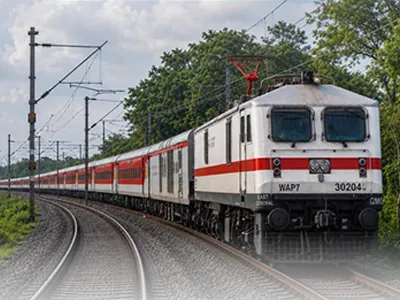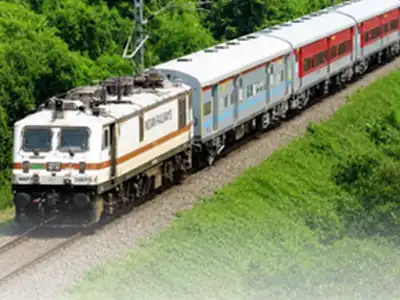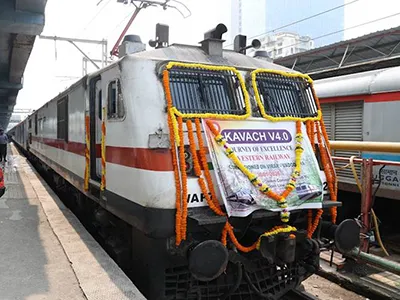
The projects focus on railway safety, passenger amenities, freight capacity and environmental sustainability. The WAG-12 maintenance shed has been constructed at a cost of Rs 700 crore, while the Kavach train protection system has been commissioned on the Sabarmati-Kalol section at a cost of Rs 48 crore. Work has also commenced on implementing Kavach on the Ahmedabad-Palanpur and Ahmedabad-Samakhiali sections, along with the doubling of the Sabarmati-Sarkhej railway line.
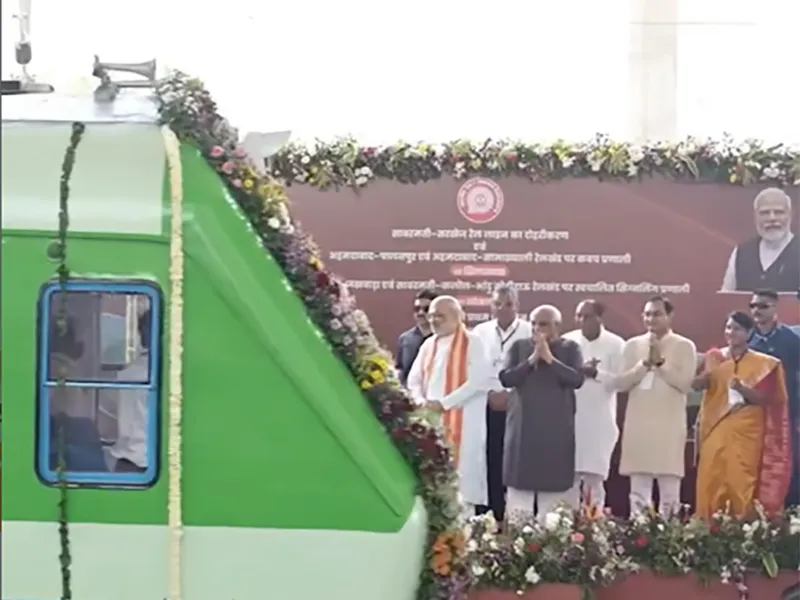
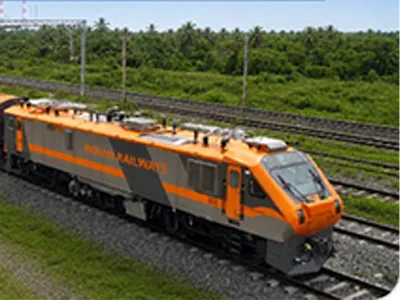
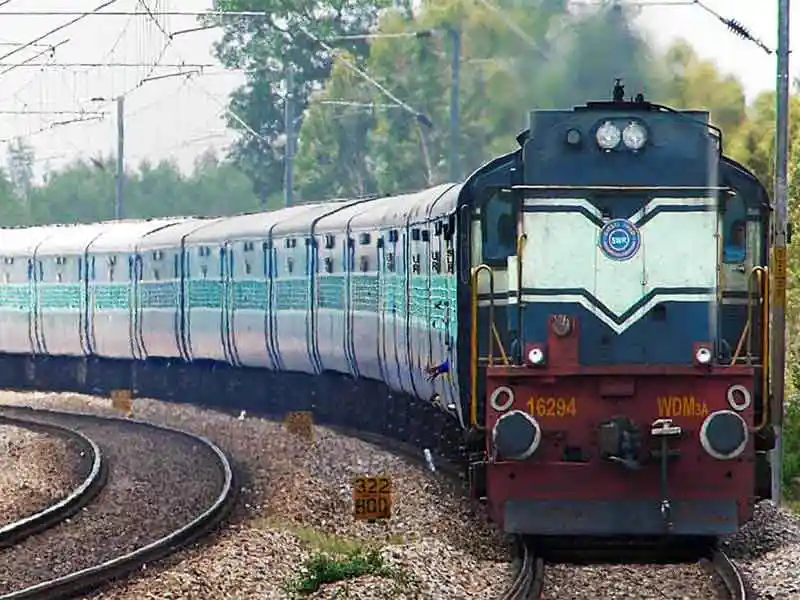
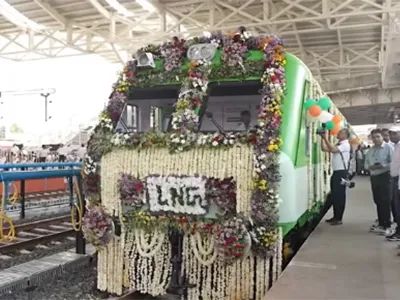
The newly inaugurated LNG-powered train introduces an alternative fuel technology to Indian Railways. The train uses a diesel-LNG dual-fuel system, with LNG expected to reduce diesel consumption and emissions. Shah said the initiative would contribute to environmental conservation.
Shah also highlighted the successful trial of a double-stack long-haul container train between Jawaharlal Nehru Port in Mumbai and Vadodara. He said wider adoption of double-stack freight operations could increase rail freight capacity. He also referred to the development of dedicated freight corridors, rapid rail systems and upgraded railway stations.
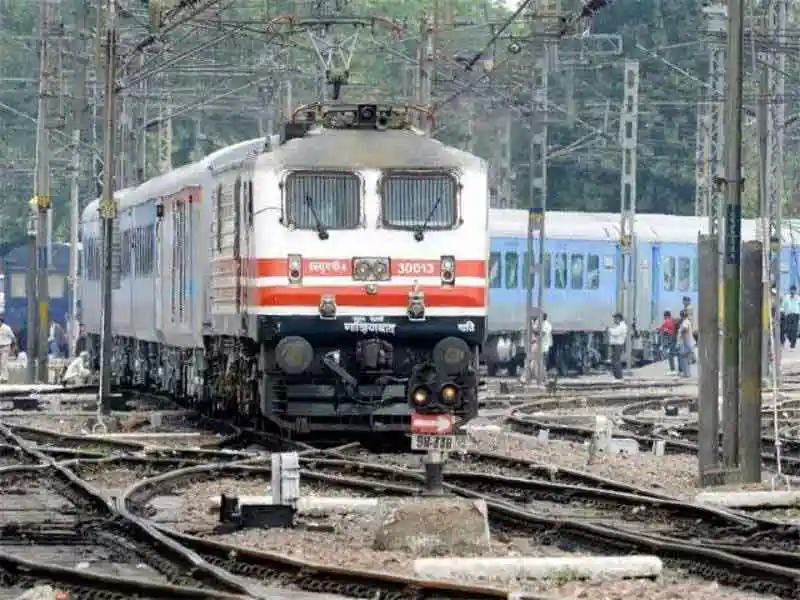
Addressing railway modernisation, Shah cited progress in electrification, locomotive manufacturing and fuel efficiency. He said railway electrification had reached 99.6% of the network, while annual diesel consumption had declined from 293 crore litres in 2015-16 to 108 crore litres in 2024-25. He also highlighted the increase in annual electrification from 75 km in 2010-11 to 7,188 km in 2023-24. These figures were presented by Shah during the event.
The projects form part of ongoing efforts to modernise railway infrastructure in Gujarat, improve operational capacity and strengthen safety across key sections of the network.