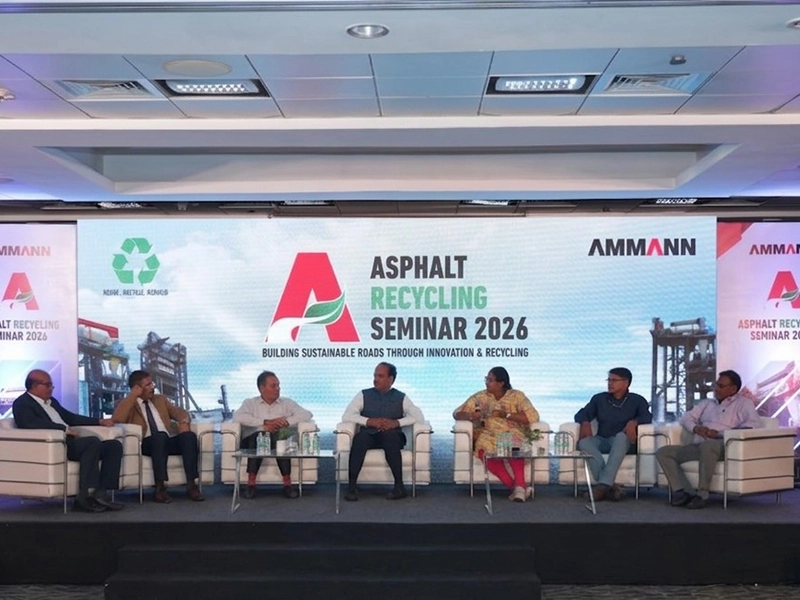
With material costs continuing to rise and sustainability becoming a key priority for infrastructure projects, the event provided a platform for industry experts to exchange insights on the wider adoption of Reclaimed Asphalt Pavement (RAP) and other recycling technologies.
The seminar featured presentations from industry and academic experts, including Prasad Dayal, General Manager, Ammann India, Martinho J. Fernandes, Assistant Vice President and Product Head, Asphalt Plants, Ammann India, Dr. Dharamveer Singh, Professor at IIT Bombay, Dr. Manoranjan Parida, Former Director, CSIR-CRRI, Dr. Ramya Sri Mullapudi, Assistant Professor, IIT Hyderabad, and Rajesh Kumar Pandey, Independent Director, Vertis Infrastructure Trust. The sessions explored a range of topics related to sustainable road construction, including asphalt recycling technologies, high RAP utilisation, pavement recycling practices, rejuvenator technologies, evolving policy frameworks, and the future of asphalt recycling in India.
Addressing the gathering, Dheeraj Panda, Managing Director, Ammann India, said, “The defining question for India's road construction industry over the next decade will not be how much infrastructure we build, but how much value we can create while consuming fewer virgin resources. The industry's competitive advantage will increasingly come from innovation, circularity, and technology-led resource optimisation. Solutions such as Reclaimed Asphalt Pavement (RAP) represent a fundamental shift in how we think about road assets as resources which can be renewed. Collaboration between industry, policymakers, researchers, and technology providers are critical to enable an ecosystem for recycling. Through discussions like these Ammann aims to achieve this and make recycling an integral part of road construction in India."
Experts highlighted the growing potential of RAP to reduce dependence on virgin raw materials while maintaining pavement quality and performance and shared interesting insights on how advanced RAP technologies can substantially reduce virgin aggregate consumption, lower fuel consumption and generate cost savings. Participants also discussed pathways to increase recycling rates in India through greater technology adoption, policy support, and industry awareness.
The seminar also highlighted the significant opportunities for recycling-led road construction in Telangana and Andhra Pradesh, where continued investments in transportation infrastructure are driving demand for advanced construction technologies.
Ammann India commands an estimated 50% market share across Telangana and Andhra Pradesh and has supported several road infrastructure projects in the region. Through its technology portfolio and local presence, the company continues to work closely with contractors and project stakeholders to advance sustainable road construction practices.
At the national level, Ammann India remains at the forefront of asphalt recycling innovation.
The seminar concluded with a shared commitment from participants to strengthen collaboration and accelerate the adoption of recycling technologies, reinforcing the role of sustainable construction practices in meeting India's growing infrastructure needs.