Uttar Pradesh has joined the elite list of cities having metro rail services, and has set a record for early commissioning, despite some initial delays. Please comment.
Lucknow Metro Rail Project is a joint venture Mass Rapid Transit System (MRTS) project between the Government of India and the Government of Uttar Pradesh. There are two major statutory clearances that are generally required before commencing a public run of Metro services in the country. One is the technical clearance from the Ministry of Railways, which LMRC received on 8th June 2017, and the second clearance from the Commissioner of Metro Railway Safety (CMRS) was given to LMRC on 14th August 2017. The project was scheduled to roll out on 27th March 2017, but the late clearances led to an initial delay in starting the project.
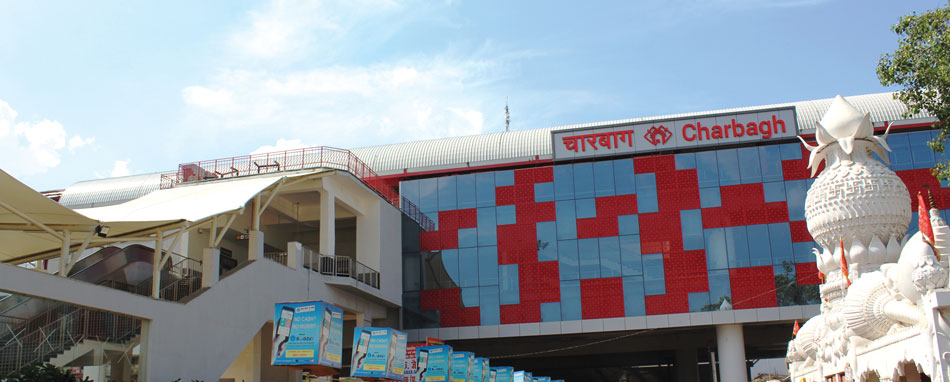
On 5th September 2017, Phase 1 of Lucknow Metro Rail Corporation’s ‘Priority Corridor’ stretching 8.5 km from Transport Nagar to Charbagh railway station, was inaugurated and it opened to the public the next day. It is for the first time that any Metro project has been commissioned in less than three years for commercial services. LMRC has now earned the distinction of being the fastest ever Metro project executed in the country, and thereby, set a new benchmark in Metro Rail project execution.

How will the Metro system help in easing traffic congestion and reducing vehicle pollution, and thereby, improving air quality and quality of commuting in the city?
As per LMRC Detailed Project Report 2013, the tables below give an estimate of the reduced number of accident, reduced traffic consumption and reduced fuel consumption after implementation of metro rail services.
Reduction in road accidents: This is a very positive impact of the Metro, and has been found in other cities as well.
| ESTIMATED REDUCTION IN ACCIDENTS | |||||
| Quantified Benefits in Horizon Years | 2019 | 2020 | 2021 | 2022 | 2023 |
| Reduced No of Fatal Accidents in Year | 20.73 | 22.48 | 23.75 | 25.08 | 26.49 |
| Reduced No of Other Accidents in year | 186.56 | 202.35 | 213.72 | 225.74 | 238.45 |
| ESTIMATED REDUCTION IN PASSENGERS AND VEHICLES | ||
| Vehicles | % Passengers | % Vehicles |
| BUS | 14.53% | 0.80% |
| MINI BUS | 3.63% | 0.42% |
| CAR | 1.54% | 1.02% |
| TAXI | 0.17% | 0.10% |
| 2WH | 75.85% | 94.09% |
| AUTO | 4.27% | 3.56% |
| ESTIMATED REDUCTION IN FUEL CONSUMPTION | |||||
| Quantified Benefits in Horizon Years | 2019 | 2020 | 2021 | 2022 | 2023 |
| Annual Fuel Saved by Metro Passengers in thousand Tons. | 33.72 | 37.17 | 39.91 | 42.86 | 46.04 |
| ESTIMATED REDUCTION IN AMBIENT AIR QUALITY LEVELS | |||||
| Tons/Year | 2019 | 2020 | 2021 | 2022 | 2023 |
| CO | 1498.35 | 1634.55 | 1736.38 | 1844.60 | 1959.59 |
| HC | 1011.42 | 1103.36 | 1172.10 | 1245.14 | 1322.76 |
| NOX | 281.71 | 307.32 | 326.46 | 346.81 | 368.43 |
| PM | 56.37 | 61.49 | 65.33 | 69.40 | 73.72 |
| SO2 | 3.75 | 4.10 | 4.35 | 4.62 | 4.91 |
| CO2 | 38579 | 42085 | 44707 | 47493 | 50454 |
| Total Emission Saved | 41430 | 45196 | 48012 | 51004 | 54184 |
When fully commissioned in April 2019, LMRC will operate for approximately 23 km long North – South Metro corridor from Chaudhary Charan Singh Airport up to Munshipulia for its Phase 1A Project.
The estimated completion cost for the Phase 1A Project is Rs.6,880 crore. It is being funded in equity contributions of 50:50 by the Central and the State governments, and externally through a loan of Rs.3,502 crore by the European Investment Bank (EIB). The State Govt. is also providing land free of cost for the project and also reimbursing the State taxes.
As per the Detailed Project Report 2013 (DPR) the ridership of the North – South Corridor will be as follows:
North-South Corridor: CCS Airport to Munshipulia
| Year | Corridor Length (Km) | PHPDT (Peak Hour Peak Direction Traffic) | Daily Passenger Km | Daily Ridership |
| 2020 | 22.878 | 20976 | 4963877 | 644659 |
| 2030 | 34955 | 8223462 | 1054290 |
In its first phase of less than three years, LMRC has been bestowed with many awards and accolades, and recognized internationally as well. It is now an ISO 14001: 2004 & OHSAS 18001: 2007 certified organization. This was awarded in recognition of its integrated management system that complies with the ISO & OHSAS standards and requirements.
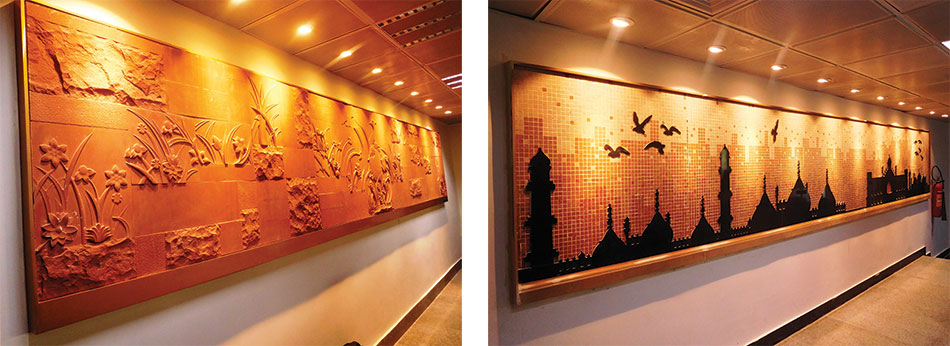
- All Metro Stations have been designed keeping in mind the traditional and modern Lucknow to give it a feel of a 21st century city with a heritage touch.
- The Metro Stations and the Transport Nagar Metro Station have been designed and built as ‘Green’ buildings in accordance with the standards of the Indian Green Building Council (IGBC). Recently, the Lucknow Metro Stations have received the ‘Platinum’ certification in this regard. This is the highest green rating that has been awarded to all the eight Metro stations. LMRC is taking forward the mission of “Cleaner and Greener Uttar Pradesh” in mass rapid public transportation.
- On 11th March 2016, LMRC was adjudged the Best Metro project for ‘Excellence in Innovative Designs’. The award “Excellence in Green & Sustainable Build” was given by ITP Publishing Group in wake of the sustainable and green construction methodology/practices being followed during civil construction throughout the Metro project in Lucknow.
- On 30th May 2016, LMRC was honoured with the ‘International Quality Summit (IQS) Award 2016’ under Gold Category by Business Initiative Directions (BID) Group One - an international organization involved in promoting quality culture, innovation and excellence - headquartered in Madrid, Spain. Lucknow Metro was awarded for maintaining the highest quality standards in project execution while being the fastest Metro Project being executed in the country.
- To have better quality control, most of the elements of viaduct and stations are pre-cast.
- Being on the congested main road of the city, all the pre-cast elements were erected during the night only.
- At Mawaiya Railway Crossing, LMRC constructed a special balanced cantilever span of 255 meters (central span 105 meters; end spans of 75 meters each). This is one of the most challenging and critical jobs, which has been executed at a height of 21.5 meters above the ground level while surpassing a Railway Crossing at a height of 15.2 meters from the ground level under extremely difficult situations and in the middle of the main road traffic.
- At Awadh Rotary, Lucknow Metro launched a 60 meter special steel span bridge crossing the rotary over a statue in the middle. This bridge, which has been built at a height of approximately 13 meters above the ground, connects both the ends of the Metro viaduct to provide seamless connectivity for the Metro trains. It is one of the rare works being done for any Metro project in the country.
Elevated Section
Lucknow Metro’s stretch between Amausi & Charbagh and between K. D. Singh Stadium & Munshipulia are the elevated sections with a 19 km long Metro stretch. Amausi, Transport Nagar, Krishna Nagar, Singaar Nagar, Alambagh, Alambagh Bus Stand, Mawaiya, Durgapuri, Charbagh, K.D. Singh Stadium, Vishwavidyalaya, IT College Junction, Badshah Nagar, Lekhraj Market, Ram Sagar Mishra Nagar, Indra Nagar and Munshipulia are the 17 elevated Metro Stations in this corridor.
Underground Section
The 4 km underground stretch comprises the Chaudhary Charan Singh Airport Metro Station (CCS Airport), Sachivaalaya, Hazratganj and Hussainganj Metro Stations of the 23 km long North –South Metro corridor (Phase 1A).
What new technologies and methodologies were adopted by LMRC for the faster and smoother construction of the metro projects?
LMRC selected the following state-of-the-art technologies:
- Rolling Stock has incorporated the latest Communication Based Train Control (CBTC) Signaling system with lightweight modern stainless-steel coaches
- Heavy-Duty Escalators and Lifts
- Electrical and Mechanical systems
- Air Conditioning, LED Lights, Silent DG sets, etc
- Fire Detection and Protection Systems
- Contactless AFC system using Smart Cards/Tokens
- Tele Communication System for Public Announcement, PIDS, CCTVs
- Energy-Efficient Equipment: Sustainable and Environment friendly technologies
- Green Initiatives for Station Buildings and Workshop Cum Maintenance Depot
- Fully barrier-free for physically challenged persons.
Construction methods include building elevated viaducts using pre-stressed concrete box girders placed on a single pier with pile or open foundation, use of a tunnel boring machine (TBM) for underground tunneling, and cut-and-cover with top-down method for construction of underground stations.
Lucknow Metro is a role model for other metros coming up in Kanpur, Varanasi, Agra, Meerut, Allahabad, Jhansi and Gorakhpur. LMRC has ushered in a revolution by bringing Mass Rapid Transit System (MRTS) in important cities of Uttar Pradesh.
How challenging was the construction of the 3.5 km underground stretch from Charbagh to Hazratganj? What tunneling technologies were adopted?
Before starting work, we did a lot of public interaction. Utility identification was a big issue. The entire city had already been utilized for making roads and there were narrow footpaths and congested buildings. We widened some of the footpaths, removed some of the electrical poles, and shifted some cables, telecoms and water pipelines.
The city had never seen work on such a large scale and that too in such busy areas. We took help of utility agencies and they supported us despite LMRC being a new entity for them. Gradually, people began to have confidence in us and we shifted the utility zones on their behalf. We set up barricades, deployed marshals and trained them with the help of the local police.
A single technology is not sufficient for a metro project as it requires different kinds of construction work for various lines and stations. The Lucknow Metro is largely using the Cut and Cover Methodology for constructing the Underground Stations while Tunnel Boring Machines (TBMs) are being used for tunnel excavation.
How does Lucknow Metro with its partners & contractors ensure timely completion of work and use of the latest construction equipment?
Today, machines are fast replacing physical manpower. This has increased the efficiency and speed of project deliverance, as projects are now being completed within the targeted schedule and without cost overruns. From day one, LMRC ensured that the targets and schedules be met and deadlines never missed on the ground.
The Metro engineers in LMRC are thorough professionals in their respective fields, and abreast of the latest technological developments around the world. Construction machinery like Heavy Duty Cranes, Mobile Cranes, Tunnel Boring Machine (TBM), Cutter Head, Stone Crusher, Displacement Cylinder, Camera, Concrete Batching and Mixing Plant, Drilling Rig etc. are used under the supervision of these engineers.
The team of general consultants (GC) - a consortium of AYESA-KRNA-AARVEE-GEODATA - is always helping and guiding LMRC in all matters pertaining to implementation, testing, research and commissioning of the project etc, in close coordination with LMRC officials and providing the much-needed guidance and support to the Metro team.
Which big construction and engineering companies are associated with the project?
Larsen & Toubro (L&T), Gulermak, Tata Projects Limited (TPL), Systra, Canon Fasteners, Alstom, Mikroelectronika, Datamatics and others.
LMRC Green & Energy Conservation Measures
- Use of regenerative braking in the trains will result in saving of 30 to 35& traction energy, resulting in reduction in emission of greenhouse gases.
- Use of 1% criteria for underground stations in the AC system for the stations, using Variable Voltage Variable Frequency drive for all lifts and escalators, provision of LED lights at stations
- Use of energy efficient equipment for Environment Control System and Tunnel Ventilation System for the underground section
- LMRC plans to use 1.5 MW - 2 MW of electricity from roof-mounted solar photo voltaic cells of train’s stabling and inspection line sheds under RESCO model
- Implementation of green construction practices like wheel washing of vehicles leaving the site, tree transplantation, recycling of curing water, regular cleaning and maintaining, aesthetically pleasing barricades at construction site, among others.