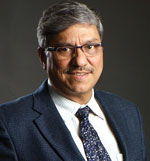
HCC, one of the leading construction companies in India with almost 9 decades of experience, has been setting norms and adopting a strict monitoring mechanism for key parameters across its projects. Mr. Arun Karambelkar, President & CEO, HCC, during an interview with S.A.Faridi & Maria R, says, "We will keep focusing on sustained operational efficiencies through value engineering, smart subcontracting, and increasing equipment productivity."
How do you see the year 2016 for HCC in India?
We're one of the leading construction companies in India with almost 9 decades of experience. Our core business is to provide engineering and construction services for Power Projects (Hydro, Nuclear, Thermal), Transportation projects (Roads, Bridges, Metros, Ports), Water Solutions (Irrigation, Water Supply, Sewerage), Industrial Plants, and Institutional Building projects.
Since April 2015, we have secured orders with over Rs.10,000 crore in hydro power, transportation, nuclear power, and buildings. Almost 70% of this order inflow comprises large size projects (over Rs.1,000 crore). Our order backlog has increased by 1.5 times from Rs.13,920 crore as on June 30, 2015 to Rs.20,762 crore as on July 31, 2016. We are also the lowest bidder in 4 projects that account for Rs.2,986 crore where orders are yet to be signed. We now have a well diversified order book across various infrastructure sectors and geographies with good revenue visibility for the next 4-5 years.
Also, over the last couple of years, we have focused on sustained operational efficiencies by setting norms and adopting a strict monitoring mechanism for key parameters across our projects. These measures have resulted in improved inventory-turnover ratio, operating margins, cash collections as well as employee productivity.
We willl keep focusing on further improving operational efficiencies through value engineering, smart subcontracting, and increasing equipment productivity. Our focus on large size orders is also expected to result in greater depth of project management and better margins.
Which business segment is currently the major contributor of revenue?
Traditionally, Hydro Power projects have been the largest contributor to our turnover with share of over 40% till FY 2013-14. In the last two years, transportation sector has become the top contributor with share of over 50% of turnover and hydro power has ranked second, with share of about 30%. Water solutions, nuclear and special projects have accounted for 8% and 7% of total turnover respectively, in FY 2015-16. Transportation projects now account for 45% of our order backlog. We foresee that this sector will continue its dominance in turnover and order book in near future, followed by Hydro Power projects.
How do you see HCC's current involvement in Metro projects and its future prospects, considering Metro Rail projects in various stages of planning and implementing in around 26 cities of India?
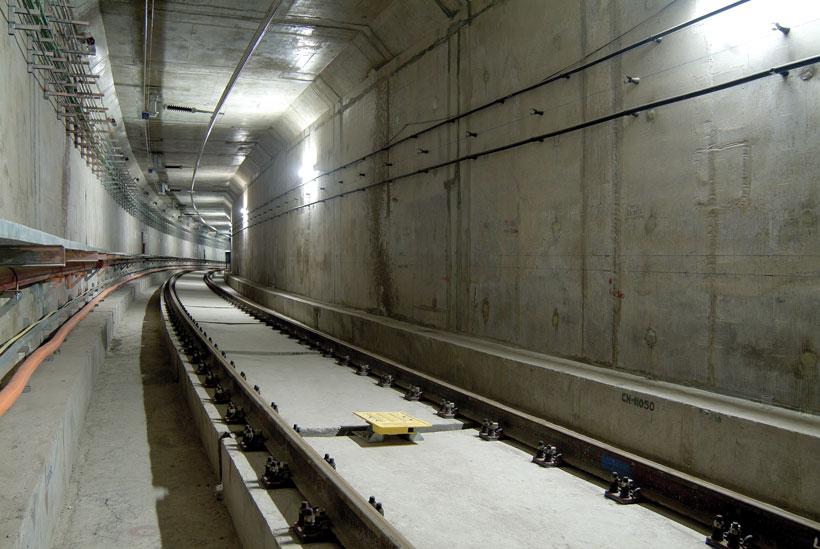
HCC has had the privilege of constructing India's first three operational Metro Rail projects in Kolkata, Delhi, and Mumbai. HCC was involved in building India's first Metro Rail Project in Kolkata in 1996. HCC has been associated with India's second Metro Rail project in Delhi since 2004 and has built 18 km underground metro line with 13 underground stations in 6 different contracts. The company has also built 6 elevated stations for line 1 of the Mumbai Metro Project and has recently secured work order for building package 2 of Mumbai Metro Line 3, which involves construction of 4.072 km of underground railway line with 4 underground stations.
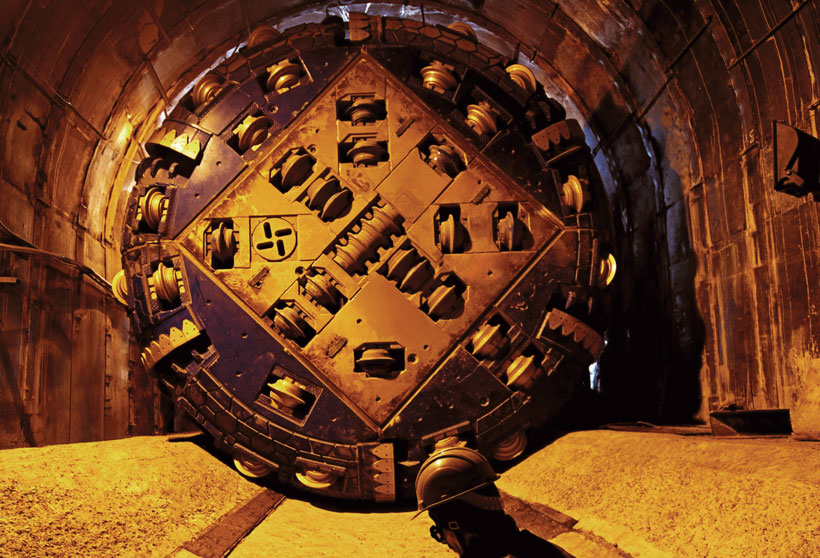
"The tunnelling history of India is synonymous with HCC's tunnelling history and it has served the nation by building over 320 km of tunnels for most civil engineering applications such as hydropower, water supply, irrigation, and transportation with some of the state-of-the-art technologies and practices."
Till date, HCC has done 25 kms of tunnelling in Metro Rail Projects. We have used a wide range of tunnelling methodologies including cut & cover method, tunnel boring machines and new Austrian tunnelling method. HCC has capabilities to build all types of metro projects - be it elevated or underground. We have built large station buildings both on surface as well as underground. We have built under various contracting models like EPC turnkey, design build, etc. HCC can deliver a complete Metro Rail Project on an EPC basis.
We are actively bidding for the upcoming Metro Rail projects in Delhi, Nagpur, Vijaywada etc. Given our extensive experience, we are comfortably positioned to get a sizeable market share.
HCC, a pioneer in underground construction, has recently been awarded to construct two tunnels and a Bridge Project by IRCON. Tell us about the expertise, the methodologies, and the latest technologies being adopted for tunnel construction.
The tunnelling history of India is synonymous with HCC's tunnelling history. Undertaking its first contract in 1926, HCC has served the nation by building over 320 km of tunnels for most civil engineering applications such as hydropower, water supply, irrigation, and transportation, with some of the state-of-the-art technologies and practices. The company also has a distinction of having worked in various geologies that throws up proportionate and occasionally disproportionate magnitudes of challenges and risks including construction in almost all the seismic zones of India.
HCC has helped evolve the underground construction technologies in India. HCC was the first company to use Alimac Raise Climber for the construction of steeply inclined pressure shafts in India for Koyna Hydel Power Project, Units 1&2 in 1960.
Having built India's first underground powerhouse in in the Himalayan region for Yamuna Hydel Power Project, Uttarakhand, in 1960, HCC pioneered the use of heavy rock support systems like pre-stressed steel cable anchors & rock-bolts in underground construction.
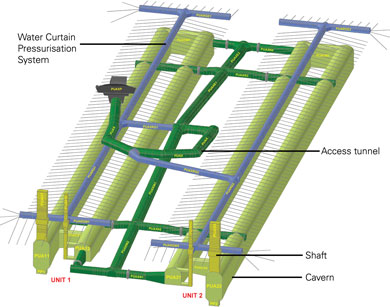
Vizag Cavern drawing
In 1994, for the 2.7 km-long head race tunnel for Chamera Hydel Power Project - Stage I, HCC extensively used New Austrian Tunnelling method for the first time in India.
Around the same period, for the construction of 11 km-long head race tunnel for Nathpa Jhakri Hydel Power Project, HCC used DRESS method (Drainage Reinforcement Excavation Support System) to successfully complete excavation amidst adverse geology, heavy water ingress, rock collapses, etc.
In 2012, HCC constructed India's first strategic crude oil storage cavern at Vizag followed by second oil storage cavern at Padur. These caverns consist of huge tunnels of 20m width, 30m height and around 2.5 to 3 km in length. The oil is stored in these caverns based on the principles of hydraulic pressure exerted by the ground water that prevents oil leakage. To maintain the ground water level, water curtains system consisting of a mesh of water tunnel and several water curtain, bore holes are drilled in the solid rock mass above the cavern cavity, each bore hole of around 100m of length. Secondly, underground bulk explosives were used for the construction of the caverns for the first time in India, which gives better yield than the conventional cartridge system. Bulk explosives have many other advantages that include shorter time cycle of charging, less manpower requirement and safest process in terms of handling and storage.
In 2013, HCC built India's longest transportation tunnel – Pir Panjal railway tunnel in J&K, where a variety of tunnelling techniques like New Austrian Tunnelling method, road headers & tunnel excavators were used.
In 2014, HCC created a world record for the 1st successful tunnel boring machine operation in the Himalayan region to complete the head race tunnel of Kishanganga Hydroelectric project in Jammu & Kashmir.
Tunnelling in urban grounds is complex and challenging, often due to existing urban infrastructure, high-rise buildings, and existing public utilities. While meeting such challenges, HCC has successfully completed India's first Metro Rail project in Kolkata and six underground sections of Delhi Metro. Recently, the company was awarded a contract to construct package 2 of the first underground metro of Mumbai using a dual mode Shield Tunnel Boring Machine.
HCC is also currently building 18.8 km long and 9.2 M finished diameter tunnel for Veligonda Project by deploying India's largest diameter tunnel boring machine.
Tunnelling through fragile, weak and jointed rock masses of the Himalayas is often challenging for planners, designers, engineers, geologists, and construction contractors. Tunnelling in such regions invites multiple, often unforeseen problems, such as face collapse, chimney formation, water-inrush, hot water springs, gas explosion, squeezing, and so on. Dealing with such issues necessitates responsive and "on the toes" engineering and construction, often requiring sleepless vigil and presence of mind. To alleviate and surmount such challenges, HCC in its bloodline has built sound construction practices that include detailed geological explorations, state-of-the-art designs, adaptable tunnelling practices, in-depth knowledge of monitoring and feedback systems and mechanisms with an inbuilt culture for safety.
How do you see government's ambitious target of constructing 40km of road per day in 2016-17? How is your company prepared to be a part of this initiative?
The Policy interventions of the NDA government has helped the road sector to pick up pace. We understand that during the previous government regime the pace of road construction was around 4 to 5 km per day which has improved to 16 km per day and for the current fiscal, the Government has set target of 40 km per day. In FY 16, the government issued new orders worth Rs.73,240 crore. Coupled with it, the teething issues of land acquisition are being addressed and innovative solutions such as contracting models interventions, push for global player's participation has given a fillip to the road sector.
As I said earlier, HCC has already seen a spurt in the order booking since April 2015 which is over Rs.10,000 crore of which nearly 75% is under transport sector including highways, railways and metro. We will continue to focus on large value EPC road projects and are very confident of securing a good market share in road projects in the year ahead.
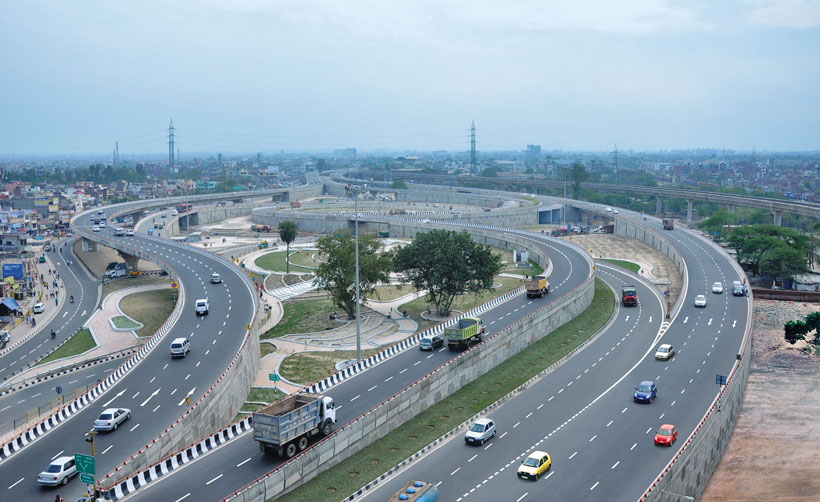
For sustainable construction, innovative and technologically advanced equipment are quite important; how does HCC look at this important aspect and what is your equipment bank strength as of today and plans to acquire new equipment in near future?
As most of the construction activities are fully mechanized, equipment bank has been the backbone of HCC's operations and is valued at Rs.1,829 crore. To meet the challenging requirements of large scale complex projects, the equipment mix has been very diverse in nature and is highly specialized which include tunnel boring machines, drill boom jumbos, road pavers, piling equipment, batching plants, crushing plants, hot & cold mix plants as well as general purpose equipment like excavators, dumpers etc.
HCC invests in equipment on a project to project basis. A lot of emphasis is given to the equipment planning at the pre-tender stage itself. The equipment proposed to be deployed on a project, is finalized after considering the needs of the project, availability of suitable equipment from the equipment bank, and new specialized equipment which has to be purchased or hired / leased.