Promoting and adopting innovative technologies in construction necessitates collaboration amongst construction firms, technology providers, educational institutions, and policymakers.
Sanjay Kumar Sinha - Managing Director, Chaitanya Projects Consultancy

The Indian construction industry is a vital pillar of the nation's economic infrastructure, demonstrating notable resilience in recent years. In the aftermath of the pandemic, the industry has strategically navigated through challenges, displaying remarkable adaptability and innovation in response to evolving conditions. According to industry estimates, the sector is on an upward trajectory, projected to reach $1.4 trillion by 2025. This growth is driven by government initiatives, shifting consumer preferences, and significant technological advancements.
Trends in Construction Industry
Within the construction industry, there is a noticeable trend toward reducing labor costs through strategic advancements in operational efficiencies, technological innovations, and skill development. This positive shift toward technology, innovation, and sustainability not only tackles the current situation but also prepares the industry for future demands. For example, modular construction involves assembling buildings off-site in controlled environments, which reduces construction time and costs. Building Information Modeling (BIM) improves project planning and execution by providing a detailed digital representation of a building, minimizing errors and rework. Integrating sustainable practices and smart technologies, such as the Internet of Things (IoT), drones, and robotics, setting new standards for the industry. Such advanced management software allows real-time tracking of progress and resources, enabling timely interventions to prevent delays and cost overruns.The construction industry is leveraging new products and processes that further enhance productivity, efficiency, and sustainability. For example, self-healing concrete repairs its cracks, extends the lifespan of structures, and reduces maintenance costs, decreasing the need for skilled labor for repairs. Cross-laminated timber (CLT) offers a sustainable and strong alternative to traditional building materials, reducing carbon emissions and facilitating faster construction due to its lightweight nature.
Advancements in Technologies
The construction industry is experiencing significant advancements through trends and innovations such as prefabricated elements and structures, ready-manufactured buildings, 3D printing, drones equipped with LiDAR technology, BIM, cloud computing, construction robotics, and technologies like Augmented Reality (AR), Virtual Reality (VR), and Metaverse.Prefabrication: This technology involves producing modules that are assembled directly at the construction site, similar to building with a designer kit. It enables the manufacturing of facade panels, pre-assembled engineering systems, structural elements, and more, streamlining the construction process and enhancing efficiency.
Building Information Management: BIM enables architects, engineers, contractors, and subcontractors to work together on intricate design and construction details. Through a shared database and computer model, stakeholders collaborate on a comprehensive 3D representation of the project, encompassing everything from structural elements like beams and girders to functional systems such as HVAC and electrical installations, as well as the aesthetic aspects like walls, arches, roofs, and rails.

3D Printing: When integrated with BIM, 3D printing uses robotic technology to print designs layer by layer using advanced construction materials. With multi-axial control, these printers offer custom motion systems tailored to specific needs. They eliminate the need for formwork, providing high design flexibility. Construction printers can create entire buildings or prefabricated components. This technology can intricately print design elements like facades, parts, fixtures, and furniture, enhancing project customization. Over a dozen 3D printing projects have already been completed in India.
AR, VR, and Metaverse: Today, construction companies are increasingly leveraging virtual environments to enhance various phases of building and infrastructure design, construction, and operation. VR and AR are improving communication and collaboration among all stakeholders in construction projects. VR allows for virtual walk-throughs of buildings and infrastructures, facilitating better communication between designers, engineers, and contractors. AR overlays digital information onto real-world environments, enhancing interactions with stakeholders. AR and VR serve as precursors to the metaverse, fundamentally transforming how teams design, build, and operate. Metaverse revolutionizes collaboration and communication, enabling seamless idea exchange within local or global teams. Experts worldwide can unite in the metaverse to collaborate on solutions, leading to more sustainable, efficient, and innovative buildings.
Drones with LiDAR technology: Drones, or Unmanned Aerial Vehicles (UAVs), equipped with Light Detection and Ranging (LiDAR) technology, are transforming the construction industry. LiDAR allows drones to capture accurate 3D maps of construction sites, which is essential for surveying, inspections, and progress monitoring. These drones cover large areas quickly and safely, providing valuable data to project managers and stakeholders.
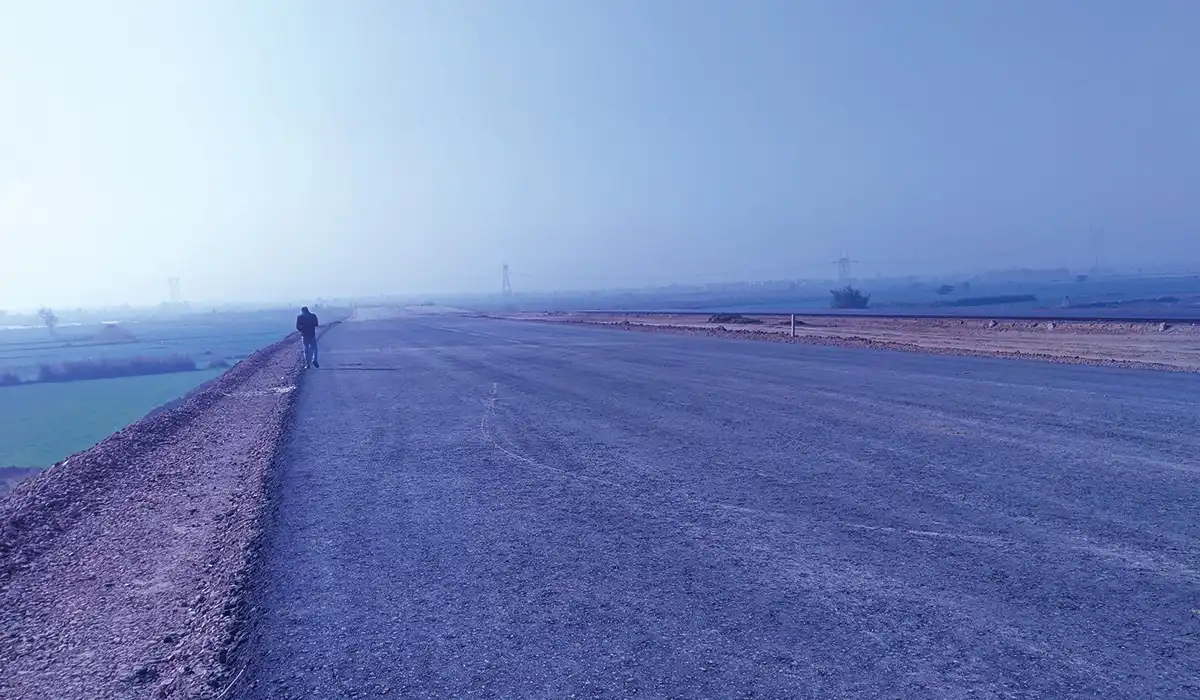
For the Delhi-Mumbai 8-lane access-controlled greenfield expressway, Chaitanya Projects Consultancy (CPC) designed a 470 km stretch traversing Haryana, Madhya Pradesh, Gujarat, and Rajasthan villages and suburbs. CPC utilized cutting-edge survey techniques with drones and LiDAR technology to ensure precise data collection and efficient area coverage, significantly enhancing the planning and construction processes.
Sustainable Initiatives in Construction Industry
Waste reduction measures, such as lean construction practices and material recycling, not only decrease disposal expenses but also streamline project timelines and reduce labor costs. Similarly, efforts to reduce CO2 emissions through energy-efficient practices and renewable energy sources not only align with environmental goals but also lead to long-term cost savings by decreasing energy consumption and potential carbon-related expenses. Ultimately, by integrating sustainability into construction practices, contractors can improve profitability, enhance competitiveness, and contribute to a more sustainable built environment.Innovative technology in construction serves as a driving force for sustainable practices. By incorporating advanced technologies and sustainable methods, the industry can address the increasing demand for environmentally responsible buildings. Key practices include the use of eco-friendly materials, energy-efficient designs, reducing waste, and managing resources responsibly.