The programme brought together 33 Ambassadors and senior embassy officials representing 29 countries, providing them with first-hand exposure to CSIR's scientific capabilities, indigenous technologies and advanced research infrastructure. The inaugural edition featured visits to two premier CSIR laboratories in New Delhi—the CSIR-Central Road Research Institute (CSIR-CRRI) and the CSIR-Institute of Genomics and Integrative Biology (CSIR-IGIB).
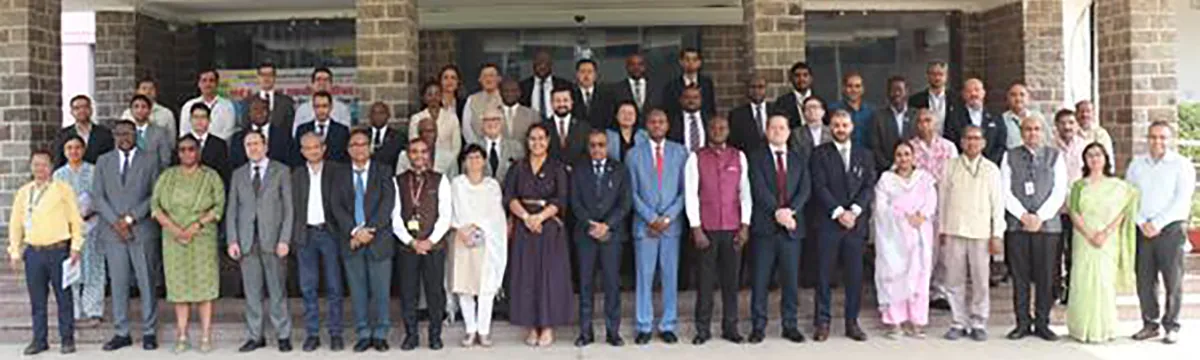
Jointly conceptualised by CSIR and MEA, the initiative seeks to build stronger scientific and technological linkages with partner countries, particularly across the Global South, by showcasing India's research capabilities and identifying opportunities for collaborative research, technology transfer, capacity building and deployment of innovative solutions addressing shared developmental challenges.
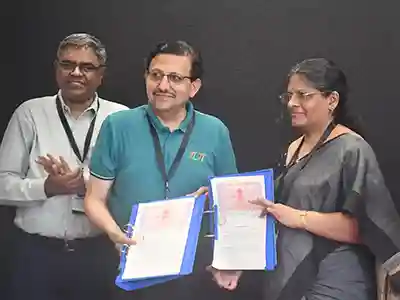
During the inaugural session, Dr. Rama Swami Bansal, Head, International S&T Affairs Directorate, CSIR, presented an overview of CSIR's scientific and technological capabilities, its international engagements and potential models for collaboration with countries of the Global South. Dr. Sadre Alam, Joint Secretary, MEA, outlined the genesis, objectives and expectations of the programme, highlighting its role in fostering international partnerships through science and technology.
Dr. Chalumuri Ravi Sekhar, Director, CSIR-CRRI, and Dr. Souvik Maiti, Director, CSIR-IGIB, introduced the visiting delegation to their respective institutes' research strengths, technological achievements and contributions in the areas of sustainable infrastructure and healthcare.
At CSIR-CRRI, the delegation witnessed several advanced research facilities and technologies, including the Driving Simulator, Cyclic Load Test Facility, Steel Slag Laboratory, a 3D model of bio-binder technology and drone models. A major highlight was the live demonstration of Ecofix, a steel slag-based instant pothole repair mix developed for rapid road maintenance. The demonstration showcased how indigenous technologies can transform industrial waste into valuable resources while offering practical, sustainable and cost-effective solutions for infrastructure development.
The delegation subsequently visited CSIR-IGIB, where participants were introduced to advanced facilities in genome sequencing, biosafety, zebrafish research, biobanking and Good Manufacturing Practice (GMP). The visit offered insights into India's growing capabilities in genomics, biomedical research, precision healthcare and biotechnology, highlighting opportunities for scientific cooperation and capacity building in the healthcare sector.
The programme concluded with an interactive session during which the visiting Ambassadors and embassy officials shared their perspectives, priorities and expectations for future engagement with CSIR. Discussions explored opportunities for joint research, technology partnerships, knowledge exchange, capacity building and adaptation of Indian technologies to address the specific developmental needs of partner countries.
The inaugural MEA–CSIR Tech Familiarization Programme represents an important step towards translating India's scientific and technological strengths into meaningful international partnerships. By bringing foreign diplomatic representatives directly into CSIR laboratories and facilitating interactions with scientists and technology developers, the initiative provides a platform for identifying practical areas of cooperation and accelerating the adoption of innovative solutions.
The programme is expected to open new avenues for sustained engagement between CSIR and countries of the Global South, reinforcing India's commitment to sharing scientific knowledge, technological expertise and indigenous innovations for inclusive and sustainable development.