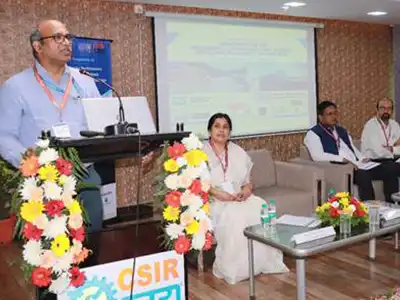
The symposium highlighted the growing role of geosynthetics and advanced polymeric materials in improving the durability, resilience and performance of transportation infrastructure. Minimol Korulla, Vice President of the Geosynthetics Society, Pune, emphasised the need to standardise field practices and promote advanced materials for infrastructure development.
CSIR-CRRI Director Dr Chalumuri Ravi Sekhar said geosynthetics have evolved from supplementary construction materials into important design components for sustainable and resilient transportation corridors. Prof G.L. Sivakumar Babu, President of the Indian Geotechnical Society and Chairman of the CSIR-CRRI Research Council, highlighted the importance of integrating geosynthetic applications with resilient and eco-efficient engineering practices.
Executive Director, Railway Board, Vivek Bhushan Sood, discussed the role of geosynthetic systems in Indian Railways’ modernisation, particularly for track-bed stabilisation, heavy-haul capacity and vibration mitigation. Amarendra Kumar, Director of the National Highways & Infrastructure Development Corporation Limited (NHIDCL), highlighted the application of geosynthetic ground engineering solutions in challenging terrain, steep slopes and high-altitude highway projects across the North-Eastern and Himalayan regions.
Day 1 of the symposium focused on distress remediation in reinforced soil (RS) walls, diagnostic and forensic investigations, repair methodologies and field experiences from geogrid-reinforced structures. Experts from NHAI, MoRTH, IIT Bombay, IIT Tirupati, CSIR-CRRI and industry shared case studies and best practices.
Technical sessions also examined the use of geosynthetics for resilient rail infrastructure, including applications in high-speed rail systems and vibration isolation using closed-cell polymeric foams. Industry experts from Maccaferri Environmental Solutions, TechFab India, Strata Geosystems and Geoquest India also participated in the discussions.
The second day of the symposium will focus on sustainable pavement stabilisation, including granular and bituminous layer reinforcement, geogrid-reinforced asphalt overlays, plastic geocells and subsurface drainage solutions. Sessions will also cover rockfall protection, sloped embankments and rock-shed cushioning systems.
The symposium will conclude with an industry forum on field implementation challenges and future standards, followed by discussions on a national roadmap for wider adoption of geosynthetics in highway and railway infrastructure.