India can learn significantly from infrastructure leaders like Japan, South Korea, and the United States, especially in standardization, mechanization, quality assurance, and global practices such as modular bridges, precast viaducts, long-span tunneling, and advanced preventive maintenance.
Sh. Dineshchandra Agrawal, President

As President of NHBF, how do you see India’s highway sector evolving, and what strategic priorities should the industry focus on to meet the growing infrastructure demands?
I believe that India’s highway sector must prioritize contractual fairness, financial viability, and quality engineering to meet rising infrastructure demands. This includes establishing a standard mechanism for assessing and awarding prolongation damages, revising O&M payments to a more realistic 20–25% of project cost, and strictly enforcing overloading control measures. It is equally important to set rational project timelines based on actual project complexity and adopt transparent policies for suspension and debarment. In addition, ensuring the stability of high embankments through appropriate VOP provisions will be crucial for long-term performance and safety.India faces cost overruns and time delays in highway projects: what systemic improvements, technological innovations, or industry practices do you believe are necessary to overcome these issues effectively?
To effectively reduce cost overruns and time delays in highway projects, a combination of systemic improvements, technological advancements, and stronger governance practices is essential. Systemically, there is a need to enhance the quality of DPRs, streamline approval processes, and incorporate standardized delay-compensation clauses to reduce disputes.Technological innovations such as BIM, drones, LiDAR, GIS, and digital project management platforms can significantly improve accuracy, monitoring, and decision-making.
From a governance perspective, adopting incentive-and-disincentive frameworks along with transparent dispute-resolution mechanisms will help maintain accountability and project momentum. Furthermore, ensuring proper embankment quality through VOP or settlement provisions is crucial for long-term stability and performance.
Persistent project hurdles such as delayed land acquisition, environmental clearances, and payment bottlenecks continue to affect timely execution. Following the Prime Minister’s directive to MoRTH to address systemic issues, how is NHBF collaborating with NHAI and MoRTH to implement reforms? What additional policy or procedural changes does NHBF recommend to streamline approvals, de-risk projects, and ensure timely execution, quality standards, and financial viability for concessionaires?
NHBF continues to advocate several policy reforms aimed at de-risking highway projects and ensuring timely execution. Key recommendations include ensuring 95% RoW (Right of Way) availability at the Appointed Date, and mandating that utility shifting for 132 kV and above lines be completed by the concerned departments within 180 days to one year from the Appointed Date.NHBF also proposes the release of full annuity and O&M payments upon issuance of the Provisional Certificate, along with the establishment of a robust mechanism for awarding prolongation damages in cases of authority-attributable delays. Encouragingly, many of these measures are now being incorporated into the revised DCA, signalling meaningful progress toward systemic reforms.
The L1 bidding system has often been criticized for prioritizing the lowest cost over quality, innovation, and timely delivery, leading to financial stress and execution challenges for contractors. What is NHBF’s stance on reforming the L1 mechanism?
NHBF strongly advocates replacing the purely cost-driven L1 bidding system with a Quality-and-Cost-Based Selection (QCBS) approach, where cost, technical competence, and past performance are all given appropriate weight. This balanced evaluation framework will promote sustainable, high-quality project outcomes, and reduce the financial and execution challenges that arise when contracts are awarded solely on the basis of the lowest bid.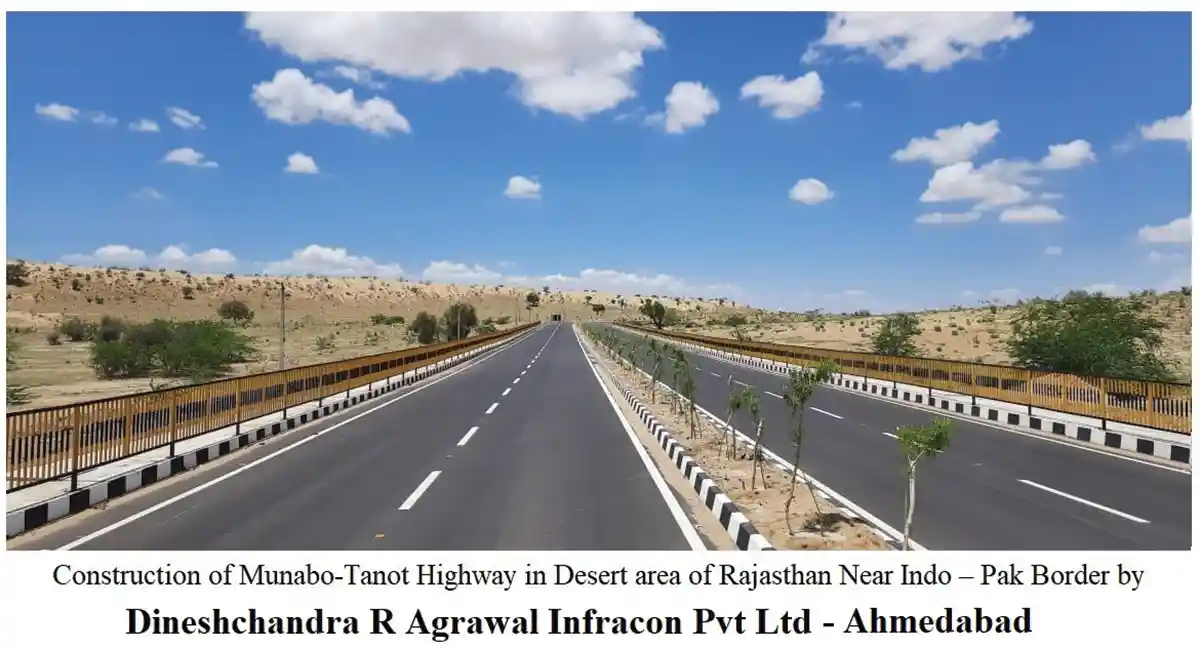
In line with MoRTH directives for mechanized, AI-enabled construction, how are NHBF members preparing to adopt automated solutions, and how is the Federation supporting contractors in leveraging such technologies?
In alignment with MoRTH’s push for mechanized and AI-enabled construction, NHBF is actively supporting its members in adopting advanced technologies. The Federation is conducting training and capacity-building programs focused on AI-driven and mechanized construction methods, while also promoting the use of hybrid and electric machinery, robotics, and automation. It is encouraging the adoption of IoT-based monitoring systems, BIM, and digital twin technologies to enable predictive maintenance and improve project planning.NHBF is also fostering collaborations with MoRTH and equipment manufacturers to facilitate knowledge exchange and best practices. Through these initiatives, the Federation aims to enhance quality, safety, and cost efficiency across the industry.
What initiatives is NHBF taking to upskill labor and engineers on the modern mechanization practices, safety protocols, and global best practices?
NHBF, in collaboration with MoRTH, NHAI, and various training institutions, is actively working to upskill engineers, operators, and supervisors in modern mechanization practices, quality management, safety protocols, and sustainability. These training initiatives are designed to align with global best practices and ensure that the workforce is equipped to meet the evolving demands of the highway construction sector.How does NHBF help de-risk supply chain challenges such as price volatility, logistics constraints, and import dependence?
We support supply chain resilience by promoting bulk procurement and long-term agreements for key materials to mitigate price volatility, while also encouraging domestic sourcing and diversification to reduce import dependence. The adoption of digital logistics platforms enhances visibility and optimizes material movement, while establishing market intelligence systems help track price trends and potential disruptions.In addition, NHBF advocates policy measures that support stable pricing and strengthen local manufacturing, contributing to a more reliable and robust supply ecosystem for the road infrastructure sector.
As a platform for contractors and builders engaged in national and state highways and bridge projects, how do you envision enhancing collaboration among contractors, government agencies, equipment manufacturers, material suppliers, and consulting engineers?
NHBF aims to strengthen collaboration across the highway ecosystem by creating joint task groups to resolve issues and encourage innovation, organizing regular forums and technical sessions for knowledge sharing, and promoting digital integration to enable real-time monitoring and feedback. Through these efforts, the Federation seeks to improve coordination, transparency, and overall efficiency among contractors, government bodies, consultants, suppliers, and equipment manufacturers.With increasing emphasis on sustainability and net-zero targets, how can the highway construction sector integrate green materials, circular economy practices, alternative fuels, and low-emission equipment to reduce environmental impact while maintaining project efficiency?
To advance sustainability and support India’s net-zero goals in the highway construction sector, we are increasingly emphasizing on adopting green materials such as fly ash, recycled aggregates, and cement-free concrete, while also integrating circular economy practices through the reuse of reclaimed materials. The sector should further support the adoption of CNG-, LNG-, and biofuel-powered equipment and encourage wider use of low-emission and electric machinery. These initiatives can be strengthened through targeted policy incentives and the introduction of a Sustainability Rating Framework for highway projects aligned with India’s Net-Zero Mission, ensuring environmental performance is enhanced without compromising project efficiency.Does NHBF facilitate the adoption of global best practices in scale, speed, quality, and technology in its members?
India can learn significantly from infrastructure leaders like Japan, South Korea, and the United States, especially in standardization, mechanization, and strong quality assurance systems. Global practices such as modular bridges, precast viaducts, long-span tunneling, and advanced preventive maintenance offer substantial potential for India.To encourage their adoption, NHBF aims to organize knowledge-sharing platforms and international collaborations, promote pilot initiatives with MoRTH and NHAI, advocate necessary policy and specification updates, and implement capacity-building and certification programs that equip industry professionals with modern global practices.
How can toll revision policies and deferments be structured to safeguard the financial viability of concessionaires, and what role does NHBF play in ensuring fair compensation mechanisms?
Toll revision policies and deferments should ensure that concessionaires remain in the same financial position as originally envisaged by mandating timely compensation for any toll rate changes, deferments, or concessional passes. A formula-based mechanism with automatic revenue-loss recovery and periodic indexation linked to WPI/CPI should be incorporated to avoid discretionary delays. A uniform toll-compensation framework applicable across BOT, HAM, and TOT models will further strengthen financial stability.NHBF supports this by facilitating policy dialogue with MoRTH/NHAI, providing data-driven analysis of revenue impacts, and recommending transparent and predictable compensation mechanisms.
How do you see the EXCON platform enabling collaboration and adoption of best practices supporting India’s vision of Viksit Bharat and net-zero targets?
EXCON, often called the ‘Kumbh’ of the construction industry, acts as a powerful catalyst for collaboration and innovation by enabling the exchange of insights on technology, safety, sustainability, mechanization, and automation to enhance speed, quality, and efficiency across the sector. The platform also promotes green and low-emission solutions that align with India’s Net-Zero ambitions and the vision of Viksit Bharat.NHBF will use EXCON 2025 to drive policy-level engagement between government and industry, encourage the adoption of global best practices, and strengthen capacity-building efforts so that its members can effectively leverage the technologies showcased at the event.