S.A. Faridi: Terex, a leading global manufacturer of materials processing, lifting, and recycling equipment, has been manufacturing in India for over 15 years. Over this time, it has become one of the leading players in its segment, while also exporting ‘Made in India’ products to Asia, Africa, Latin America, and beyond. It would be great to hear your thoughts on Terex’s growth outlook for the next 5–10 years, and how important is India in shaping its global market strategy?“India has been a critical part of our business for 15 years, and it will remain central to our plans going forward. With one of the world’s most dynamic economies and a strong, proven team on the ground, we’re focused on scaling our presence and building on the momentum we’ve created.”
Kieran Hegarty, President – Materials Processing, Terex Corporation
Kieran Hegarty: Terex recorded revenues of just over $5 billion in 2024 and is focused on accelerating growth in the years ahead. India represents a key market for us—not only because of its scale and infrastructure needs, but also because of the consistent growth we’ve achieved here for more than 15 years, particularly at our Hosur site. As India’s infrastructure construction market expands, we are committed to supporting this momentum through advanced crushing, screening, and recycling solutions. At the same time, we are investing in skilling local talent to ensure sustainable development and long-term value creation. If we continue to execute effectively in India, I believe it will significantly contribute to our global success and strengthen our position as a trusted partner in materials processing solutions worldwide.
S.A. Faridi: We’ve observed that Terex’s market share in India has been growing steadily, and at the same time, exports of ‘Made in India’ products are expanding across Asia, Africa, Latin America, and beyond. Naturally, this raises the question of what comes next. What are Terex’s plans to expand its manufacturing footprint and overall presence in the Indian market, and how do these plans align with its broader strategy of strengthening global operations and exports from India to the world?
Kieran Hegarty: No doubt, exports play a role; but we are ultimately in India for India. We didn’t enter the country simply to be a manufacturing hub for the rest of the world; we are here because we recognize the country’s immense potential. At the same time, we believe India is an excellent location to serve the wider region, including other parts of Asia, the Middle East, and even parts of Africa. So, while we certainly welcome and encourage exports from India, our primary focus and ethos remain on capturing the opportunities within India itself – a market that is growing and becoming increasingly important in terms of scale and impact.
S.A. Faridi: India is quite a complex market. Buyers typically look at three things: first, keeping the initial cost as low as possible; second, the product quality; and third, the after-sales service accorded by the company. From my industry connections with over 1,000 quarry owners and miners, I’ve observed the same pattern in buyer behaviour across India. However, this trend is beginning to change with many customers reversing the order - placing after-sales service as their top priority. So, how are you balancing initial cost, quality, and services, especially in developing countries? Because this isn’t just an issue in India; it’s a challenge across many developing markets.
Kieran Hegarty: Obviously, cost and price are important factors, but it’s essential to look at the complete package. We are not aiming to be the cheapest option in crushing and screening, but what truly matters is the total cost of ownership. This includes not only the initial investment but also the cost of materials, spare parts, service, and, most importantly, our ability to keep the machines running efficiently.
A good example can be seen in the construction, crushing, and screening industry, where the goal is to build infrastructure and roads. Time and again, we have demonstrated that when you invest in high-quality equipment, maintain it properly, and ensure availability of genuine spare parts, the most cost-effective solution comes from this combination of quality equipment and reliable support. This approach is critical to the overall economics of any project.
Waste processing is another strong case in point. Some of our equipment may appear sophisticated and relatively expensive, but the cost must be considered in light of the quality of output and the broader economics of the system. Low-quality equipment produces inferior fuel, which negatively impacts downstream users such as cement plants. Conversely, high-quality equipment delivers superior output, improving the efficiency and economics of processes across the entire value chain.
In markets like India, price often remains the primary driver. But if we look at more mature recycling markets in Europe, government legislation plays a crucial role in shaping economics and driving recycling adoption. I believe India will also move in this direction, where policy and regulation will help make quality solutions both viable and sustainable.
S.A. Faridi: There is a lot of talk regarding sustainability, environmental impact, and carbon reduction in the field of construction. The U.S. is often cited as one of the largest contributors of carbon emissions, and now countries like China and India are also producing high levels of carbon due to their use of older technologies. How is Terex, as a corporation, responding to these concerns?
Kieran Hegarty: India faces a significant challenge with construction waste. Our machines have the ability to address this in a very practical way as they can directly help clean up the construction waste. Even historical landfills or piles of debris across urban areas can be processed and reduced through our solutions.
In doing so, the equipment helps lower fundamental pollution levels in cities, improves dust control, and makes urban environments visibly cleaner and better organized. This provides an immediate and tangible benefit to the citizens, alongside the larger, long-term sustainability agenda.
Electric machinery is now being offered as an alternative to diesel-powered machines, which clearly helps reduce the construction sector’s carbon footprint..
S.A. Faridi: For any successful operation in a country like India, which, in many ways, is less a single country and more like a union of diverse regions and cultures, almost comparable to Europe — faster market penetration often depends on harnessing local talent. How is Terex bringing Indian talent, especially engineers and innovators into its R&D efforts and overall product development strategy?
Kieran Hegarty: We have been in India for 15–16 years and have also central design engineers based in Bangalore.
Our strong base of engineers in India contributes both to our global businesses and to local product developments. Within Terex Materials Processing, we rely on Indian engineers to design products specifically for the Indian market, many of which are also applicable regionally and even globally. So, there’s a healthy mix: some engineering resources in India focus on global projects, while others focus on developing India-centric products, whose benefits can be leveraged worldwide.
S.A. Faridi: Another important trend we are seeing in India and in fact across most manufacturers, is the emphasis on being available for customers 24x7, with spare parts and service support almost at their doorstep. This has increasingly become a key selling point in a competitive market. How is Terex strengthening its presence in India on this front, particularly through expanding operations and investing in training its workforce to meet these evolving customer expectations?“With a growing installed base, our priority is ensuring maximum uptime for customers—through faster parts supply, wider service reach, and enhanced operator and dealer training to keep advanced machines running efficiently.”
Jaideep Shekhar
Managing Director, Terex India
Jaideep Shekhar: We have been setting up warehouses for spare parts across the country (based on the number of locations we are operating in) to ensure that spare parts reach our customers within 24 hours, or sooner. We continue adding service personnel as the installed base grows.
We are training operators and service teams (both ours and that of our dealers) to work across our wide portfolio of machines. We also train operators at project sites so they can carry out routine upkeep of the machines and manage the plants on their own, and even do some troubleshooting when required. If operators understand basic machine upkeep, downtime can be reduced significantly.
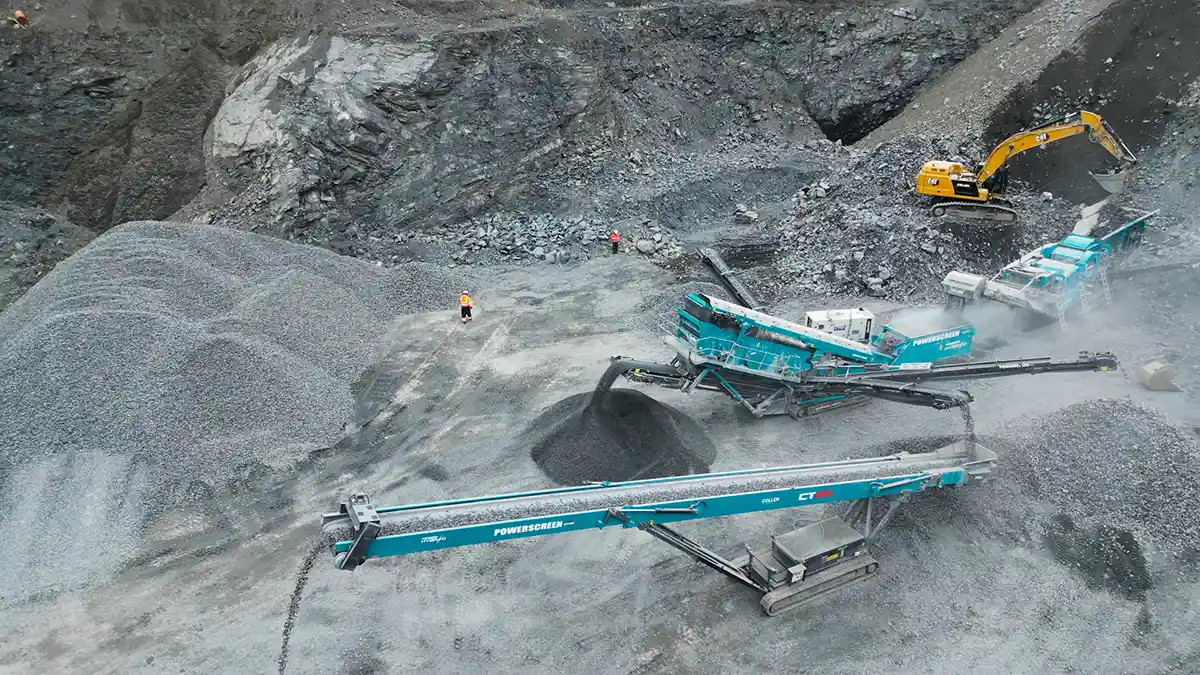
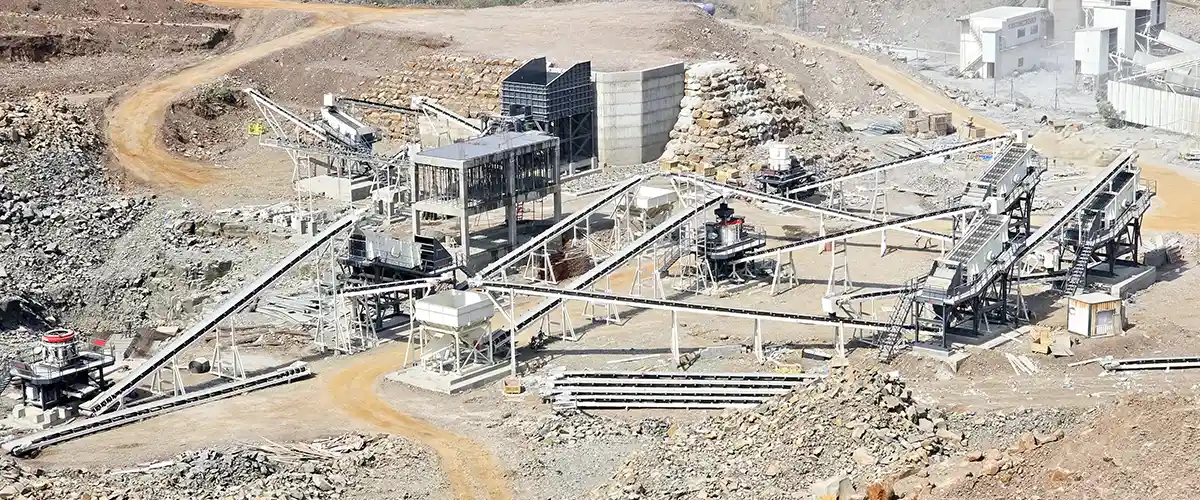
As part of strengthening our presence in India, we are also introducing our new Connec-T telematics platform at EXCON this year. This will allow customers to keep their machines always connected, monitor performance, receive early alerts, and plan maintenance more proactively—supporting higher uptime across their operations. Alongside this, we will be showcasing key products from our portfolio, including the high-capacity Powerscreen Horizon 6203 Dual Power, Franna cranes, and a Terex MPS Static Cone Crusher. We will also be introducing a new material-handling brand to the Indian market, which further expands our capability to support customers with a wider range of specialised solutions.
Kieran Hegarty: Overall, we are very pleased with our progress in India over the last 15 years. India is a critical part of our business and, with its trajectory as one of the most dynamic economies over the next 10–15 years, we see it as the “new China,” in terms of growth and development. We have a strong team, a positive track record, and are committed to continuing to build on that success.
S.A. Faridi: Terex has been making strong strides in the sand and aggregate washing systems space, which is becoming increasingly important for the construction and mining industries. However, one of the biggest challenges—particularly in regions like southern India—is water scarcity. We all know that effective washing demands not just efficiency but also the ability to recycle and reuse water with minimal wastage. In this context, how is Terex leveraging technology and R&D to develop solutions that allow miners and producers to recycle crusher waste more effectively?
Kieran Hegarty: Over the last several years, we have built a strong aggregate wet processing business with a focus on producing sand, which, globally, has become a scarce resource. High-quality sand is now being produced from recycled aggregates, particularly in Europe and in North America. However, to achieve the quality needed for applications such as concrete, these aggregates must be thoroughly washed.
The challenge is that recycled aggregate washing often takes place in urban environments where there is little or no access to fresh water. That’s why our wet processing plants are designed with integrated water recycling solutions. What’s more, in many city locations there is no way to discharge wastewater. As a solution, we use a closed-loop system that recycles water continuously.
We’ve developed advanced products such as filter presses, which remove silt from the water so it can be reused, and deep cone thickeners, which further enhance water recovery. Together, these provide a complete end-to-end solution that enables production of high-quality aggregates from recycled materials while conserving water.
In India, the situation is similar: there is huge potential for recycled aggregates, but significant water scarcity in certain regions. Our ability to close the water loop and offer robust technical solutions enables us to support aggregate production in the country.
S.A. Faridi: How do you see the role of biofuels or ethanol in your equipment, considering that these fuels are often available only seasonally and not on a regular basis, though in areas where electric power is not available, operators continue to rely on engines. So, does Terex plans to transition to alternate fuels so that its machines can operate in such scenarios?
Kieran Hegarty: Most of the engine providers we work with (since Terex doesn’t make its own engines), are global OEMs. Where we use combustion engines, we rely on these suppliers, and most of the engines we select today have the capability to run on both biofuels and traditional diesel. That’s an important part of our selection process.
The reality, however, is that very few customers are currently using biofuels, likely due to issues around their availability and consistency. But the key point is that our primary OEM engine suppliers ensure their engines have the dual capability to operate on either biofuels or conventional diesel.
S.A. Faridi: Equipment owners and crushing plant operators often express a concern that, nowadays, a lot of electronics are being added into engines and systems, and that with more electronics including IoT, sensors, automation, etc, machines may face frequent breakdowns and higher maintenance costs—especially in India, where they are often run at full capacity or even higher. This, they fear, could hurt their ROI. How do you view this concern?
Kieran Hegarty: The relevance of electronic systems really depends on the product. For example, some hybrid machines operate on both diesel and electric. However, when feedback is received from customers, it is often not about electric power itself but rather about the electronic control systems and the software within the plants.
The level of complexity also varies by product. Electric wheel plants generally have a simpler architecture, while track plants can be more sophisticated. Customer concerns typically relate to the electronic control systems, options, and features—not the power source.
This reflects the continuous evolution of equipment, as systems are becoming increasingly robust over time. Proper maintenance remains essential, and in some markets where machines are pushed extremely hard without strict maintenance regimes, challenges do arise. Nevertheless, solutions are available across the spectrum to meet different needs and operating conditions.
S.A. Faridi: Another issue is service availability. In the past, local maintenance was sufficient, but now owners often find themselves fully dependent on OEM service networks. Hence, getting a good RoI while balancing higher upfront costs and maintenance with long-term reliability and efficiency is a challenge. How do you view this concern?
Jaideep Shekhar: With newer machines coming in, equipped with higher levels of automation and advanced technology, it is critical that operators are trained properly. A major reason for frequent machine downtime—not only in crushing and screening but across the equipment industry—is the lack of trained operators. ICEMA and IESC are taking initiatives in this area, and under this umbrella, Terex also provides training both at its factory and at customer sites.
Another challenge is logistics. Reaching remote sites such as those in the Northeast can take days, with further delays caused by traffic congestions, landslides or road blockages. To address this, stock points are being opened at multiple locations so that parts remain accessible even during disruptions in transportation. Service engineers are also being strategically placed near machine clusters to provide faster support.
In addition, customers are being offered annual maintenance contracts. Instead of relying solely on service calls, complete maintenance can be handed over under such contracts. Dedicated personnel are placed on-site for 365 days, with a guarantee that the per ton cost of spares, wear parts, and service will not exceed a fixed value. This model functions much like an insurance plan and is increasingly being adopted by large customers who prefer not to manage machine maintenance themselves.
S.A. Faridi: The crushing equipment industry has been relatively late in integrating IoT, AI, and advanced electronics compared to other industries. Most OEMs are actively utilizing data for product modification and continuous improvement. However, very few customers are leveraging the data being collected for their operations. What has been your experience with this, especially in the context of the developing world?
Kieran Hegarty: In Europe and North America, and increasingly in India, Terex machines have been equipped with telemetry for several years. However, data coming off the machines is only valuable if it provides practical benefits to the end-user. Many OEMs often promote data such as machine location, but this is more novelty information since customers usually know where their equipment is.
What truly matters is uptime, as these assets are core production units for customers. Terex has advanced its systems to ensure that the data delivered is meaningful and actionable. For example, customers now receive alerts on their phones when a fault code appears or if a breakdown occurs. They are also notified in advance when maintenance is due based on hours of operation, so they can schedule service 40 or 100 hours ahead.
This evolution ensures that data drives real action rather than serving as a passive tool. Customers can now book service, monitor fault codes in real time, and measure production more effectively. The focus is on ensuring that the data is not just informative but also delivers tangible operational benefits.
S.A. Faridi: In recent years, there has been a strong push in India toward recycling—whether it’s construction and demolition waste, municipal waste, or other solid wastes—and utilizing these recycled materials in construction projects. How do you view this shift in India, and which environmental and recycling segments do you see as the most promising or active, both globally and within the Indian market? Where do you believe the greatest opportunities lie for Terex to contribute meaningfully to sustainable practices in the years ahead?“India’s recycling journey may take decades, like Europe, but the direction is clear: tackling legacy waste while preventing new ones. Localization and complete, cost-effective solutions will be key to scaling sustainable recycling.”
Tony Devlin, Vice President,
Environmental Material Processing, Terex Corporation
Tony: Environmental and recycling is a vast field, but the key segments where significant work is being done include construction and demolition (C&D) waste, commercial and industrial waste, and municipal solid waste (MSW). Another important sector is green waste; while, globally, biomass is also a major area—though less so in India. Here, virgin wood and recycled wood are increasingly being converted into biomass.
From Terex’s perspective, the emphasis is on machinery that ensures proper recycling and delivers by-products that can be used across different industries. However, when comparing developed markets with developing regions such as India, Africa, or Latin America, the challenge is different. In these regions, initial investment and project viability are critical concerns. Customers are highly cost-sensitive, and the decision to adopt advanced recycling technologies often depends on balancing higher upfront costs with the long-term benefits that these solutions can deliver.
Historically, Europe has been the most advanced continent in terms of recycling. After establishing a strong presence there, our expansion gradually took place into the US, Asia, and now India, which is seen as a market with enormous potential. The recycling and waste sector in India is still in its early stages, and the market remains highly cost-sensitive.
S.A. Faridi: So far, in India, most recycling sites, usually use locally made and somewhat obsolete equipment, making it difficult to produce consistent, high-quality recycled products. On the other hand, when recyclers look at advanced technologies, the high upfront cost often raises a big question mark on the overall viability of such projects. How is Terex striking the right balance between affordability and advanced technology, and adapting its recycling solutions to meet the specific requirements and realities of a market like India?
Tony: To address India’s cost-sensitive market, a significant focus has been placed on localising products. In the past, machines designed in Europe were brought to India and then adapted with local technology to make them more cost-effective. A similar evolution is now underway in Terex’s recycling systems. Several products, originally developed for Europe, are already being manufactured in Hosur. This not only helps reduce costs but also makes the equipment more competitive in the Indian market. Going forward, machines will continue to be developed specifically for markets like India, where value and cost competitiveness are critical factors.
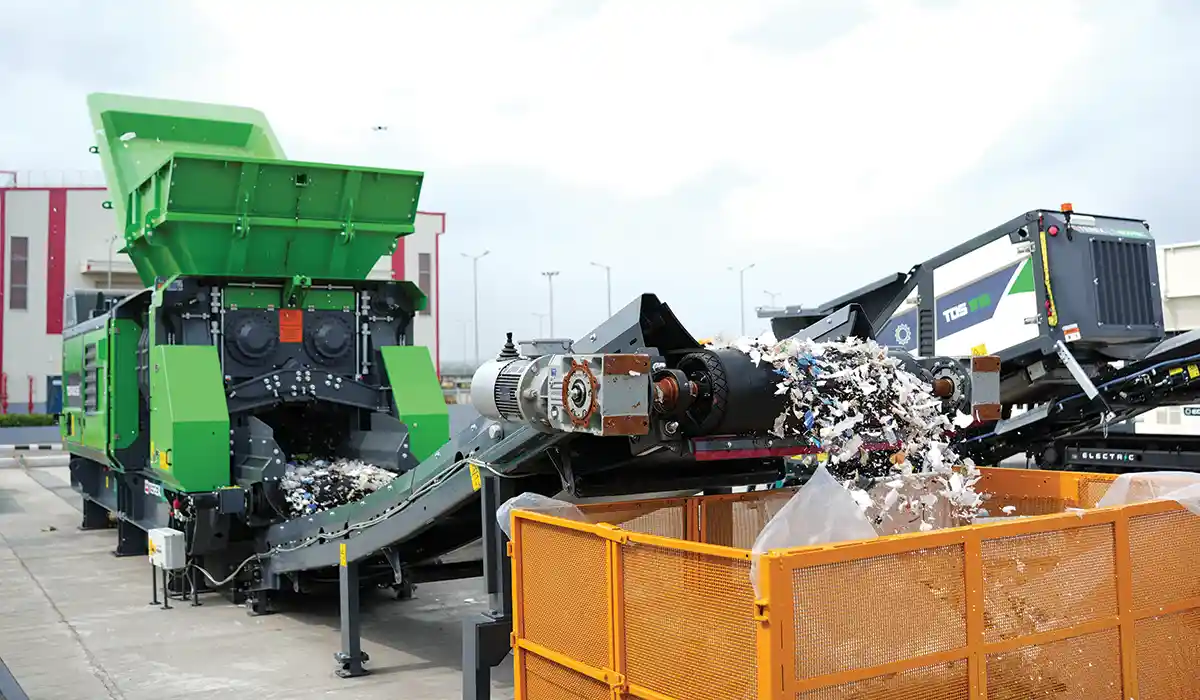
Our aim is to provide a complete recycling solution. This includes waste handlers, which typically feed the plant, as well as full processing plants. A two-stage solution can be offered, either as a mobile set-up or a stationary system, depending on customer requirements.
It is acknowledged that there are many low-cost entry-level machines in the market, and individual machines, whether mobile or stationary, but Terex’s focus is on delivering comprehensive solutions, with an emphasis on providing an integrated approach that enables customers to achieve effective and sustainable recycling outcomes.
S.A. Faridi: How do you see India’s recycling industry evolving when compared to more developed regions like Europe, where recycling practices are already mature and well-regulated? What are the key challenges that India must overcome, and where do you see the most promising opportunities for growth and innovation in this sector?
Tony: Recycling is gaining traction in India, driven by both geopolitical priorities and the growing emphasis on reuse and sustainability. One of the major challenges lies in addressing legacy waste sites, which remain a significant problem across the country. At the same time, there is a parallel need to prevent the creation of new legacy issues. This results in a two-pronged approach: tackling legacy waste while also managing fresh waste streams.
The transition will not happen overnight as India’s recycling sector is still in its early stages.. A useful comparison can be drawn with Europe, where the recycling industry took 20–30 years to evolve into its current mature form. In the early days, machines such as trommels and shredders were seen as revolutionary. Over time, a combination of industry promotion and government legislation drove adoption. For example, in the UK, the introduction of a landfill tax played a critical role in accelerating recycling.
In India, similar policy measures are expected to emerge over time, providing the necessary push to scale up recycling efforts. Alongside this, continuous industry promotions and active participation in trade shows are helping in raising awareness and encouraging adoption of advanced recycling solutions.