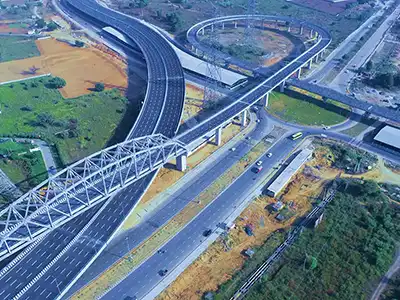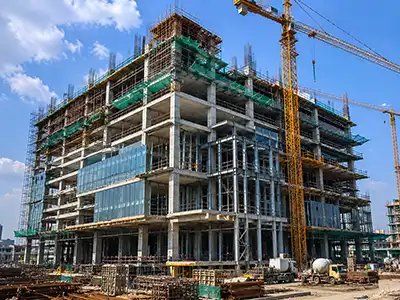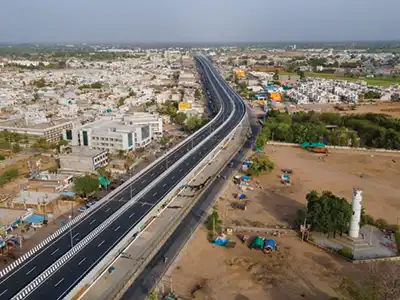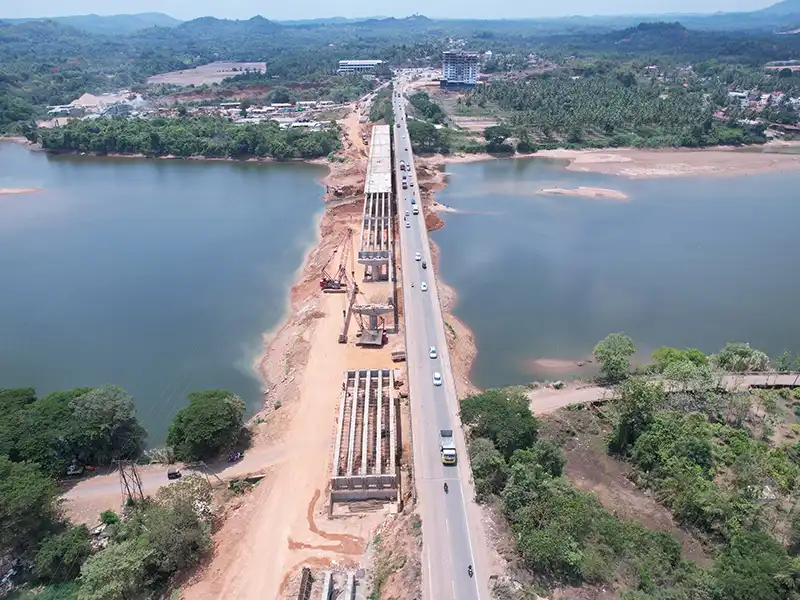
While L1 remains reasonable for small, repetitive, well-specified works with minimal risk, it is suboptimal for complex highways, urban transit, bridges, tunnels, and multimodal infrastructure with significant geotechnical, land, or utility risks.
Manjeet Yadav
Deputy Manager – Technical
SIMS Infrastructural Management Services

Pitfalls of Lowest-Bid Procurement
The L1 system, where contracts go to the lowest-priced technically compliant bidder, remains the default in many Indian infrastructure tenders. Its appeal in terms of transparency, simplicity, and perceived fairness, made sense during early procurement reforms. Today, however, L1 often distorts outcomes. Contractors frequently underbid 10–25% below estimates, compressing margins and forcing compromises in manpower, materials, and sometimes safety. Project plans tend to assume best-case scenarios, leaving little room for risk, while lower-cost procurement encourages use of cheaper materials, limited testing, and minimal supervision, increasing the risk of defects. Low bids also create cashflow pressures, delays, and disputes over change orders, reducing overall productivity.Hidden Costs Beyond the Bid
The immediate savings visible at bid opening are just the tip of the iceberg. Hidden costs often emerge in several forms. Pavements, structures, and MEP assets installed under aggressive low-bid regimes require earlier-than-expected maintenance and renewal, diverting funds from new capital expenditure. Substandard construction increases safety risks, adding to India’s already-high road fatality numbers, while low-quality work triggers legal and financial liabilities, as agencies contend with growing arbitration pipelines running into hundreds of thousands of crores.Economic inefficiencies also arise. Delays on major corridors increase vehicle operating costs, waste fuel and time, and reduce industry competitiveness. Addressing these challenges requires shifting procurement evaluation toward Value for Money (VfM), explicitly weighing technical strength, past performance, lifecycle costs, and maintenance commitments alongside price. Mechanisms to achieve this include QCBS, life-cycle costing with NPV of initial cost plus 10–20 years of O&M, performance securities, and performance-linked payments tied to measurable outcomes such as pavement condition or travel time.
Need to Turn DPRs into Effective Project Blueprints
DPRs are meant to serve as the blueprint for execution but often fail to capture real-world conditions. A robust DPR should draw on thorough field investigations, geotechnical and hydrological data, utility and land mapping, socio-economic assessments, and a realistic analysis of costs and risks. In practice, however, compressed timelines, limited budgets, and procedural shortcuts often compromise quality.Weaknesses are common, narrow geotechnical scope, poor utility and right-of-way mapping, overlooked social and environmental issues, static cost assumptions, and template-based designs that clash with site realities. While technologies like LiDAR, UAV surveys, and GIS integration are improving DPRs, they need institutional support through adequate budgets, timelines, and accountability.
Improving DPR reliability calls for standardized survey protocols with LiDAR, drones, and geophysical testing; BIM- and GIS-enabled designs for clash detection; independent peer reviews; early stakeholder mapping and clearances; and continued involvement of consultants during preconstruction and PMC. Value engineering sessions on alignments, construction methods, material reuse, and life-cycle costs can further strengthen outcomes. With these measures, DPRs can evolve into true risk-management tools rather than mere paperwork.
Policy Reforms and Accountability Measures
Recent policy developments in 2024–2025 reflect a shift toward stronger risk management and accountability. MoRTH has introduced Additional Performance Security (APS) for abnormally low bids, calibrated according to how far a bid falls below estimates, discouraging suicidal bidding and ensuring bidders internalize risk. NHIDCL has strengthened DPR-to-PMC linkages, requiring DPR consultants to continue in construction supervision or participate in peer review regimes. This reduces knowledge loss and lowers scope creep and disputes.These reforms represent a shift in mindset: treating DPRs and tendering as a continuum with transparent allocation of responsibility and risk. Institutional fixes, though carrying upfront cost, deliver long-term benefits through fewer variations, faster execution, reduced arbitration, and lower life-cycle expenses. Emphasizing DPR quality, adopting VfM procurement frameworks, and linking design accountability to execution are critical steps toward more efficient, safe, and resilient infrastructure delivery in India.