In most organizations, manufacturing discussions begin with efficiency: Cycle Times, Yields, Costs, and Utilization. These metrics matter — until they don’t. At the leadership level, manufacturing decisions are rarely made on spreadsheets alone. They are made in the context of reputation, continuity, and consequence. Because when something fails at scale, the impact does not remain operational. It travels upward — to governance, credibility, and the boardroom. That is when efficiency quietly steps aside, and certainty takes its place.At the leadership level, manufacturing isn’t outsourced for efficiency; it’s outsourced for certainty.
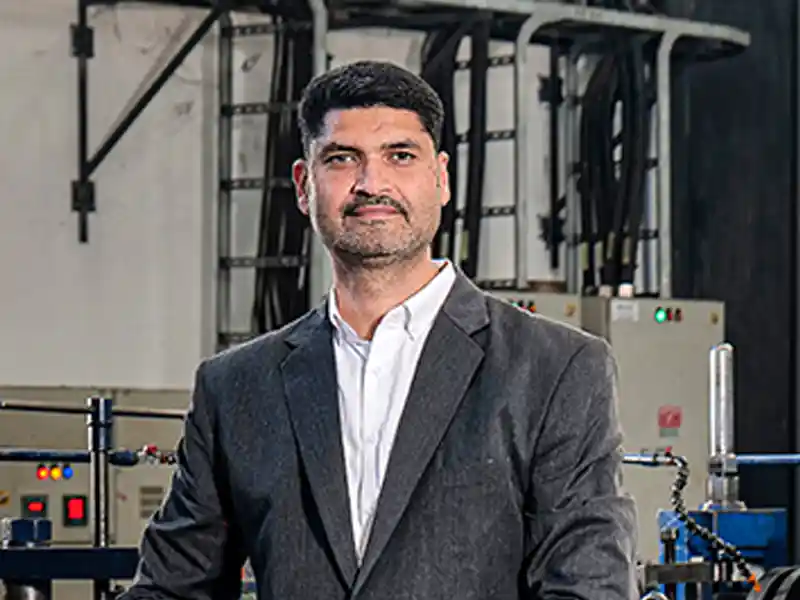
Dhirendra Sankhla
Director – Operations
Mother India
What Leadership Actually Optimizes
For senior leaders, certainty looks like this:- Production that remains steady while leadership changes
- Compliance that does not get reinterpreted under pressure
- Systems that hold when volumes grow or scrutiny increases
A Moment That Clarified the Shift
Early in my career, I saw this distinction clearly. We were part of a long-running manufacturing program — technically sound, commercially viable, and largely uneventful. Midway through the program, the client went through a leadership transition. New faces. New priorities. A review of existing partners.No one asked about cost reductions. No one asked about innovation roadmaps.
One question surfaced quietly: “Is this supplier predictable?”
Not impressive. Not ambitious. Predictable.
That single word explained everything.
From the Boardroom, Suppliers Carry Risk
From the boardroom, suppliers exist to absorb risk away from the organization.- Risk of inconsistency
- Risk of non-compliance
- Risk of surprises that demand explanations no one wants to give
When decisions are questioned — and eventually, all of them are — leadership needs to be able to say: “This was the responsible choice”.
Why Reliability Quietly Wins
This perspective often leads to a preference that looks counterintuitive.Innovation excites teams. Reliability reassures leadership.
Manufacturing excellence, from this vantage point, is not about peaks. It is about consistency across years, programs, and people.
Reliability is not a feature. It is an operating posture.
It shows up in how processes are maintained, how deviations are handled, and how accountability is accepted. It also shows up in the discipline to say no to unnecessary complexity and short-term gains that introduce long-term fragility.The Quiet Trait of Trusted Partners
At the leadership level, the most trusted suppliers share one trait:They do not demand attention. They do not escalate. They do not surprise.
The most trusted suppliers are the ones which leadership never has to explain. Their work fades into the background and that invisibility is not neglect. It is trust.
Efficiency can be measured quarterly. Certainty reveals itself over years. At the leadership level, this difference matters more than most people realize.