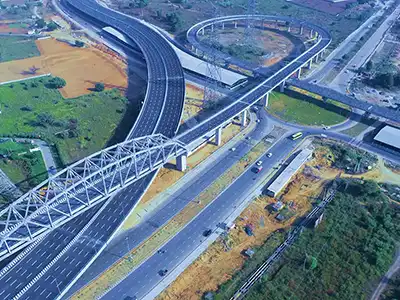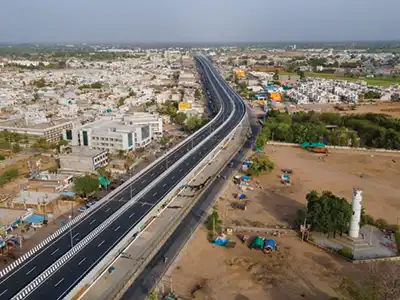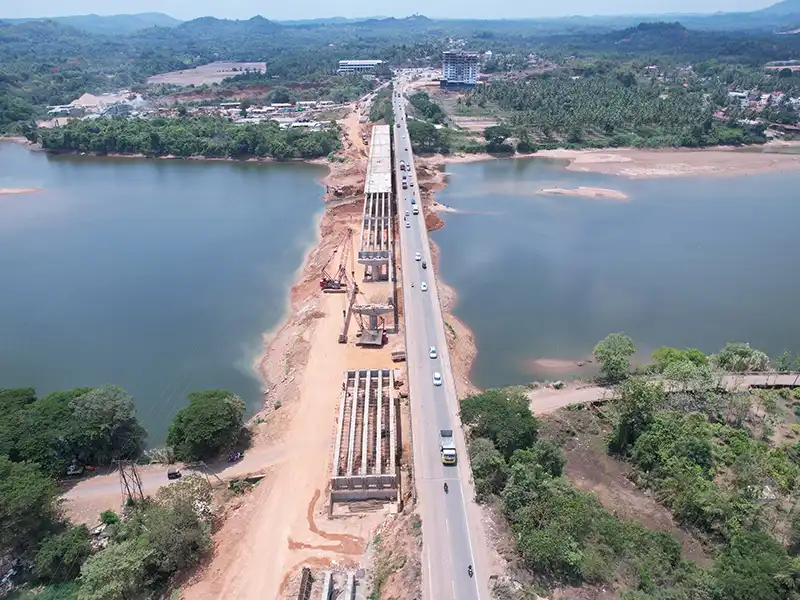
Even under the cost-focused L1 system, highway projects can maintain high quality by combining technical standards, performance-based mechanisms, and technology, proving that lowest cost does not have to mean lowest quality.
R.K. Pandey
Former Advisor – MoRTH & Member Projects (Technical) (Retd), NHAI

Highway Development: Balancing L1 Costs with Quality
The highway sector has been performing exceptionally well. Over the past decade, national highway construction has accelerated to 37 km per day, with several world records set. With the government’s strong focus on infrastructure and the ambitious Viksit Bharat plan, this momentum is expected to continue.Highway development involves procurement of Works and Services. Contracts for civil works are procured under works, whereas consultancy for preparation of Detail Project Report (DPR) and Supervision of Works are procured under procurement of Services. For civil contracts, where precise specifications for outcome can be defined, selection is primarily based on the lowest cost i.e. L1 system, whereas consultancy services, involves primarily non-physical project specific, intellectual and procedural processes where outcomes/ deliverables would vary from one consultant to another, Quality and Cost Based Selection (QCBS) system is adopted.
In QCBS initially the quality of technical proposals is scored as per criteria announced in the bid. Only those responsive proposals that have achieved at least minimum specified qualifying score in quality of technical proposal are considered further. After opening and scoring, the Financial proposals of responsive technically qualified bidders, a final combined score is arrived at by giving predefined relative weight ages for the score of quality of the technical proposal and the score of financial proposal. The minimum qualifying score and also the relative weight ages to be given to the quality and cost are specified in the bid documents. The proposal with the highest weighted combined score (quality and cost) shall be selected.
While L1 bidding ensures cost efficiency, there are often concerns about its impact on quality. In practice, a low bid does not necessary means compromise quality standards. Civil contracts specify safety, durability, and technical benchmarks/specifications. Only bidders meeting minimum technical, managerial, and financial thresholds are eligible. Further, works are accepted after inspection by the Engineer, who satisfy about the adherence to the specified specifications. However, to discourage unrealistic low bids, mechanisms like Additional Performance Security (APS) and longer defect liability periods are employed. Recent modifications in the General Financial Rules (GFR) also allow authorities to reject abnormally low bids when justified. Introducing contractor ratings based on past performance could as one of the qualification criteria in bid can further strengthen the bidding process and promote both quality and reliability.
In consultancy contracts, the QCBS model gives higher weightage to quality over cost, awarding the task to the consultant with the highest combined score. Yet, DPR quality often falls short. To address quality issues in Consultancy assignments, stakeholder consultations have led to key changes which included: consideration of past performance of Consultant, time-bound approvals/comments by the client on intermediate stages, built in variation clauses to address additional scope, capping of financial scores at level to be derived from quoted rates rather than the lowest rate etc. These measures aim to make DPRs more robust, timely, and reliable. Besides, a new system of award based on the fixed cost is also being implemented. In this system the cost will be predefined and the bidder who scores the highest technical scope shall be the successful bidder.
Evolution of Execution Models
The highway sector has been a pioneer in introducing diverse execution models to the industry. The journey began with item-rate contracts funded entirely through public resources. Recognizing that public funding alone could not address all the deficiencies, Public Private Partnership explored, including Built-Operate Transfer and its variants i.e. BOT (toll) and BOT (annuity), were introduced to supplement government resources. While these models initially showed promising results, leading to taking up major portion of development of Highways through Public Private Partnership. However defaults on both sides highlighted their limitations leading to adverse effect on the projects. Many projects stalled.To maintain momentum, the Engineering Procurement Construction (EPC) model, fully public-funded with freedom to design to the Contractor, was introduced. Acknowledging that EPC could not be a long-term solution due to resource constraints, the Hybrid Annuity Model (HAM) was developed, providing partial government support while sharing risks with the private sector. Along the way, several stretches constructed through public funding were opened for toll collection. To better leverage toll revenues, Operation, Maintenance and Toll (OMT) and Toll Operate and Transfer (TOT) models were also implemented. Each of these models differs in how risks are allocated between the contractor or concessionaire. Over time, they have been designed to address varying levels of risk and resources, ensuring efficient highway development while encouraging private participation.
Technology Adoption in Highway Construction
Civil engineers have traditionally been slow in adopting new technologies, but the highway sector has seen meaningful efforts to bridge this gap, ensuring that cost-focused L1 projects do not compromise quality. Technology adoption in highways includes mandatory use of LiDAR for DPR preparation, software tools for finalizing alignments, introduction of new IRC specifications covering panel concrete, high-performance bituminous mixes, recycling, long-span bridges, and integrated bridge designs. In the operation and maintenance phase, tools such as Network Survey Vehicles (NSV) for road condition monitoring, FASTag for toll collection, ATMS for traffic management, and structural health monitoring of bridges, exemplify technology integration.Another challenge is that new technologies often come with monopolistic specifications, making them difficult to integrate under the traditional item-rate contract system. To overcome this, newer implementation models such as BOT, HAM, and EPC have shifted the focus from process-based specifications to performance-based outcomes.
The government has actively promoted technology adoption through enabling policies, yet challenges remain. Field units often hesitate to adopt new materials or processes due to a lack of confidence and fear of failure. To address this, a system of technology accreditation has been introduced, where expert committees prepare a vetted list of technologies that can be safely adopted.
A landmark pilot project on the Lucknow–Kanpur Expressway collected detailed data on construction speed and quality using sensors installed on equipment. Following its success, plans are underway to equip grading, paving, and compaction machinery with Automated & Intelligent Machine-aided Construction (AI-MC) systems for future projects. This approach minimizes human error, aligns L1 cost pressures with quality expectations, and represents a shift from mechanization to digitalization in highway construction.