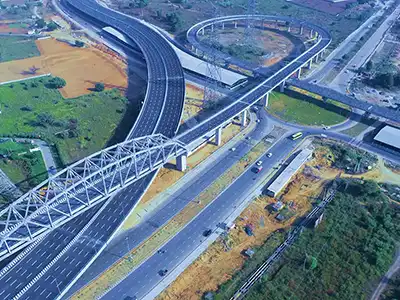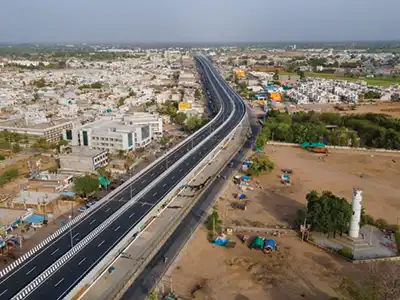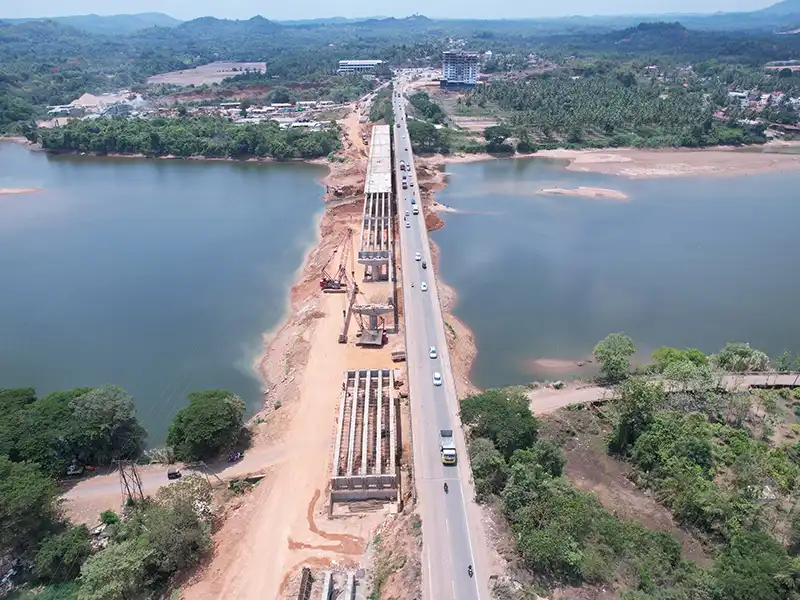
Countries that have moved beyond L1, integrating lifecycle costing, supplier performance scoring, and hybrid models, have achieved higher quality outcomes, fostered innovative ecosystems, and strengthened public trust.
Dr. Ramji Singh
Independent Consultant and Technical Expert, Hydraulic & Water Resources Engineering
- Technical Advisor & National Expert – NWRWS&K Department, Government of Gujarat
- Technical Advisor & Senior Consultant – Indian Institute of Technology Gandhinagar (IITGn)
- Member–Dam Safety Review Panel, Government of Gujarat

The Evolution: From Physical to Online Tendering
The history of public procurement in India reflects its journey from manual, paper-based tendering to digital e-tendering systems. Early practices relied on physical notices, sealed bids, and extensive paperwork, often leading to inefficiencies and risks of manipulation. Economic reforms in the 1980s - 90s emphasized transparency and standardized procedures, yet processes remained largely manual. The real transformation began in the 2000s with the adoption of ICT-driven e-tendering, enabling wider participation, reducing human intervention, and strengthening accountability.With the launch of the Government e-Marketplace (GeM) in 2016, e-procurement received a structured and nationwide push. Today, almost all government departments and public sector undertakings (PSUs) are mandated to use online tendering platforms for transparency, efficiency, and accountability. The evolution from physical to online tendering has not only streamlined processes but has also aligned India with global best practices in procurement. And this journey from sealed envelopes to secured digital submissions highlights India’s commitment to efficiency, competition, and integrity in public procurement, especially in large-scale and safety-critical sectors like infrastructure and dam projects.
During this transition, the process of scrutiny and evaluation of bids became faster; however, it continued reliance mainly on the L1 based model, often kept compromised on quality, safety, and long-term sustainability.
The Problem with the L1 System
The challenges embedded within the L1 tendering system reveal that while it is designed to safeguard transparency and procedural accountability, it inadvertently conceals deeper inefficiencies and vulnerabilities that undermine infrastructure quality, fiscal prudence, and institutional credibility. The hidden erosion of quality, lifecycle cost neglect, and opportunistic underbidding create a structural mismatch between the lowest quoted price and the true cost borne by the public exchequer over time.Equally damaging are systemic distortions such as collusive bidding rings, gradual thinning of genuine suppliers, and the stifling of innovation, which hollow out market competitiveness and long-term resilience. The explosion of arbitration and litigation, coupled with officer risk aversion, shows how an ostensibly “safe” process burdens projects with delays and disputes, rather than shielding them from risk.
The political capture and fragmented state-level practices further complicate harmonization, leading to inefficiencies invisible in isolated datasets but deeply corrosive at a national scale. Together, these “unseen challenges” highlight that the L1 system is no longer a neutral tool of fairness but a barrier to achieving quality, safety, and sustainability in public procurement. Addressing them requires a paradigm shift from price-centric awarding to value-based, lifecycle-oriented, and innovation-friendly procurement models that balance accountability with long-term public interest.
The Grey Areas
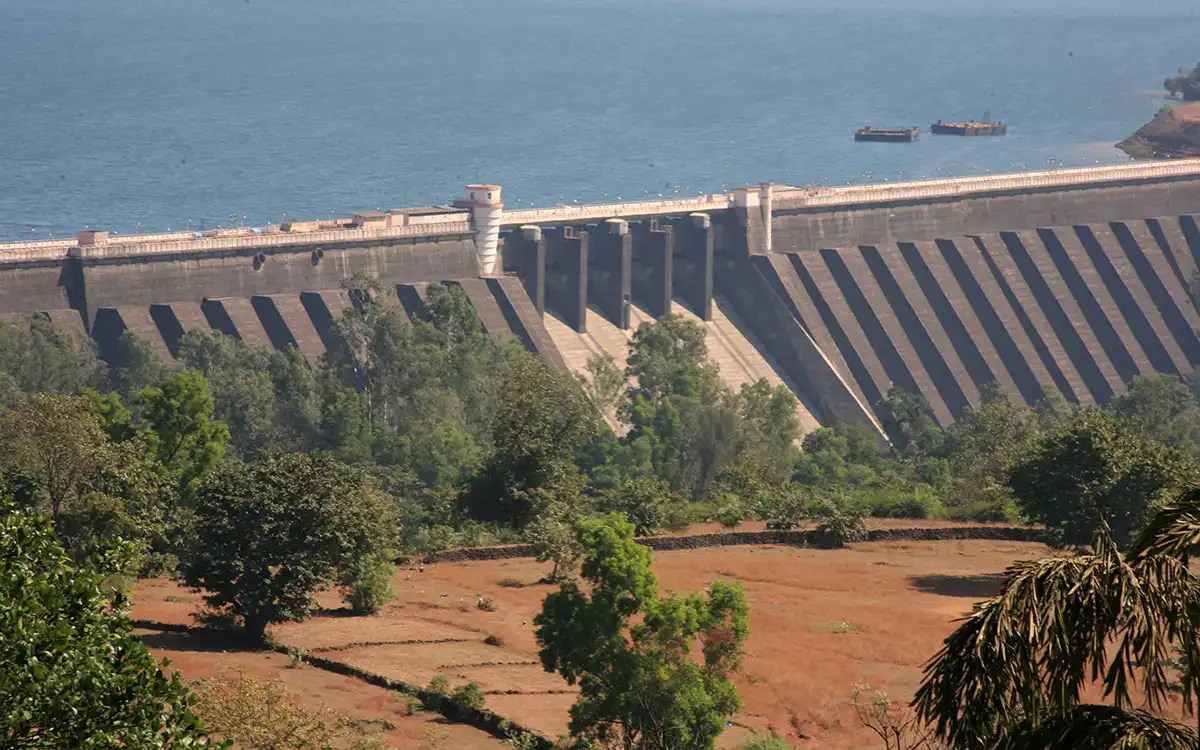
It is important to note that the challenges in procurement are not limited to the L1 approach alone. Issues often arise from poorly defined scopes of work, contradictory clauses in tender documents, weak evaluation mechanisms, irrelevant or impractical requirements, and even practices such as fabricated submissions, front-loading of items, or pre-determined bid outcomes. Unfortunately, many of these gray areas remain unmonitored and unaddressed.The L1 model, while aimed at ensuring cost efficiency and transparency, becomes problematic when applied to technically complex and long-life infrastructure. For dams and similar projects, focusing only on the lowest bid can undermine technical competence, experience, and safety practices leading to compromised quality, delays, and long-term risks to structural integrity and public safety.
Alternative Approaches
Alternative approaches such as Quality and Cost-Based Selection (QCBS), weighted evaluation models, or stronger pre-qualification processes, validation and evaluation of documents based on forensics analysis can provide a better balance between cost, quality, and sustainability.Procurement re-engineering is necessary, particularly for critical infrastructure, to integrate lifecycle cost, resilience, and safety into decision-making. At the policy level, I would recommend a hybrid model that retains transparency and competition while embedding technical evaluation, quality assurance, and accountability frameworks. Such an approach would help ensure not only cost-effectiveness but also reliability, sustainability, and public trust in critical infrastructure assets. The assessment and evaluation of submitted documents must be checked and verified through forensics methodology to stop the malpractice and carteling.
Global Best Practices: Moving Beyond L1
Many countries have successfully shifted from cost-centric to value-oriented procurement systems:- European Union - MEAT (Most Economically Advantageous Tender): Evaluates bids on cost, quality, sustainability, and lifecycle value.
- Ukraine - Prozorro: Radical transparency using open contracting data standards, with civil society oversight.
- South Korea - KONEPS: Fully integrated platform linking procurement with tax, customs, and vendor performance.
- Singapore - GeBIZ: Simplified processes for SMEs, ensuring inclusivity and competition.
Early Risk Detection: Red-Flag Analytics
India’s e-procurement platforms can be strengthened with automated analytics to detect risks:- Abnormally Low Bids: Flag bids >15–20% below estimates
- Price Clustering: Detect artificial grouping of bids.
- Bid Rotation: Identify vendors rotating wins across contracts
- Contract Variations: Flag projects with >30% cost escalation
- Quality Failures: Track inspection complaints to filter unreliable vendors.
State-Level Innovations: Gujarat’s Example
Gujarat has demonstrated localized reforms that can be scaled nationally:- Mandatory e-procurement on Centralized Portals
- Price-Matching Preference for MSMEs, Preventing Predatory Pricing (Underbidding, Collusion, Quality Dilution, Change-Orders)
- High-Value Technical Scrutiny Committees
- Random Audits and Blacklisting of Fraudulent Vendors
Reform Roadmap for India as Process Re-Engineering
- Retain L1 for routine, commoditized, low-value procurement.
- Apply MEAT/QCBS for high-value, complex, and safety-critical projects.
- Mandate Total Cost of Ownership (TCO) models under GFR for contracts with significant O&M.
- Maintain a national vendor database with past performance linked to eligibility.
- Deploy AI / ML for anomaly detection, blockchain for audit trails, and IoT for quality monitoring.
- Build a cadre of trained procurement professionals.
- Provide legal protection for officers applying MEAT/TCO transparently.
- Establish a National Procurement Authority to harmonize Union and State practices.
- Mandate OCDS publishing for all high-value projects.
- Create Dispute Avoidance Boards (DABs) for contracts above ₹100 cr.
- It is suggested that the Central, State and PSU agencies establish dedicated Evaluation, Monitoring, and Review Cells, along with robust framework mechanisms, to ensure transparency to expedite the effective resolution of both technical and non-technical issues related to Public Procurement System.