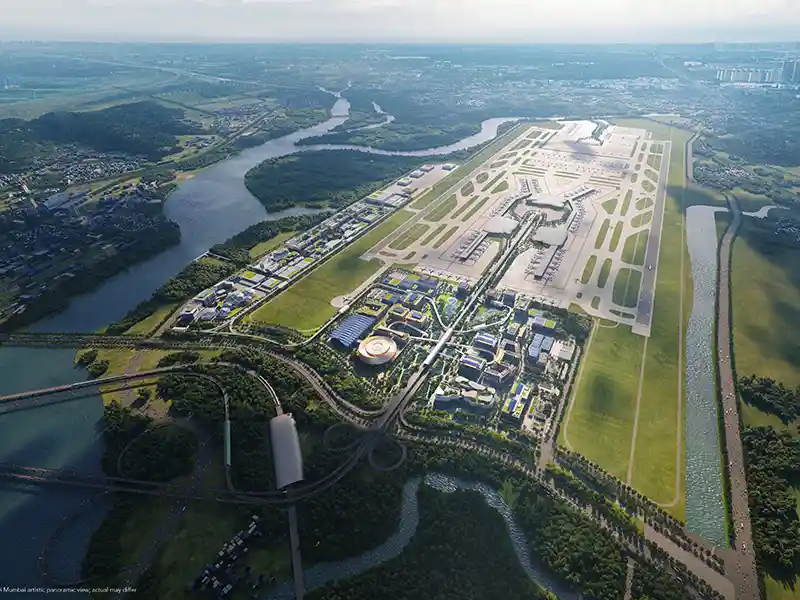

“Air traffic is expected to grow by 8–10% driven primarily by resilient domestic demand—catalyzed by expanding Tier-2 footprints and the launch of new greenfield assets like Navi Mumbai and Jewar airports—which is helping cushion a highly subdued international segment. International growth has flattened due to route restrictions, rising fuel prices, and the Middle East conflict; this regional instability has an outsized impact on the sector because the Middle East constitutes a massive 38–40% share of India's entire international passenger traffic. Consequently, while these combined headwinds are projected to leave the first half of the financial year flat and subdued, a sharp capacity and demand recovery is anticipated in H2FY27 as airlines adjust schedules for peak winter travel and new airport assets scale up,” says Niraj Rathi, Senior Director - Ratings, Brickwork Ratings
“The credit outlook for the airport infrastructure sector is stable. While heavy spending on terminal expansions pressures near-term cash flows, steady growth in passenger traffic keeps the industry moving forward safely,” Rathi adds.
Margin growth strong on account of completed projects
Operating margins for FY26 are estimated at a near-term high of ~53.8%, up from 44.4% in FY25. The surge comes from the completion of new terminals for some of the airports. Further, margins are projected to improve to 54.5% in FY27 as these expanded facilities open up, allowing operators to collect high-margin retail fees and airport charges from a larger volume of passengers.Credit profile improved with aggressive debt reduction and project monetization
The sector shows a steadily improving credit profile, with the debt-to-equity ratio falling from 3.8 in FY25 to an estimated 3.3 in FY26 and shrinking further to a projected 2.7 in FY27 as operators started generating cash to repay construction loans. “This aggressive debt reduction improves interest coverage to around 2.0 across FY26 and FY27, though it remains in the below average range. Meanwhile, debt service coverage holds at an average level, supported by steady passenger traffic and aeronautical fee collections. This rising terminal footprint and predictable cash flow generation are expected to keep financial performance steady through FY27,” says Rathi.Capital outlays, strong greenfield pipeline v/s persistent losses and volatile ATF
The UDAN initiative—regional airport development programme of the Government of India—with a capital outlay of INR 288 billion by FY36, and the 100% FDI permitted in greenfield airport development projects are some of the tailwinds for the airport infrastructure segment.At the same time, the sector experiences persistent net losses at the consolidated level (negative PAT every year, FY21-FY27F) despite strong EBITDA margins. Further, aviation turbine fuel, or ATF, cost volatility—approximately 40% of an airline’s operating cost—creates a headwind for airport infrastructure by compressing airline profits. This restricts fleet expansion plans, restricting airport passenger traffic, and delays the return on investment for airport projects.
Further, high fixed maintenance costs and long regulatory timelines for setting passenger fees squeeze operating margins, restricting profitability gains even during periods of strong demand.
“The sector's credit trajectory through FY27 is expected to remain stable, underpinned by structural passenger growth, an active greenfield pipeline, and deleveraging at major operators. Key swing factors to monitor are ATF price pass-through to airlines, execution pace on the Airport Authority of India (AAI) and Adani Airports FY27 capex plans, and whether persistent net losses narrow as new capacity matures and begins generating revenue at scale,” Rathi concludes.