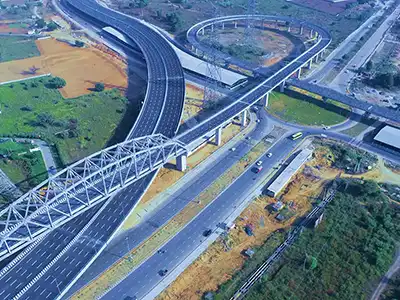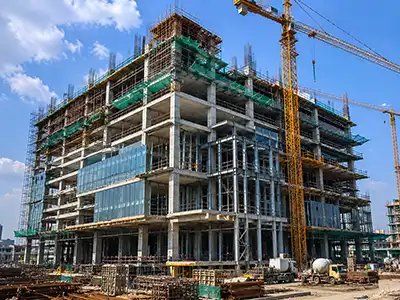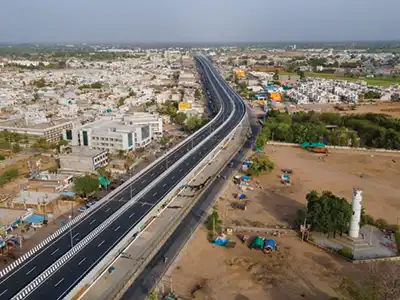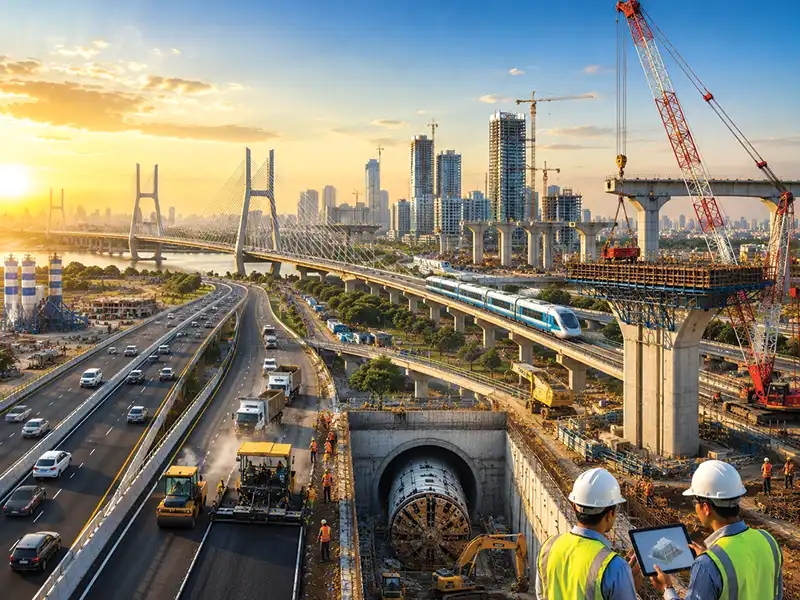
Global experience shows real savings in infrastructure come from investing in quality, innovation, and durability, not just cutting costs. Using robust materials, efficient designs, and lifecycle planning minimizes delays and rework, delivering long-term value. The L1 system should factor in these aspects to capture true value in India.
Varun Pandya
AGM - Business Development
Tata Projects

Cost Leadership and the L1 Challenge
Cost leadership is the primary strategy to win the L1 bidding system. It can be achieved through value engineering in design, supply chain intelligence, multi-mode and multi-delivery transport, faster execution, and subsequently lower finance costs, overheads, and expenses. However, this cannot come at the expense of quality and safety.Prioritizing the lowest bidding cost often results in compromises in quality and safety, delays in project completion leading to delayed revenue generation, and a higher likelihood of claims, disputes, and arbitration between employer and contractor. Poor quality also raises maintenance costs, as frequent breakdowns occur due to substandard construction. The absence of mechanization, digitalization, and modern technology, coupled with poor resource mobilization, leads to inefficiency and low productivity.
Reforms For Fair and Transparent Bidding Framework
For India’s bidding system to become fairer and more transparent, policy and procedural changes are critical. PPP guidelines should be amended to allow hybrid models such as annuity plus toll, while value engineering must be mandated in DPRs. Creating a National Infrastructure Database for cost benchmarking would standardize pricing and prevent undercutting. Before financial bids are considered, technical qualifications of contractors must be based on technology offered, the extent of digitalization and mechanization, value engineering practices, safety standards, resource qualifications, and execution planning.To move toward value-for-money, incentives must go beyond early completion bonuses. Contractors should also be rewarded for delivering higher quality, adhering to the highest safety standards, implementing value engineering, and using advanced software, tools, and mechanization without compromising workmanship. Incentives for innovative procurement practices, adoption of the latest technology, and use of digitalization can transform project outcomes and ensure that efficiency is achieved without cutting corners.
Strengthening DPRs for Better Execution
DPRs are the backbone of infrastructure projects, and their accuracy determines success or failure. An erroneous DPR can lead to major losses for the nation, the client, and contractors. During project management, I have found that the common issues with DPRs are scope discrepancies, unclear or incorrect route alignments, vague technical specifications, absence of detailed engineering, and significant quantity variations during execution because DPRs are often prepared in haste.Other problems include lack of clarity on inspection requirements, failure to incorporate the latest technologies, insufficient groundwork, and weak consideration of land acquisition challenges, which can account for 20–30% of project time lost in litigation. Contract fragmentation and over-engineering of project components also add to inefficiencies.
Improving DPRs requires the adoption of modern tools and practices. BIM has already shown its impact globally, with London’s Crossrail saving £1 billion through clash detection. In India, 4D/5D simulation has been used in Chennai Metro for real-time progress and cost tracking, while drones and LiDAR were deployed in the Mumbai–Ahmedabad High-Speed Rail project for faster land surveys. Digital project management tools such as AI-based scheduling and Primavera risk modeling, as used in Hyderabad Metro, also enhance reliability. With mandates from the Ministry of Housing and Urban Affairs for BIM in metro projects above ₹500 crores, and pilot successes in Delhi Metro Phase 4, India is moving in the right direction. However, more trained professionals and stronger enforcement are needed to realize the full benefits. Adopting BIM and digital tools consistently could reduce cost overruns by 10–15%.
Learning from Global Best Practices
Several global models offer valuable lessons for India. Drawing inspiration from the UK’s Infrastructure Projects Authority (IPA), which monitors project health, India too can establish an institutional framework to ensure accountability. By emphasizing lifecycle cost, quality, safety, and sustainability, and not just the lowest bid, India can create a system that rewards efficiency and innovation while building infrastructure that is durable, safe, and future-ready.Equally important are the global practices in design, procurement, and financing that drive efficiency on the ground. In China, standardized designs in viaduct construction reduce costs by 20–30%, while centralized bulk procurement of rolling stock allows significant economies of scale. Japan’s Shinkansen demonstrates the effectiveness of prefabrication and modular bridge segments, which reduce on-site work, while seismic resilience strategies save retrofitting costs in the long run. Europe’s metro projects, including Crossrail in the UK and Paris Metro, illustrate the benefits of private finance initiatives for risk-sharing, and the use of BIM and digital twins for clash detection, which minimize rework.
Case Studies from Indian Metro Projects
India has already begun adopting global best practices. Precast concrete, first used in the Nagpur Metro, saved 15% of construction time, while its fully precast system with 36 standardized stations and solar-powered depots significantly reduced lifecycle energy costs. Bundled contracts in Delhi Metro Phase 4 combine EPC and O&M for lifecycle savings, while standardized viaduct designs in Phase 3, along with precast segmental construction and bulk procurement of rails and signaling, enabled the completion of 142 km in just 4.5 years.Local manufacturing under the Make in India program, such as Alstom’s Chennai plant for rolling stock, has further improved cost efficiency. Chennai Metro Phase I also demonstrated innovation through the customization of TBMs to tackle hard rock, reducing wear-and-tear costs by 25%, and recycling 30% of aggregates from construction waste. Integrated station designs lowered land costs by 15%.
Other metros have also achieved substantial savings through innovative approaches. Ahmedabad Metro, under a hybrid annuity model, reduced delays by 14 months by coordinating utility shifting with city agencies, while 40% of costs were borne by the private operator. Mumbai Metro Line 2A cut equipment costs by 60% by reusing launching girders and adopted AI-based traffic management to reduce disruption penalties.
Together, these examples show that with modular construction, bulk procurement, integrated contracts, and innovative planning, India can replicate global cost efficiencies while tailoring them to domestic needs, delivering metro systems that are both cost-efficient and sustainable.