
Tekla's Gardens at the Bay
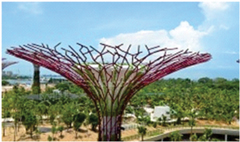
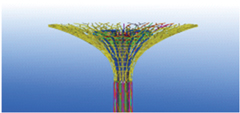
Design has complex geometries
On this project, TTJ worked closely with the architects and structural construction consultants to fabricate the parts needed for the Supertrees.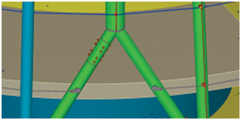
"Any time you have curved parts, it is good to use Tekla," says Madam Tan Yumin, the Engineering Manager at TTJ. This is because the company's other software has difficulty handling curved members. "From our experience, Tekla is the best," she says.
Fabrication process speeds up
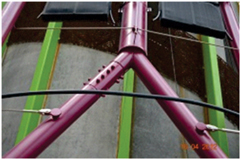
According to Madam Tan, Tekla has numerous attributes that make it ideal for steel fabricators. For example, it is able to handle changes on the fly so any changes proposed by the architect to the original drawing are automatically reflected in the general arrangement drawing.TTJ took about one and a half months to model each tree with Tekla. "If we had used ordinary CAD software to do the models, it would have taken us three times longer," says Madam Tan. Part of what speeds up the process is the extensive library of parts that exist, and that can be manually added to. Once architects and the consultants approve the general arrange drawings for the tree, TTJ uses Tekla software to generate the shop drawing for fabricating the joints and every steel part needed, right down to the bolts.
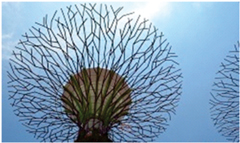
At the site, workers from TTJ begin assembling the different parts to form each tree again, relying on the drawings and the 3D models to help them. Overall, the project has taken about two years to go from the drawing board to the actual structures on the ground, ready to welcome the first of many thousands of visitors.
With the help of the 18 Supertrees, Gardens By The Bay will undoubtedly pull in the crowds, all anxious to see these giants close hand. All with the help of TTJ and Tekla.
Published on:
13 March 2014
Published in: NBM&CW March 2014
Share:
We Value Your Comment