Robots offer a remarkable advantage, being able to accomplish tasks with a speed ten times faster than traditional methods, while also reducing costs by threefold. Moreover, they guarantee consistent quality, eliminate physically demanding tasks, and create a safer and healthier work environment. PACE Robotics offers a modular wall finishing robot that automates tasks like plastering, putty, and painting, saving time, reducing costs, and improving consistency in construction projects.
Srinivas K Pai & Ayushmoy Roy - Co Founders, Pace Robotics
Our goal is to make robots ubiquitous in construction projects, starting with building finishes.
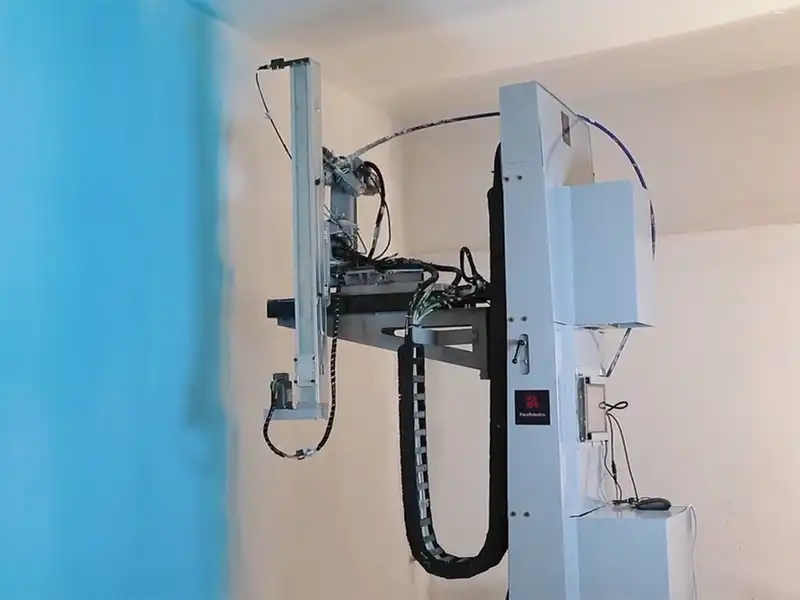
We are developing modular, multitasking robots capable of performing advanced construction tasks and digitizing execution data in real time. These robots can complete tasks 10 times faster and at 3 times lower costs than traditional methods. They ensure consistent quality, eliminate physically demanding tasks, and provide a healthier and safer work environment.
In a recent pilot project for putty work, we achieved four times higher productivity and superior finish quality compared to manual work.
Our first product is a robot designed for internal plastering, painting, and putty application in buildings. It is currently being deployed for pilot projects at customer sites. Our primary target market is high-rise residential buildings, with plans to gradually expand into commercial buildings as well. We will begin by focusing on internal wall and ceiling finishing and then add more use cases like floor finishing, including tiling, external wall finishing etc. According to estimates, there is a productivity gap of approximately $1.6 trillion globally between the construction industry and other industries. By improving construction productivity, we aim to capture this value.
We are currently in advanced R&D stage and few months away from commercial launch. Recently, we completed a pilot project (approximately 7000 sq.ft of wall and ceiling area) for putty work. During the project, we achieved four times higher productivity (approximately 800 sq. ft./day) and delivered a superior finish quality compared to manual work.
The lack of standardized work methods, work sequences, and quality assessments across organizations and projects has presented significant challenges in making product design decisions.
To illustrate this issue, consider the variation in wall finishing process in each of our three pilot projects. Project 1 entailed blockwork and cement plaster, Project 2 employed gypsum plaster on a concrete wall, and Project 3 utilized an unplastered concrete wall. Furthermore, the desired finish quality requirements and the approaches to measuring quality differed among these projects.