
Simple Guidelines for Producing Sustainable, Durable and Economical Concrete
Dr. Narayan V Nayak, Principal Advisor, Gammon Engineers and Contractors Pvt Ltd.

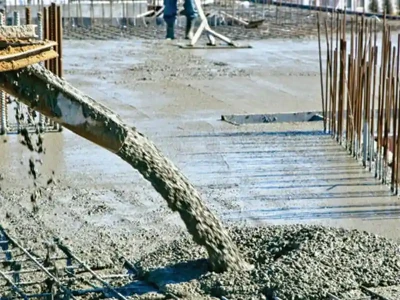
Our aim is to produce more concrete, but with less cement and thus less emission of CO2. For this, we have to use waste materials like fly ash and slag. These secondary cementing materials (SCMs) reduce emission of CO2 and make concrete more durable and economical.
Source of SCMs
All the SCMs are industrial waste products except Metakaoline (MK). SCMs include:
- Fly Ash (FA): From waste product of thermal power stations
- GGBS: Waste product from steel plants
- Metakaoline (MK): A natural product heated to 7000 to 8000 C to make it amorphous.
- Micro Silica (MS) / Silica Fumes (SF): A waste product from silicon industries.
- Rice Husk Ash (RHA): Product from rice husk, which is generally considered as a waste product. We are still in an experimental state in India though it is marketed in USA under Agro Silica.
- Ultrafine Slag (UFS): Produced from GGBS and commercially known as Alccofine 1203.
- Ultrafine Fly Ash (UFFA): A much finer variety of fly ash, suitably collected from classifiers.
Published on:
04 October 2019
Published in: NBM&CW October 2019
Share:
We Value Your Comment