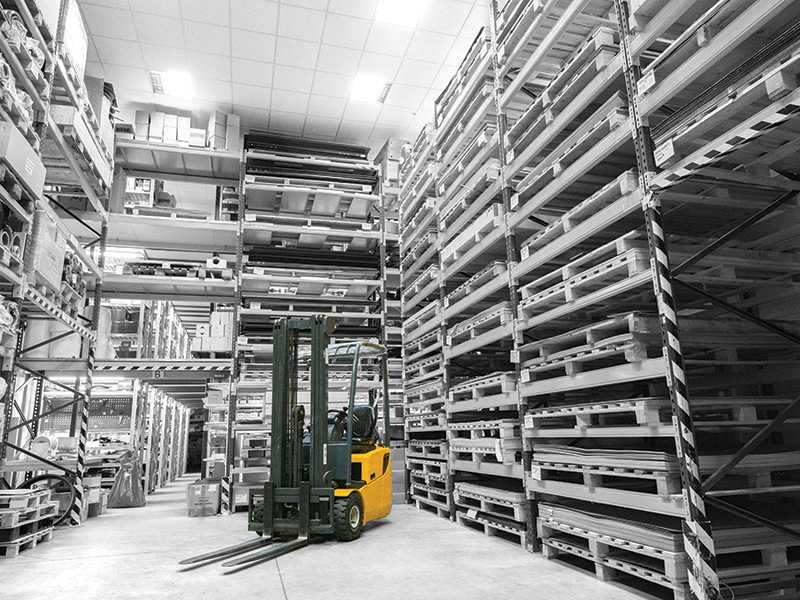
Improvisations in the crane control systems by manufacturers are adding to the overall efficiency of crane operations. P.P Basistha takes stock of the advancements being made.
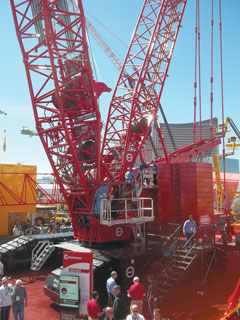
From an engineering standpoint, the process to introduce a common operating system has required a huge amount of resources from Manitowoc. Yet at the same time it is one of the most significant developments from the company in recent years. The move also fits well with the overall shift to greater standardization from the manufacturer.
For companies who own multiple Manitowoc products, there will be greater flexibility in fleet management as operators can move more freely between machines within a fleet. A further benefit for fleet owners is the simplicity of CCS. There are only seven major components in each CCS. These are: the crane controller, the safety controller, both small and large IO (input/output), the joysticks, the jog-dial, and the display. Each of these can be easily replaced if needed and they can be just as easily switched temporarily from another machine for the sake of completing a job.
Crane optimization
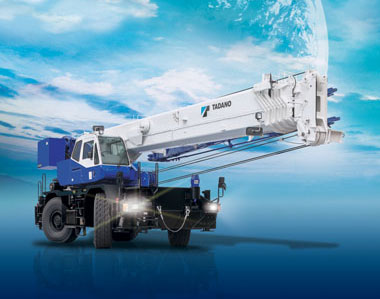
According to Mr. Erwan Maillot, Global Marketing, Manager Brand Development, Terex Cranes: “Known as Demag Tech Inside, it is built of the proven platform of Demag Cranes for improved quality and reliability of the cranes during general and critical lifting operations. IC-1+ enables real-time calculation of the load chart, counterweight, outriggers, and the slewing angle, in 17 languages. Real-time calculation enables the crane to be set up as per the lifting requirements. One of the biggest advantage of the technology is that it will facilitate movement of the crane to the job site with the exact number of counterweight required, thus reducing travelling cost and upkeep of the counterweights at the job sites.” IC-1+ comes in Demag’s new AC-220-5 all-terrain cranes and CC3800-1 Demag Crawler Cranes.
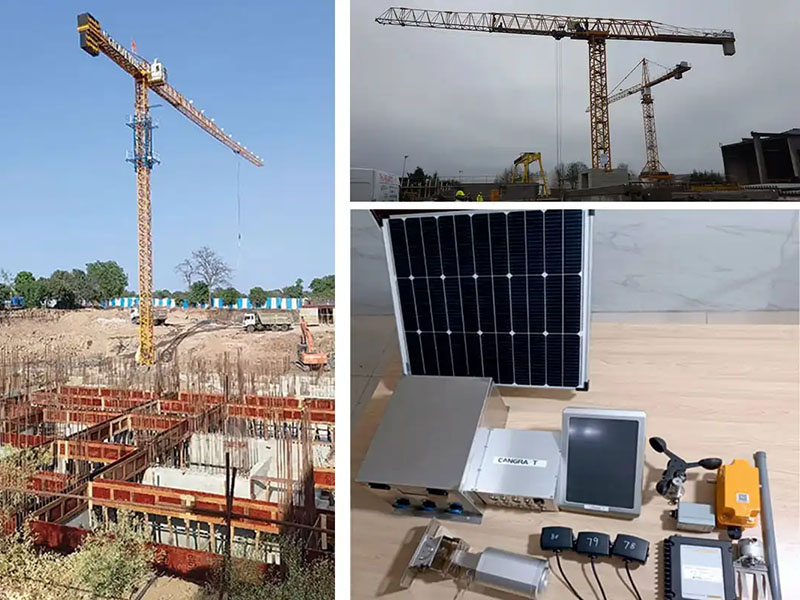
Improvisations by Terex also include an easy-to-use interface and control system for facilitating the operator to set the crane’s configuration and customize the speed movements. Exhibited at Conexpo, the intelligent system, available in Terex’s new SK 452-20, 20-ton tower cranes, also enables trouble shooting and remote access, thereby enabling the owner or the project officials to understand job site developments and the crane’s performance. Using the system, it is also possible to gather actual and historical crane data, weather conditions, working hours, active alarms, and alarm history with e-mail notifications.
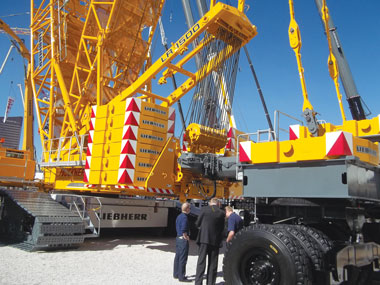
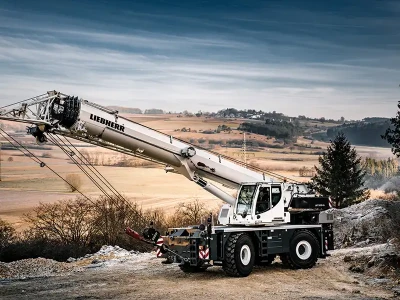
Liebherr’s LICCON (Liebherr Computerized Control Systems) with colored digital monitor for advanced load calculation is present in Liebherr’s LRT 1100-2.1 rough terrain crane. The load moment limiter of the LICCON control systems calculates the lifting chart according to the extension of the outrigger beams. The crane with 50-meter boom comes with Telematic system, which allows boom extension options. The crane also features outrigger monitoring system as standard. The support system on tires and outriggers is detected automatically and saved to the crane controller. The attachment of the ballast to the turntable and the installation of the optional double folding jib, including its angle adjustment, are also recorded and monitored. The VarioBase variable support base system is standard on the rough terrain cranes. It allows each outrigger to be extended to any length. Liebherr had announced its return to the rough terrain market in 2016.
The new features in crane control systems will enhance overall productivity of the cranes. However, since the solutions are at their maiden stage, they will have to be ensured by the OEMs through appropriate product support initiatives during the initial stages of crane operation as well as during the operation stages. This will enable manufacturers to undertake further improvisations based on the varied requirements, as there are many dynamic elements involved in general and critical lifting.