
As product owning and operation costs continue to mount for road construction contractors, led by growing business and project execution complexities, road equipment manufacturers in India face challenges of exploring numerous elements that can facilitate growth in top and bottom lines while ensuring decent returns on margins for the contractors, Partha Basistha reports.
"All cutting edge technologies are redundant unless it results in profits to our customers"- Marini Fayat
Rising fuel and manpower costs, compressed work schedules, and profit revenue margins, make the observation quite legitimate for road construction contractors nationally and internationally. For contractors in road construction business, involved in executing projects through engineering, procurement and commissioning under the aegis of build, operate, and transfer there, is a sustained requirement of growing cash flow into the business throughout the entire stage of construction and finally operation. Indexing profitability with the business, seems at first glance, the more job volume, the more business profitability, however, the looming rider remains. The more number of jobs, the more requirements of cash supply. Further, the more complexity greater the requirement of finance availability.

Business structure of road contractors in India has continued to become complex over the recent years, right from the project awarding stage that may get stretched due to delayed land acquisition, delay in laying of access points to the job site or arbitration. Additionally, during project execution, complexities in execution may require the contractor bring in added mechanization for faster completion of the job. Further, requirement to meet desired specification of the concessionaire, may also need added mechanization, thereby requiring higher cash flow again than that of the estimated amount. These are typical situations in India, which usually surpasses the levels of committed cash required for the projects.
According to Mr. Digvijaysingh G. Padheria, MD, Digvijay Construction Pvt Ltd., "Indexing the future requirement of plants that may be required during the course of construction and the monetary requirement for the same, continues to be a challenging task for the plant manager at Indian job sites. Though calculations of estimated cost of plant operations and predictability of ongoing and future requirement, in the course of construction are available tools, however, not absolute in Indian conditions."
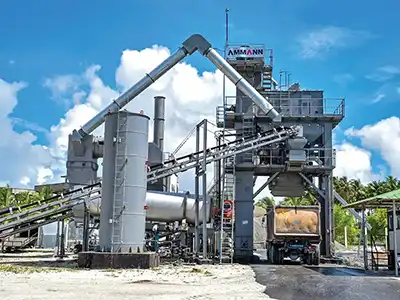
While plant and machinery constitutes 6-10% of the investment component for typical road construction project, contractors are of the opinion that OEM's can add value to the business by making them run the plants efficiently. "OEM's have no jurisdiction to curtail project cost escalation due to various external factors. However, they can play a very crucial role by bringing technologies and processes which can reduce the production & operating costs, so chances of putting extra finance in operations is kept minimal. Marini asphalt plants are designed for contractors who are interested to keep an edge and interested on efficiency, environment and sustainability. Since availability and desired quality of fuel is an issue with the contractors, burners of our plants come with multiple options, so depending on the location and prices of fuel, customer can use either diesel, heavy oil, gas or light oil. If the contractor is using a Marini in close proximity to seaports, he can even use waste oil.
 The desired temperature is ensured in our plants through our QUAD-control burners which have three variable sources of air. Further, inherent design features like Waste Heat Recovery, Heat retaining designs and a fantastic dryer-burner combination, keeps fuel consumption of our plants at minimal levels," says Mr. Blesson Varghese, MD, Marini Fayat Group.
Mr. Varghese further adds, "Since Fayat has its roots from civil engineering and even 50% plus of our group turnover comes from our civil engineering activities, we understand the veins and pains of every road building professional. This understanding & decades of experience is built in to each of our products, which are know to set industry benchmarks in Productivity and Efficiency. Cost saving is delivered on a Marini by some very intuitive designs. For eg, a Marini requires very low pressure fuel pumps, delivering very high up time and very low maintenance. The pumps work on low pressure thus requiring less energy. Being custom built to Indian job site requirement, our plants work economic miracles for our customers. Wider experience in the Indian market has enabled us to place products differently as compared to our competitors."
MARINI launched MAC 120 and 160 tph range of asphalt batching plant at bC India 2013 in Mumbai. According to Mr. Varghese, "Plants are intended to be marketed towards the new smaller road construction contractors entering into the market, who normally desire so much to own a Marini."
By this mid segment range of products, complemented by the right size of paver fnisher and supporting equipment, we intend to bring to our customers, value for money proposition and a taste of the latest pro-customer technology. Small contractors in India are seriously thinking about sustainability and we are ready to offer them some fantastic profit delivering machines. Marini's asphalt plant portfolio comprises plants of 120-160-240-280-320-360 tph.
Market presence is also being built up by Linhoff. The company has been in India for last 10 years. It is now looking to strengthen its presence through its wide portfolio of asphalt plants. It has asphalt plants between 80-to-400 tph and Eurotec concrete batching plant serving the Indian market. The range of Eurotec concrete batching plants are 30-to-240 Cum provided by Linhoff in the Indian market. The company's 7 plants of 120cum are operational in India. It is looking to offer cost competitive solutions to buyers through undertaking local manufacturing of its asphalt and Concrete plants at its upcoming factory at Khed near Pune with an initial capacity of 20 plants per month. Likely to be commissioned during September this year, the factory will manufacture asphalt and Concrete batching plants catering to the required capacity of Indian market.

"Initially, we propose to produce mass required 80-240tph range asphalt plants. The smaller capacity of plants will find usage for pan India road construction projects and especially in the North Eastern part of the country and other hilly areas," says Mr. Abhijit Padhye, VP (Sales & Marketing) Linhoff India Pvt Ltd. He claims, "Our local production would comprise Linhoff's cost-effective CMX series of compact mix batch plants."
The CMX series batching plants involve components like hot mix dryer screen drum, hot storage bins, bag house, mixer, and weighers which are moved to site in modular form and are assembled there in sequential order. These plants are also known as stationery plants, as they require a Skid mounted foundation. Linhoff's range of batching plants comprises MSD series modular batching plants, CMX series compact mix batching plant, TSD series mobile batching plant, LH series tower batching plants, HRC series recycling asphalt attachments to existing new plants, mastic attachments to existing/new plants. The company's Lintec's CSD series plants are marketed in European Union and Middle East for premium segment customers which according to the company are also bought by 10% of it's Indian clientele.
At par with promoting asphalt plants, the company will lay emphasis towards promoting concrete plants, with customized origin. According to Mr. Padhye, "in the concrete segment we are more interested in the dedicated specialized plants which call for our expertise of catering to major customers like Lafarge through our worldwide offices. However in India we will also supply to small users in the 30-45 cum range, sharing our overseas experience and product knowledge.
"All cutting edge technologies are redundant unless it results in profits to our customers"- Marini Fayat
Rising fuel and manpower costs, compressed work schedules, and profit revenue margins, make the observation quite legitimate for road construction contractors nationally and internationally. For contractors in road construction business, involved in executing projects through engineering, procurement and commissioning under the aegis of build, operate, and transfer there, is a sustained requirement of growing cash flow into the business throughout the entire stage of construction and finally operation. Indexing profitability with the business, seems at first glance, the more job volume, the more business profitability, however, the looming rider remains. The more number of jobs, the more requirements of cash supply. Further, the more complexity greater the requirement of finance availability.
Business structure of road contractors in India has continued to become complex over the recent years, right from the project awarding stage that may get stretched due to delayed land acquisition, delay in laying of access points to the job site or arbitration. Additionally, during project execution, complexities in execution may require the contractor bring in added mechanization for faster completion of the job. Further, requirement to meet desired specification of the concessionaire, may also need added mechanization, thereby requiring higher cash flow again than that of the estimated amount. These are typical situations in India, which usually surpasses the levels of committed cash required for the projects.
According to Mr. Digvijaysingh G. Padheria, MD, Digvijay Construction Pvt Ltd., "Indexing the future requirement of plants that may be required during the course of construction and the monetary requirement for the same, continues to be a challenging task for the plant manager at Indian job sites. Though calculations of estimated cost of plant operations and predictability of ongoing and future requirement, in the course of construction are available tools, however, not absolute in Indian conditions."
While plant and machinery constitutes 6-10% of the investment component for typical road construction project, contractors are of the opinion that OEM's can add value to the business by making them run the plants efficiently. "OEM's have no jurisdiction to curtail project cost escalation due to various external factors. However, they can play a very crucial role by bringing technologies and processes which can reduce the production & operating costs, so chances of putting extra finance in operations is kept minimal. Marini asphalt plants are designed for contractors who are interested to keep an edge and interested on efficiency, environment and sustainability. Since availability and desired quality of fuel is an issue with the contractors, burners of our plants come with multiple options, so depending on the location and prices of fuel, customer can use either diesel, heavy oil, gas or light oil. If the contractor is using a Marini in close proximity to seaports, he can even use waste oil.
Mr. Varghese further adds, "Since Fayat has its roots from civil engineering and even 50% plus of our group turnover comes from our civil engineering activities, we understand the veins and pains of every road building professional. This understanding & decades of experience is built in to each of our products, which are know to set industry benchmarks in Productivity and Efficiency. Cost saving is delivered on a Marini by some very intuitive designs. For eg, a Marini requires very low pressure fuel pumps, delivering very high up time and very low maintenance. The pumps work on low pressure thus requiring less energy. Being custom built to Indian job site requirement, our plants work economic miracles for our customers. Wider experience in the Indian market has enabled us to place products differently as compared to our competitors."
MARINI launched MAC 120 and 160 tph range of asphalt batching plant at bC India 2013 in Mumbai. According to Mr. Varghese, "Plants are intended to be marketed towards the new smaller road construction contractors entering into the market, who normally desire so much to own a Marini."
By this mid segment range of products, complemented by the right size of paver fnisher and supporting equipment, we intend to bring to our customers, value for money proposition and a taste of the latest pro-customer technology. Small contractors in India are seriously thinking about sustainability and we are ready to offer them some fantastic profit delivering machines. Marini's asphalt plant portfolio comprises plants of 120-160-240-280-320-360 tph.
Market presence is also being built up by Linhoff. The company has been in India for last 10 years. It is now looking to strengthen its presence through its wide portfolio of asphalt plants. It has asphalt plants between 80-to-400 tph and Eurotec concrete batching plant serving the Indian market. The range of Eurotec concrete batching plants are 30-to-240 Cum provided by Linhoff in the Indian market. The company's 7 plants of 120cum are operational in India. It is looking to offer cost competitive solutions to buyers through undertaking local manufacturing of its asphalt and Concrete plants at its upcoming factory at Khed near Pune with an initial capacity of 20 plants per month. Likely to be commissioned during September this year, the factory will manufacture asphalt and Concrete batching plants catering to the required capacity of Indian market.
"Initially, we propose to produce mass required 80-240tph range asphalt plants. The smaller capacity of plants will find usage for pan India road construction projects and especially in the North Eastern part of the country and other hilly areas," says Mr. Abhijit Padhye, VP (Sales & Marketing) Linhoff India Pvt Ltd. He claims, "Our local production would comprise Linhoff's cost-effective CMX series of compact mix batch plants."
The CMX series batching plants involve components like hot mix dryer screen drum, hot storage bins, bag house, mixer, and weighers which are moved to site in modular form and are assembled there in sequential order. These plants are also known as stationery plants, as they require a Skid mounted foundation. Linhoff's range of batching plants comprises MSD series modular batching plants, CMX series compact mix batching plant, TSD series mobile batching plant, LH series tower batching plants, HRC series recycling asphalt attachments to existing new plants, mastic attachments to existing/new plants. The company's Lintec's CSD series plants are marketed in European Union and Middle East for premium segment customers which according to the company are also bought by 10% of it's Indian clientele.
At par with promoting asphalt plants, the company will lay emphasis towards promoting concrete plants, with customized origin. According to Mr. Padhye, "in the concrete segment we are more interested in the dedicated specialized plants which call for our expertise of catering to major customers like Lafarge through our worldwide offices. However in India we will also supply to small users in the 30-45 cum range, sharing our overseas experience and product knowledge.
Technology: Sole Criterion for Sales?
Though technology can be a key differentiator for products sales. However, it may not be the only differentiator, for a product like asphalt plant in India. This is as because there are many external factors linked to production, which may not altogether be under the jurisdiction of the contractor. The factors are well likely to have an inflated bearing at the costs of production, which even the best of the technology may not be able to neutralize. According to Mr. M.L. Pandita, General Manager, Plant, Gammon India Limited, "The viability of the plant depends on timely availability of aggregates and transportation lead times for transporting the aggregates from the source of its origin to the site. For projects taking place in North Bihar, Gorakhpur, Eastern UP or in certain parts of West Bengal lead transportation distances are between 200 and 300 kms or even beyond. Further, crushing laws vary in different states. To minimize the lead times, the contractor may have to make alternative transportation arrangements through additional dumpers. Further, road bridging may require to be done with nearest rail sidings, which ideally is not best option. All these factors definitely has a cost bearing on the operation of the plants."

The factors can negatively influence sales, despite technically ideal product positioning. Not discounting the same, Linhoff has put in an elaborate product support structure in place. According to Mr. Padhye, "Apart from the conventional service module, our product support structure is quite wide. It comprises complete operation and maintenance service. Through our specialized service department, we provide complete team of personnel to operate and maintain, along with providing the required throughput at a nominal cost. We also make our plants available on rent for the complete/partial tenure of the project backed by our operation and maintenance services. We also provide refurbishment services backed by guarantee, where we retrofit used Linhoff plants. We can also support customers through plant buyback arrangements and long term funding plans."
Passing value to customers in road constructions business, yet continuing with sustains sales is becoming arduous in India. This is despite growth in overall volumes over the years. For example, slow adaptability of advancements in technology by users, while emphasizing to keep operation costs down has made it challenging for manufacturers to pass value through compactors or pavers.
 According to Mr. Anil Bhatia, Director, Sales & Marketing, Case India. "While maintenance parameters remain same with almost all Global construction equipment manufacturers, Case is looking to incorporate value through economizing operational costs and enhanced life expectancy primarily through process and quality improvements. Continued improvements are carried out in engine to keep the temperature at the optimum level and to regulate accurate fuel delivery. Our upgraded version of Case 752, the 9-ton tandem vibratory compactor now comes with fuel efficient water cooled engines, which results in substantial temperature reduction that will also benefit customers with longer engine life and lower fuel consumption."
Case's range of vibratory compactors comprises of newly upgraded tandem compactor model 752, 1107 soil compactor featuring an operating weight of 11.3 tons and 3.2 tons mini tandem 450 DX. The company claims to be the market leader in India having sizeable market presence backed by the myriad offerings. Case India will strengthen its existing dealership network apart from expanding its presence in unexplored markets. Case India today has 18 offices and 60 dealers having more than 160 outlets proposed to increase the service outlets to 190 during 2013.
 With sales continuing to remain volatile centering competition, total solutions availability continues to be the driver for sales in India, necessarily backed through market expansions. According to Mr. Ramesh Palagigiri, MD, Wirtgen India pvt ltd, "as a complete solutions entity, for Indian road construction market, Wirtgen offers pavers with screed size from 5 meters both tracked and wheeled, Vogele 1300-2 and Vogele 1303-2 for smaller roads construction. Our pavers range from the 9 mtr to 13 mtrs class, with extending screeds. We have recently launched the Dash 3 generation of Pavers of which the 2100-3, is available for the Indian market." He mentions, "further for compactors, we have Hamm 311 vibratory soil compactor as well the HD 90 Tandem Roller. Besides, pneumatic rubber wheeled tyred rollers for Asphalt are available. For milling machines, we have the W35 DC and the W 50 for specialised applications, the W 100 and the W 130F for city milling, and the W 2000 for large milling jobs." He added, "shortly we would introduce the HD 99 which would be produced at our Indian facility."

Mr. Palagiri is optimist to think that sustained demand for the range of products will be driven by their technical attributes to a big extent. He says, "Our pavers are equipped with advanced technology, eco-friendly, economical and ergonomical aspects. The "EcoPlus Package," for instance, significantly reduces fuel consumption and noise levels. Further, the popular ErgoPlus operating system, is equipped with a number of additional ergonomic and functional features. Pavedock assistance, new Autoset function, etc. are just some of the many new features in the Dash 3 generation of Pavers." He adds, "rollers produced at Pune, meet all requirements specific to the Indian construction industry – from lighting via cooling system all the way to engine technology."
However, all the necessary technical attributes may not be sufficient to build up the brand and promote sales. To justify the brand, Wirtgen is looking to build up sufficient product support initiatives. According to Mr. Palagiri, "We have made large scale investments in a new highly advanced workshop where as many as five machines can be overhauled simultaneously as a major initiative towards product support." The state of the art workshop has four bays to refurbish 4 machines at a time including paver and surface miner. He informed, "15 machines were refurbished at this facility and the target for 2013 is 20 machines." Wirtgen India will be starting full fledged REMAN by 2014.
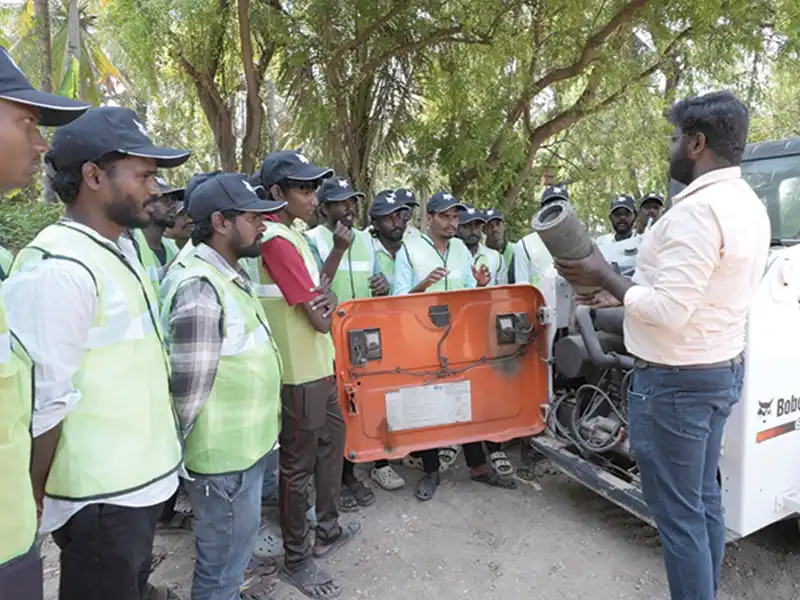
Wirtgen's production facility at Pune also houses a training school. Four batches of 20 trainees a year, are trained with hands on learning experience on the machines.
The factors can negatively influence sales, despite technically ideal product positioning. Not discounting the same, Linhoff has put in an elaborate product support structure in place. According to Mr. Padhye, "Apart from the conventional service module, our product support structure is quite wide. It comprises complete operation and maintenance service. Through our specialized service department, we provide complete team of personnel to operate and maintain, along with providing the required throughput at a nominal cost. We also make our plants available on rent for the complete/partial tenure of the project backed by our operation and maintenance services. We also provide refurbishment services backed by guarantee, where we retrofit used Linhoff plants. We can also support customers through plant buyback arrangements and long term funding plans."
Passing value to customers in road constructions business, yet continuing with sustains sales is becoming arduous in India. This is despite growth in overall volumes over the years. For example, slow adaptability of advancements in technology by users, while emphasizing to keep operation costs down has made it challenging for manufacturers to pass value through compactors or pavers.
Case's range of vibratory compactors comprises of newly upgraded tandem compactor model 752, 1107 soil compactor featuring an operating weight of 11.3 tons and 3.2 tons mini tandem 450 DX. The company claims to be the market leader in India having sizeable market presence backed by the myriad offerings. Case India will strengthen its existing dealership network apart from expanding its presence in unexplored markets. Case India today has 18 offices and 60 dealers having more than 160 outlets proposed to increase the service outlets to 190 during 2013.
Mr. Palagiri is optimist to think that sustained demand for the range of products will be driven by their technical attributes to a big extent. He says, "Our pavers are equipped with advanced technology, eco-friendly, economical and ergonomical aspects. The "EcoPlus Package," for instance, significantly reduces fuel consumption and noise levels. Further, the popular ErgoPlus operating system, is equipped with a number of additional ergonomic and functional features. Pavedock assistance, new Autoset function, etc. are just some of the many new features in the Dash 3 generation of Pavers." He adds, "rollers produced at Pune, meet all requirements specific to the Indian construction industry – from lighting via cooling system all the way to engine technology."
However, all the necessary technical attributes may not be sufficient to build up the brand and promote sales. To justify the brand, Wirtgen is looking to build up sufficient product support initiatives. According to Mr. Palagiri, "We have made large scale investments in a new highly advanced workshop where as many as five machines can be overhauled simultaneously as a major initiative towards product support." The state of the art workshop has four bays to refurbish 4 machines at a time including paver and surface miner. He informed, "15 machines were refurbished at this facility and the target for 2013 is 20 machines." Wirtgen India will be starting full fledged REMAN by 2014.
Wirtgen's production facility at Pune also houses a training school. Four batches of 20 trainees a year, are trained with hands on learning experience on the machines.
Network Expansion
Market penetration and subsequent expansion continues to be major strategy for building presence in the challenging terrain of Indian road construction equipment business. OEM's have felt that market expansion holds precedence in India in tandem with product placement. Backed by the business perception, Amman group carried planned 70% acquisition of Indian, road construction equipment major, Gujarat Apollo Industries. According a statement from Amman, "The partnership with Apollo is aimed at expanding the market position in the field of asphalt mixing plants, asphalt pavers and compaction machines in India and the neighboring markets. It states, Apollo wide network of sales and servicing subsidiaries in India; its products will be instrumental for promoting Ammann range of products in India."
Under the joint venture, according to the company statement, "Ammann will invest in Apollo's core business of asphalt mixing plants, asphalt pavers, bitumen sprayers and compaction machines." The joint venture, known as Ammann Apollo India Private Limited, the company states will be responsible for the sale of the Ammann products range in the market region of India, whilst the Ammann Group will continues to operate on a global basis. The joint venture agreement is due to be signed in mid-April 2013.

With sales continuing to remain volatile centering competition total solutions availability continues to be the driver for sales in India, necessarily backed through market expansions. In accordance with the same, BOMAG launched its total high-tech range of Bomag machines involving pavers, rollers and milling machines at bC India 2013. According to Mr. Varghese, "Our range is almost complete now in India from asphalt batching plants to pavers – compactors, maintenance equipment, recycling systems & even automatic sweeping machine. The 800 tph BOMAG BF 800 C class pavers with 10 m screed size delivers upto 98% compaction, highest in its class as compared to offering from other manufacturers. Besides unmatched compaction and leveling that the industry's most heavy & high performing screed offers, Bomag pavers are engineered to safeguard pavements from thermal segregation and light oil dissipation which is detrimental for pavement performance. The pavers have the same bloodline of our compaction range. The pneumatic tyre rollers are fully hydrostatic machines, which deliver our clients unmatched performance and almost negligible maintenance at sites."
 Automation, it is felt, is another element that can contribute value to compactors, graders and other supporting equipment in road construction within the value chain. However, it has to be cost-competitive. As adaptability to the same remains conservative from the contractors end in the country, Moba, the major automation solutions entity for road construction equipment will be localizing its products at its new plant in Gandhinagar. According to Mr. Desai, National Manager, Sales & Services, MOBA "Initially, we will localize our cables, metal brackets and allied accessories that help in mounting the solutions on the equipment." The company has recently launched its human machine interface and thermal profile, for measuring the asphalt temperature to ensure the passes are of right specifications."
 However, manufacturers would be able to reap the benefits of localization, if only demand volumes are sufficient. Affirms Mr. Nitin Lall, General Manager, Chicago Pneumatic. He says, "The benefits of local sourcing only can be when demand is adequate. The company which acquired Dynapac in the recent past, manufacturers 11-ton soil compactors and 9-tons tandem rollers at their state of the art Dynapac facility in Nashik, which happens to be one of their most modern plants around the globe. According to Mr. Lall, the localization ratios of the products are between 70 and 30%. We look to low ownership and operation costs for our products in India, by sourcing them from Europe, China and of course within India. The products are cost-competitive and adhere to European quality specifications. Global sourcing is a major strategy to make products cost competitive."

However, with global shipping container rates remaining subdued as of now, it will be profitable for the company to get imports at a reasonable cost. Nonetheless, as a long-term strategy to safeguard and extend market presence, Atlas Copco is strengthening market presence. "Enhanced marketing support is our present focus through appointment of more number of dealers and better service back up and continued hiring of people. Our ratio for sales and service support personnel is 10:30" says Mr. Lall. Atlas Copco, sells imported 9 to 13 meters pavers, pneumatic tyre rollers and 1-2 meters planners in India. It would add another 10 dealers during 2013 to its existing 30 dealers. The company plans to introduce slew of new products for the Indian market during 2013-14.
Notwithstanding, amidst the evolving marketing challenges, manufacturers continue to see the Indian market prospective as demand fundamentals continue to remain firm from the road construction sector with sustained emphasis of the government on infrastructure building. However, it would require to be seen that how sooner and transparently the project executing agencies are able to award the new tenders and get them executed. It will equally be interesting to see how, OEM's are able to meet the demand and service expectations of the market.
Under the joint venture, according to the company statement, "Ammann will invest in Apollo's core business of asphalt mixing plants, asphalt pavers, bitumen sprayers and compaction machines." The joint venture, known as Ammann Apollo India Private Limited, the company states will be responsible for the sale of the Ammann products range in the market region of India, whilst the Ammann Group will continues to operate on a global basis. The joint venture agreement is due to be signed in mid-April 2013.
With sales continuing to remain volatile centering competition total solutions availability continues to be the driver for sales in India, necessarily backed through market expansions. In accordance with the same, BOMAG launched its total high-tech range of Bomag machines involving pavers, rollers and milling machines at bC India 2013. According to Mr. Varghese, "Our range is almost complete now in India from asphalt batching plants to pavers – compactors, maintenance equipment, recycling systems & even automatic sweeping machine. The 800 tph BOMAG BF 800 C class pavers with 10 m screed size delivers upto 98% compaction, highest in its class as compared to offering from other manufacturers. Besides unmatched compaction and leveling that the industry's most heavy & high performing screed offers, Bomag pavers are engineered to safeguard pavements from thermal segregation and light oil dissipation which is detrimental for pavement performance. The pavers have the same bloodline of our compaction range. The pneumatic tyre rollers are fully hydrostatic machines, which deliver our clients unmatched performance and almost negligible maintenance at sites."
However, with global shipping container rates remaining subdued as of now, it will be profitable for the company to get imports at a reasonable cost. Nonetheless, as a long-term strategy to safeguard and extend market presence, Atlas Copco is strengthening market presence. "Enhanced marketing support is our present focus through appointment of more number of dealers and better service back up and continued hiring of people. Our ratio for sales and service support personnel is 10:30" says Mr. Lall. Atlas Copco, sells imported 9 to 13 meters pavers, pneumatic tyre rollers and 1-2 meters planners in India. It would add another 10 dealers during 2013 to its existing 30 dealers. The company plans to introduce slew of new products for the Indian market during 2013-14.
Notwithstanding, amidst the evolving marketing challenges, manufacturers continue to see the Indian market prospective as demand fundamentals continue to remain firm from the road construction sector with sustained emphasis of the government on infrastructure building. However, it would require to be seen that how sooner and transparently the project executing agencies are able to award the new tenders and get them executed. It will equally be interesting to see how, OEM's are able to meet the demand and service expectations of the market.