Pawan Kumar, Ph.D. Scholar (CTRANS), IIT Roorkee and Asstt. T&CP, Town & Country Planning Organization, M/o Urban Development, Govt. of India, New Delhi. S.Y.Kulkarni, Professor " Head, Deptt. of Architecture & Planning , IIT Roorkee. M. Parida, Associated Faculty, Centre for Transportation Systems, IIT Roorkee.
Introduction
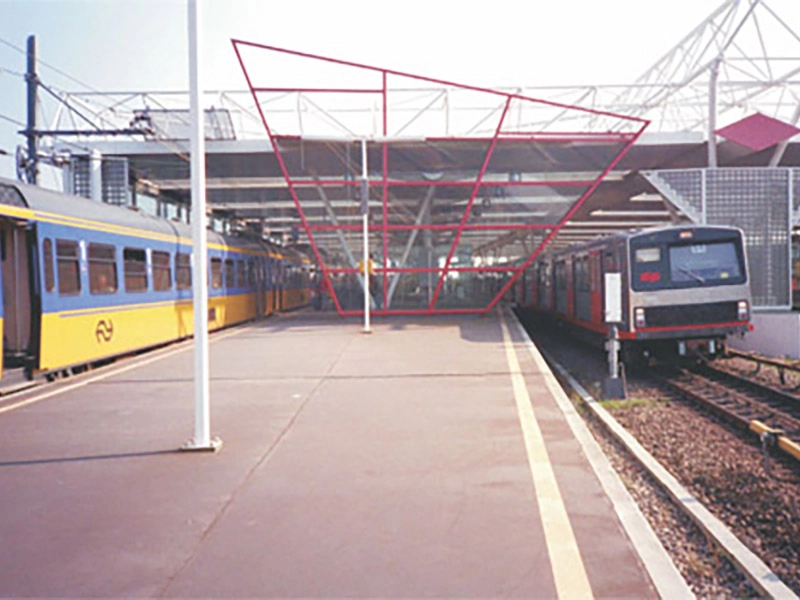
Seamless travel is an important characteristic of urban transport system. Transfer is an essential part of multi– modal trip and traveler has to change modes at transfer nodes. Multi–modal Transport System (MMTS) is an integrated approach to incorporate all components of urban transport into a single coordinated, planning and operation system for efficient use of available transport resources and infrastructure to ensure better urban mobility within a wide range of modal options for the commuters. In fact, multi–modal transport system relates to single trip consisting of combination of modes i.e. vehicle modes (bus, metro, car, tram, etc.) or service modes (private/public) between which the traveler has to make a transfer. Multi–modal transport system has two basic components: