
Flexible Pavements with Bituminous Construction and New Technologies
M.N.Nagabhushana, Senior Principal Scientist, Co-ordinator (PD&R), Pavement Engineering Area, CSIR-CRRI, New Delhi
Introduction
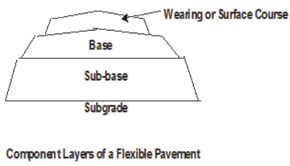
Characteristics of Pavement Layers
- Wearing course or surface course takes the stresses at top to protect the lower layers and hence shall be superior- Bituminous and/or cement concrete layer/s used
- Base course must possess high resistance to deformation in order to withstand high pressure imposed upon it by providing added stiffness and resistance to fatigue
- Sub-base is normally used as a drainage layer to keep the structure free of excessive moisture.
- The purpose of the lower layers is to even provide a working platform and regulate the surface on which upper layers are built.
Published on:
08 March 2016
Published in: NBM&CW March 2016
Share:
We Value Your Comment